

For over half a century, the high-stakes world of organ transplantation has relied on a surprisingly primitive ritual: placing a multi-million dollar life-saving organ into a $20 plastic cooler filled with ice. While "Cold Ischemic Storage" slows cellular decay, it essentially places the organ in a state of biological limbo—leaving surgeons to hope the organ "wakes up" once transplanted. TransMedics ($TMDX) was founded to shatter this "ice box" paradigm. By replacing static cooling with a proprietary Organ Care System (OCS™) that keeps organs beating, breathing, and metabolically active, the company has transitioned from a niche medical device manufacturer into a vertically integrated logistics powerhouse. Today, TransMedics is not just selling hardware; they are building the Amazon of Organs, a full-stack infrastructure designed to ensure that no viable organ is ever wasted due to the limitations of time, distance, or logistics.
Executive Summary: The TransMedics Thesis
TransMedics Group ($TMDX) is fundamentally disrupting the organ transplant market with its proprietary Organ Care System (OCS™). By keeping organs in a warm, functional, and assessable state, the company has moved beyond being a medical device vendor to become a vertically integrated logistics powerhouse.
The Paradigm Shift: Moving from passive cold storage to active, warm perfusion. This allows for the “reanimation” and assessment of organs, particularly those from Donation after Circulatory Death (DCD), which were previously discarded.
Vertical Integration: With the acquisition of Summit Aviation and the rollout of the National OCS Program (NOP), TransMedics now owns the technology, the surgical labor, and the air fleet, controlling the entire transplant value chain.
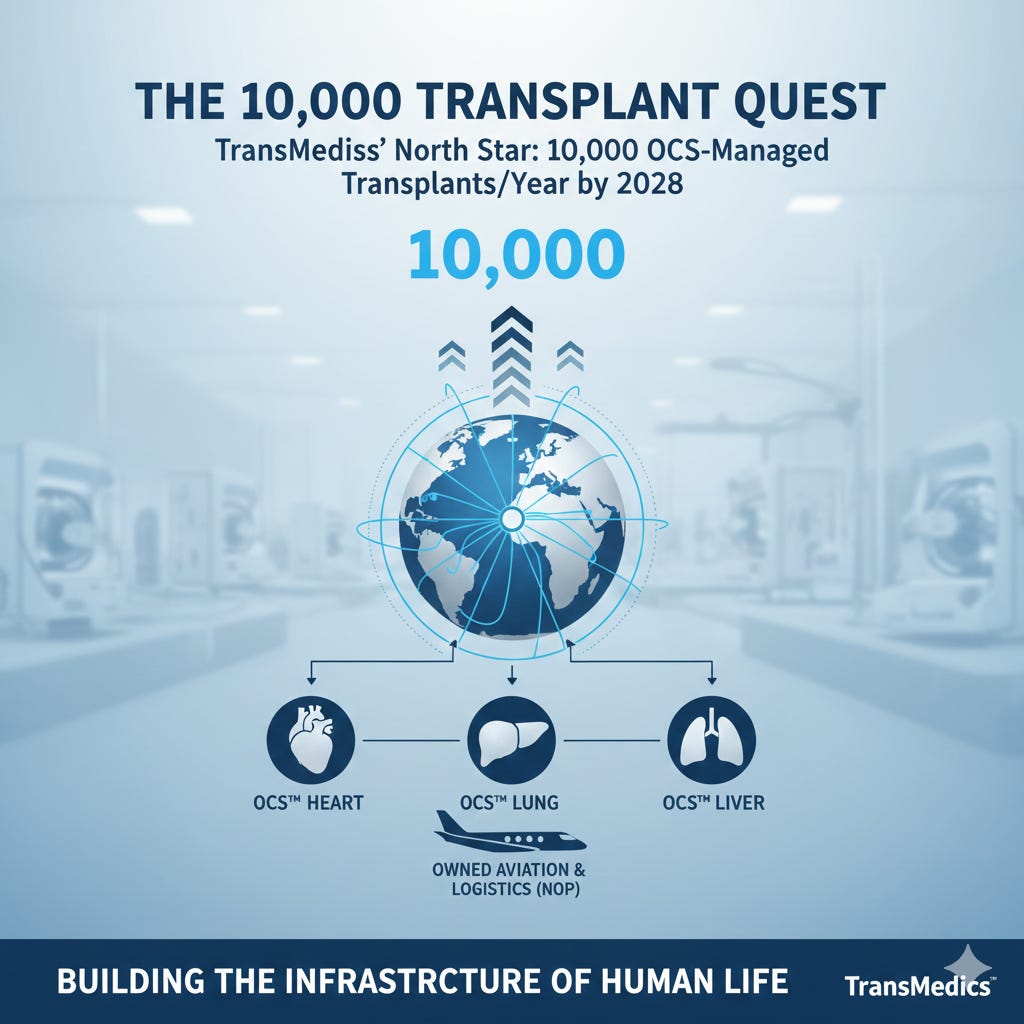
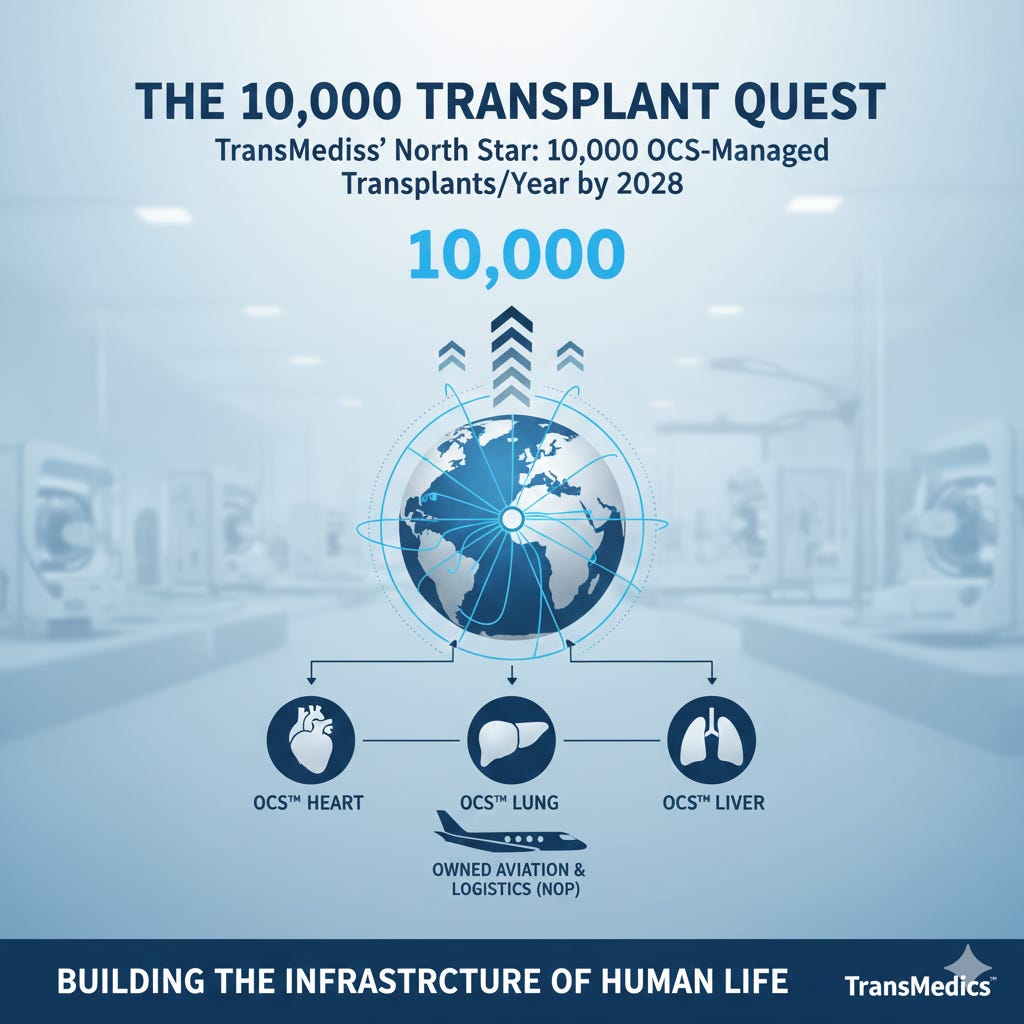
Operational Scale: The company is currently marching toward a “North Star” goal of 10,000 annual transplants by 2028, a milestone that would solidify its position as a critical infrastructure utility for the U.S. healthcare system.
Financial Inflection: After decades of R&D, the company achieved positive cash flow in 2024, with 5-year revenue growth exceeding 88% as of late 2025.
Market Moat: TransMedics holds the only triple FDA approval (Heart, Lung, and Liver) for warm perfusion, creating a regulatory and operational barrier to entry that is nearly impossible for competitors to replicate in the near term.
For decades, the standard of care for organ transplantation was Cold Ischemic Storage. Essentially putting an organ on ice. While this slows metabolism, it doesn’t stop cellular death, and it provides
no way to assess the organ’s health during transport.
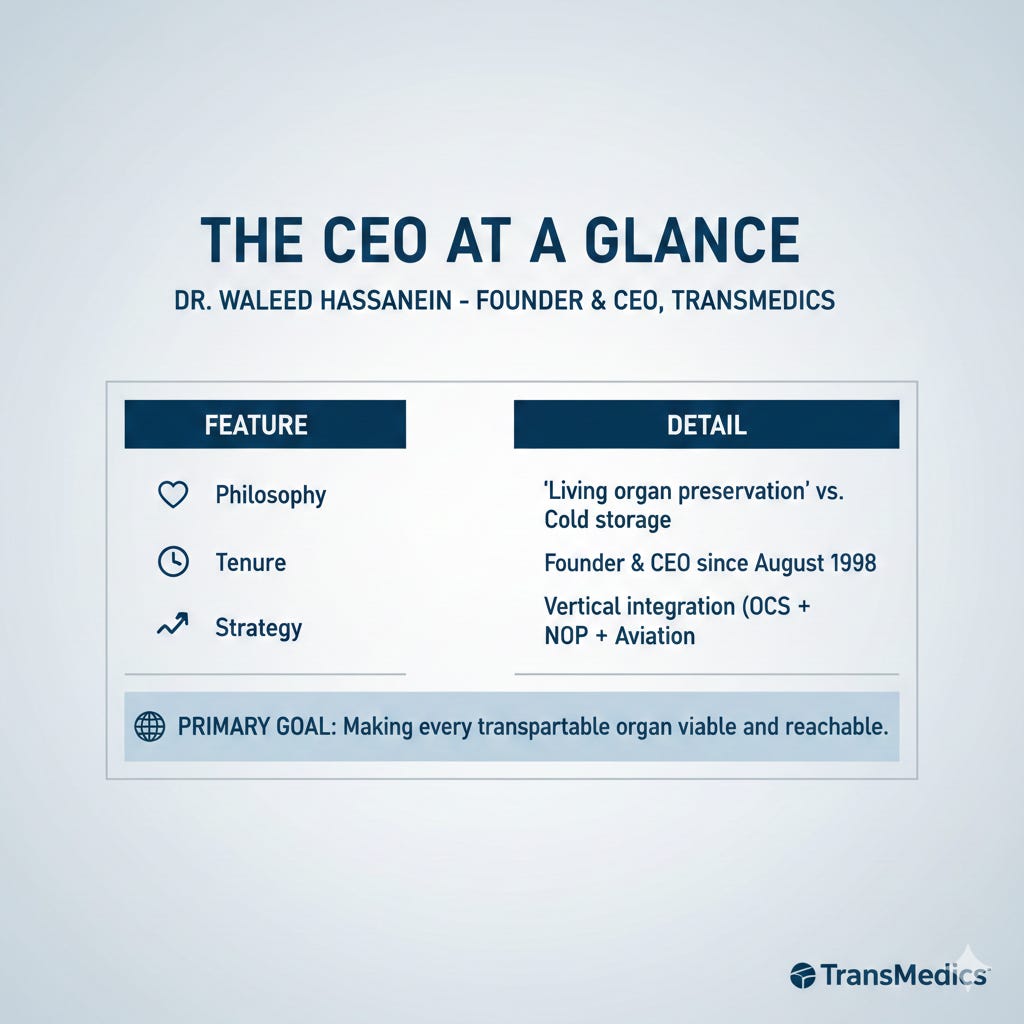
Founded in 1998 by Dr. Waleed Hassanein, TransMedics was built on a singular premise: organs should be kept in a functional, physiological state outside the human body.
Historical Milestones
The R&D Phase (1998–2006)
The first several years were dedicated to the immense engineering challenge of miniaturizing a heart-lung machine into a portable device.
The Breakthrough: Developing the OCS platform, which mimics the human body by perfusing the organ with warm, oxygenated, and nutrient-enriched blood.
Proof of Concept: Initial successful animal trials and early human feasibility studies in Europe.
European Entry and Clinical Trials (2007–2012)
TransMedics targeted the European market first while beginning the rigorous FDA clinical trial process in the U.S.
CE Mark: The OCS Heart and OCS Lung systems received CE Mark approval, allowing for commercial use in the EU.
The PROCEED II Trial: A landmark study for the OCS Heart, demonstrating that the system was as safe and effective as cold storage, but with the added benefit of being able to use extended criteria organs (organs previously considered too risky).
FDA Milestones & U.S. Expansion (2018–2021)
This period marked the company’s transition from a clinical-stage entity to a commercial powerhouse.
IPO (2019): TransMedics went public on the Nasdaq (TMDX), raising capital to scale its manufacturing and commercial teams.
Triple FDA Approval: Between 2018 and 2021, TransMedics achieved a triple crown, securing FDA Premarket Approval (PMA) for:
OCS Lung (2018)
OCS Heart (2021)
OCS Liver (2021)
The Strategic Pivot: The National OCS Program (NOP)
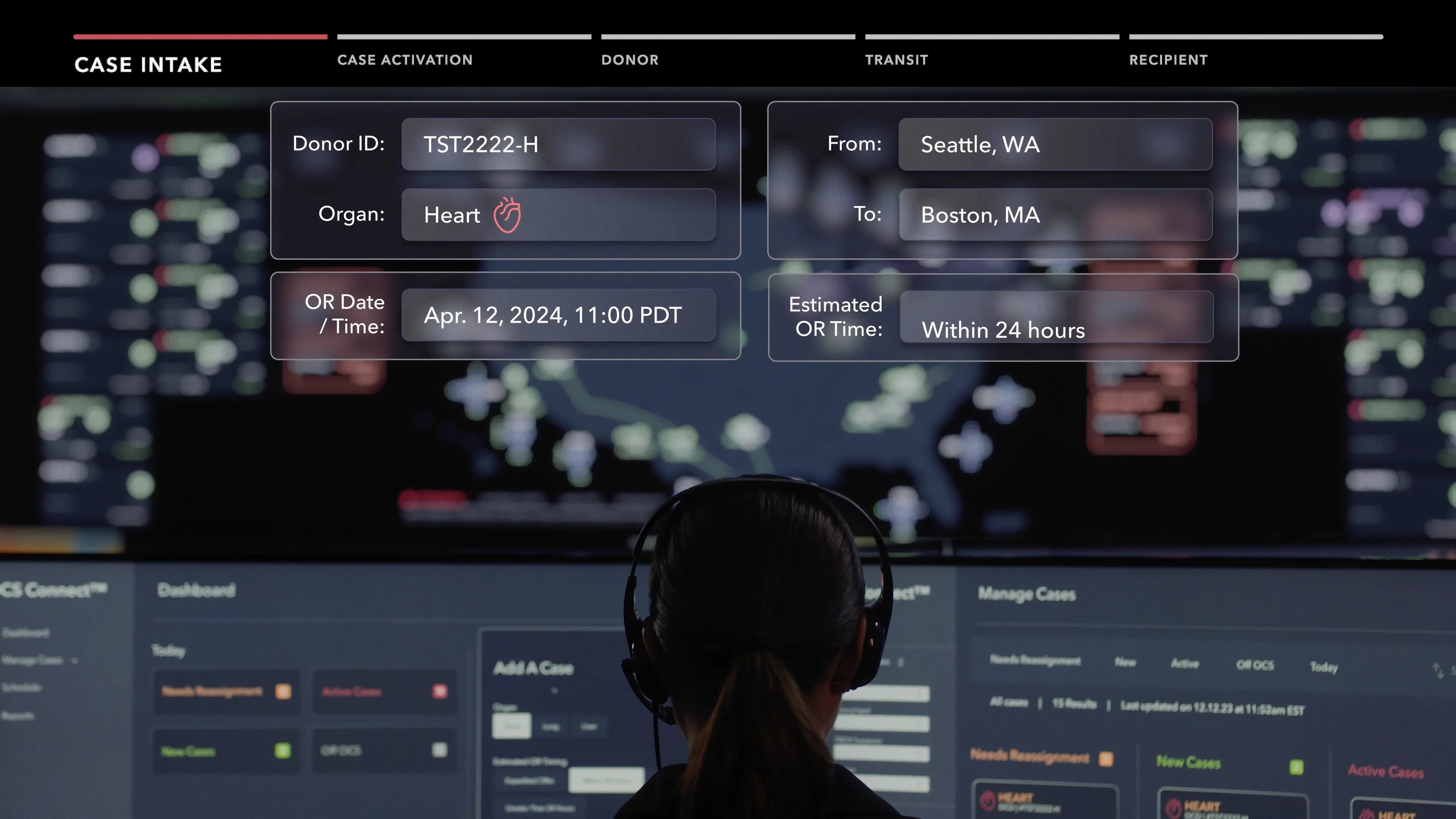
Historically, TransMedics sold the OCS machines and disposable kits to hospitals. However, the company realized that the complexity of operating the device and the logistics of organ retrieval were bottlenecks.
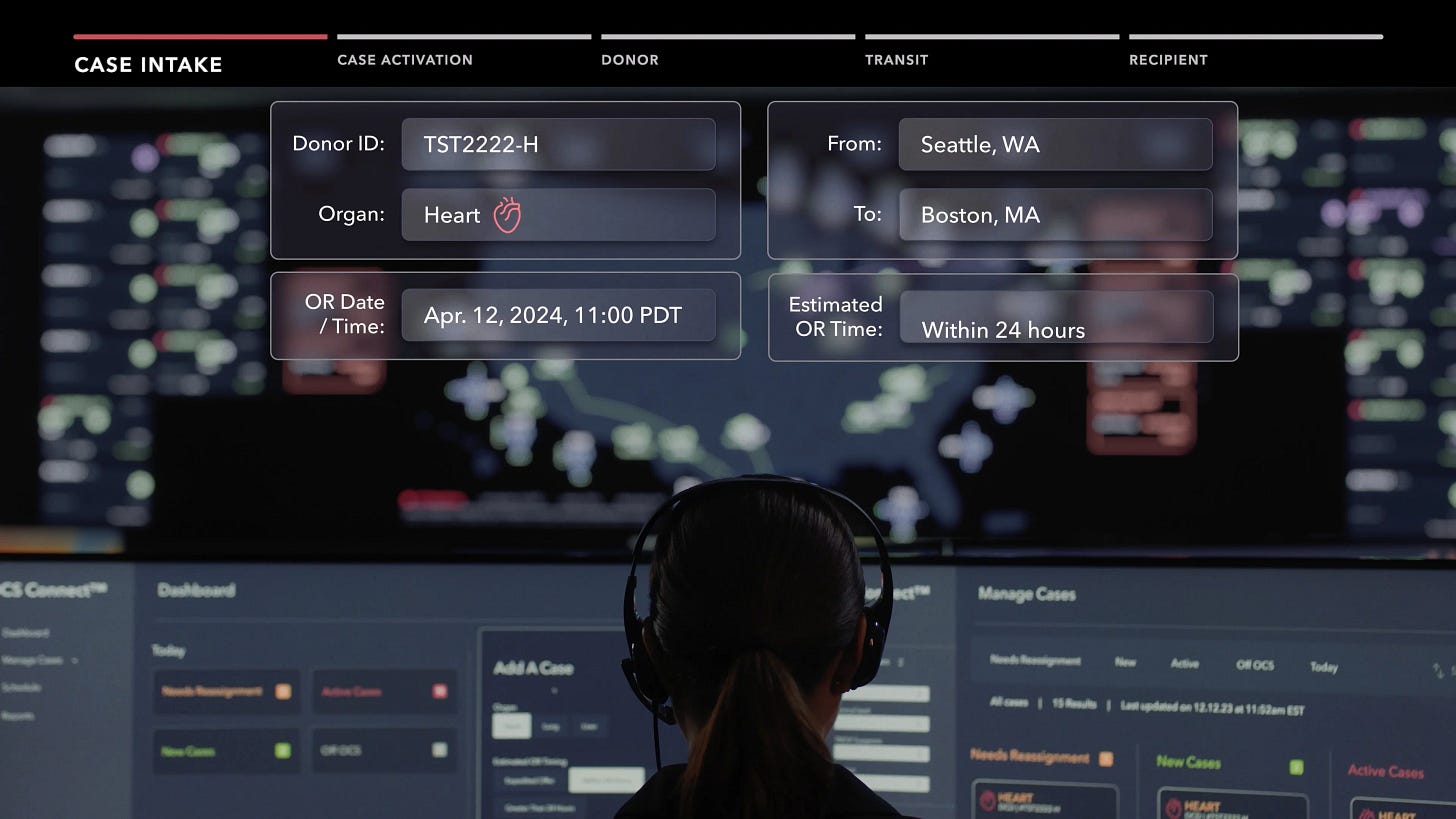
In 2021, they launched the National OCS Program (NOP). Instead of just selling the hardware, TransMedics now provides:
The Surgeons/Technicians: TransMedics personnel go to the donor site to manage the organ.
The Logistics: They handle the transport from point A to point B.
The Clinical Support: This turnkey solution allowed even small transplant centers to utilize OCS technology without massive upfront training or staffing.
Vertical Integration: The Aviation Move (2023)
In a move that surprised the market but solidified their moat, TransMedics acquired Summit Aviation in 2023.
Why it matters: By owning its own fleet of aircraft, TransMedics solved the “last mile” problem. They no longer rely on third-party charter flights, which are often the most unreliable part of the transplant process.
The Result: TransMedics became the only vertically integrated organ logistics company in the world.
Impact on the Industry
TransMedics has shifted the transplant paradigm in three critical ways:
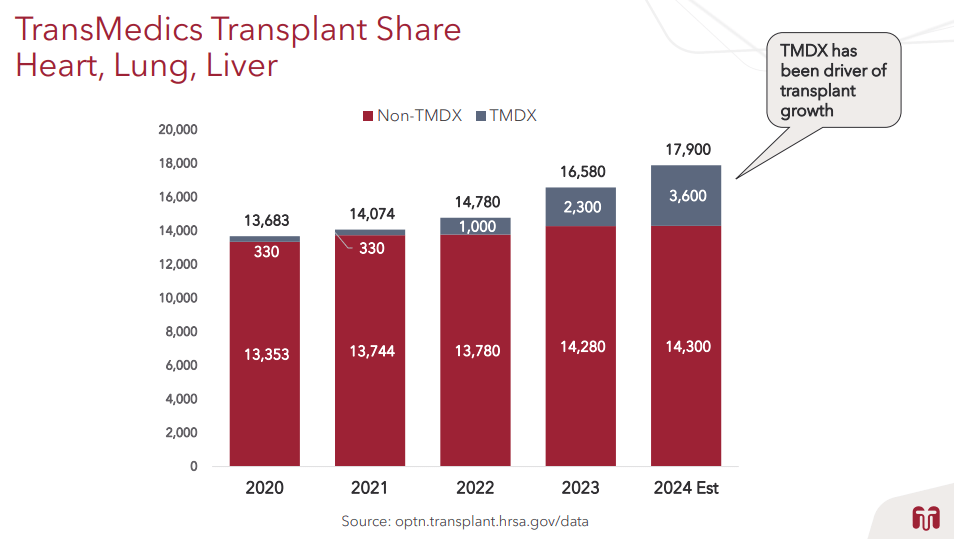
DCD Organs: They have unlocked the use of Donation after Circulatory Death (DCD) organs. These organs were previously rarely used for hearts, but with the OCS, they can be reanimated and assessed.
Time and Distance: Cold storage usually limits a heart’s out of body time to about 4 hours. The OCS can extend that significantly, allowing organs to be flown across the country.
Utilization Rates: By proving that marginal organs are actually viable when perfused, they are actively shrinking the organ transplant waiting list.
To complement the history of the company, here is an in-depth look at the man who has led TransMedics from its inception to its current position as a market leader.
The Architect: Dr. Waleed Hassanein
If TransMedics is defined by its defiance of the ice box method, its founder and CEO, Dr. Waleed Hassanein, is defined by a refusal to accept the limitations of traditional surgery. His trajectory is a classic example of a founder-led success story where clinical expertise meets aggressive industrial strategy.
The Aha Moment (1994)
The catalyst for TransMedics occurred during Hassanein’s first year of surgical residency at Georgetown University. He was tasked with transporting a donor heart and was struck by the primitive nature of the process: a multi-million dollar life-saving organ was being placed in a simple $20 plastic cooler filled with ice.
This experience led him to leave a promising career in surgery to solve a single problem: How do we keep organs alive outside the body?
Clinical and Educational Foundation
Hassanein’s leadership is rooted in deep technical credibility. He is not a traditional suit CEO; he is the primary inventor of the OCS technology.
Education: Earned his M.D. from Georgetown University School of Medicine.
Research: Completed a three-year cardiac surgery research fellowship at the West Roxbury VA Medical Center and Brigham and Women’s Hospital (a Harvard affiliate).
Expertise: His early research into ex-vivo heart perfusion won awards from the American Association for Thoracic Surgery long before TransMedics became a household name in the med-tech world.
Leadership Style: The Patient Aggressor
Analysts often describe Hassanein’s leadership style as a blend of clinical patience and business aggression.
The Long Game: He spent over 20 years navigating the grueling FDA approval process for three different organs. This required a rare level of persistence and the ability to keep investors engaged through decades of R&D.
Vertical Integration: His decision to buy an airline (Summit Aviation) in 2023 showcases a Bezos-like obsession with the supply chain. He recognized that the greatest technology in the world is useless if a third-party charter flight is delayed.
Operational Transition: He successfully transitioned the company from a medical device manufacturer to a full-service logistics provider (the NOP), a pivot that significantly boosted the company’s valuation and market reach.
Recognitions and Impact
Global Thinker: Named one of the Top 50 Global Thinkers by Foreign Policy magazine in 2015.
Disruptor: Recipient of the Tribeca Disruptive Innovators Award (2018) and a finalist for the European Inventor Award.
Wealth Creation: Since the 2019 IPO, Hassanein has grown TransMedics from a niche clinical project into a multi-billion dollar entity, recently achieving its first year of positive cash flow in 2024.
From Vision to Vessel: The Engineering of Life
The transition from Dr. Hassanein’s clinical observation in the 1990s to the commercial powerhouse of today was paved by a fundamental refusal to accept biological downtime. While the medical community had long viewed an organ in transit as a static object to be preserved, Hassanein viewed it as a living patient that required continuous care. This philosophical shift necessitated the development of the Organ Care System (OCS™)—a portable, miniature intensive care unit. By integrating complex perfusion pumps, oxygenators, and a proprietary nutrient solution, TransMedics moved beyond simple storage into the realm of ex-vivo functional maintenance. The following systems represent the three distinct iterations of this “living” transport technology, each custom-engineered to meet the specific metabolic demands of the heart, lung, and liver.
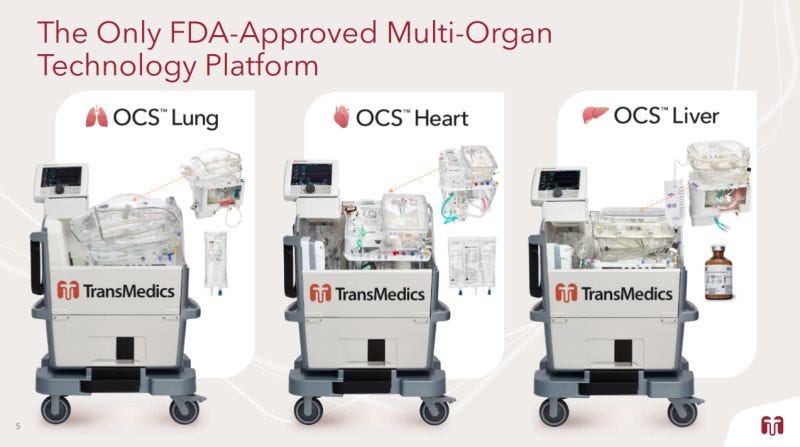
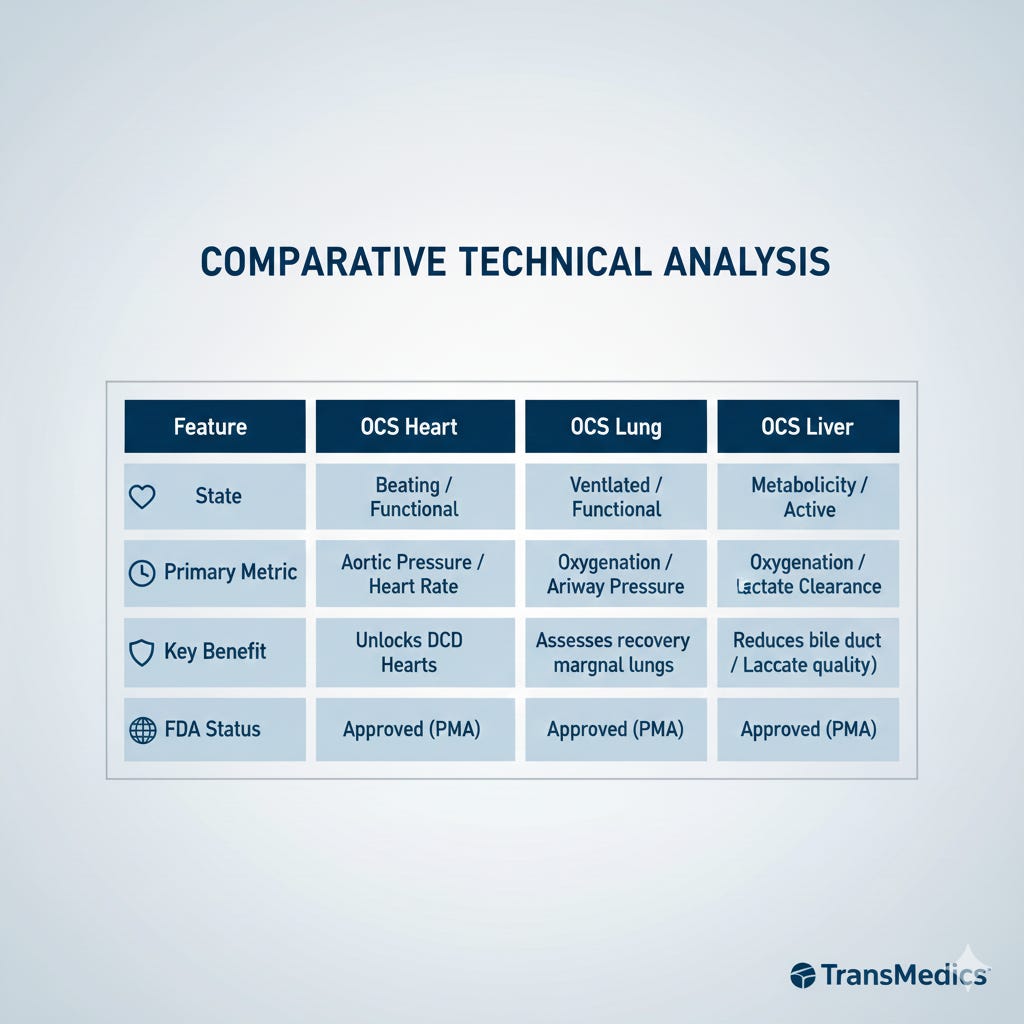
OCS™ Heart: The “Beating Heart” Technology
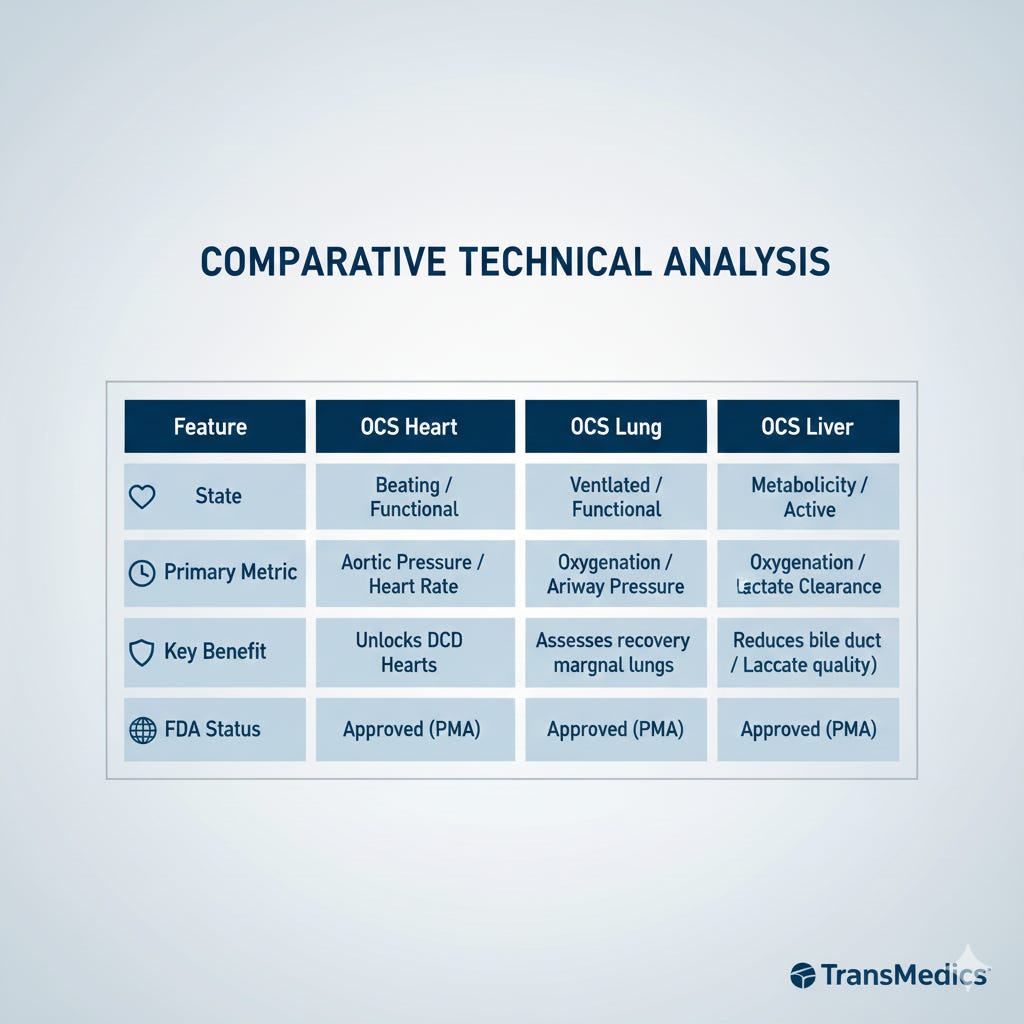
The OCS Heart is perhaps the most visually striking of the three. It is the only system in the world that allows a donor heart to be transported while it is still beating and metabolically active.
How it Works: The system perfuses the donor heart with warm, oxygenated donor blood enriched with nutrients and electrolytes. By maintaining a physiological state, the heart continues to beat in a controlled environment.
The “Ice Box” Problem: Cold storage (ischaemia) causes the heart muscle to stop moving and slowly die. This limits the transport window to roughly 4 hours.
The OCS Solution:
Distance: The OCS extends the “out-of-body” time, allowing hearts to be transported across several time zones.
DCD Revolution: It allows for Donation after Circulatory Death (DCD). Previously, if a heart stopped beating before retrieval, it was rarely used. With OCS, surgeons can re-animate the heart and assess its function before transplanting it.
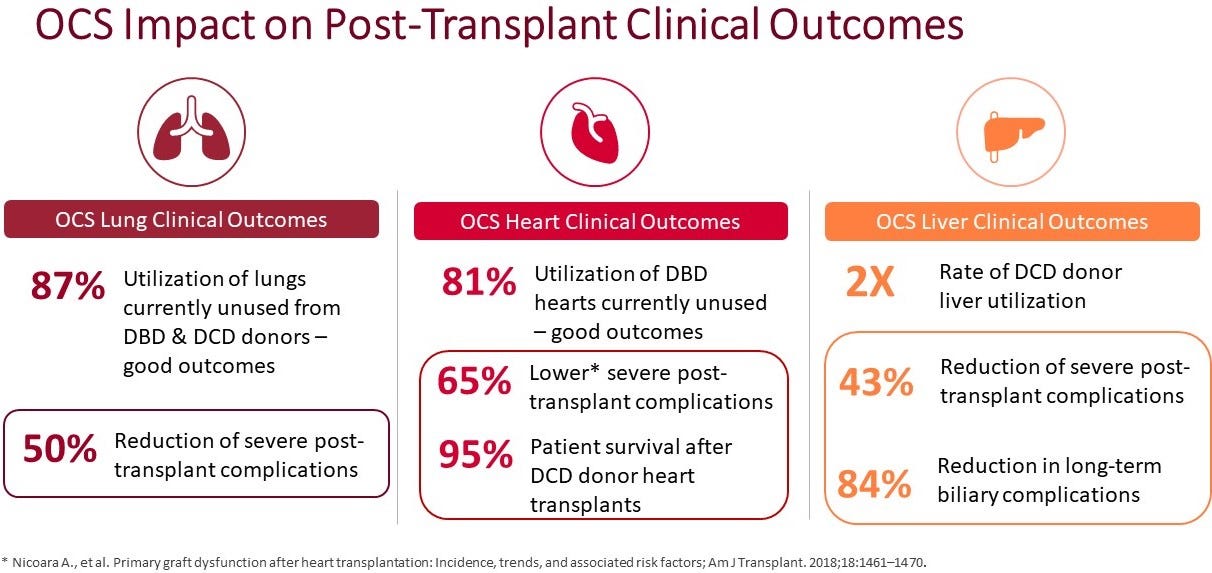
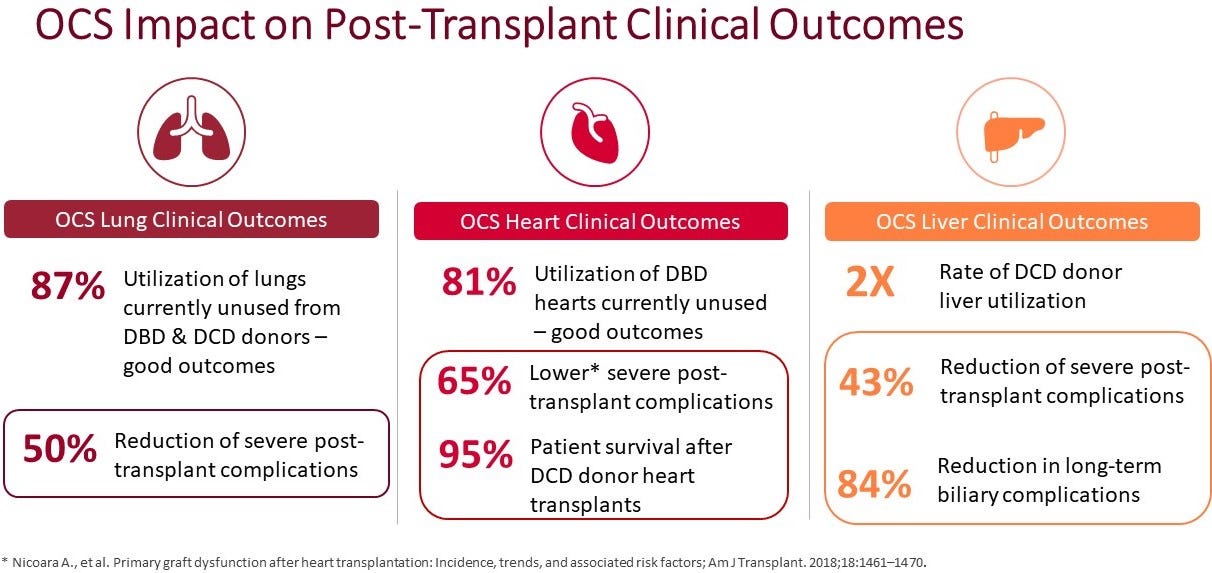
Clinical Data: In the PROCEED II trial, OCS showed a significant reduction in Primary Graft Dysfunction (PGD) compared to cold storage.
OCS™ Lung: The “Breathing Lung” Technology
The lungs are incredibly fragile organs, highly susceptible to injury during the traditional cooling and re-warming process. The OCS Lung addresses this by keeping the lungs ventilated and perfused.
How it Works: The lungs are placed in a sterile chamber where they are ventilated (breathed) and perfused with a specialized solution and blood.
The “Ice Box” Problem: Lungs are prone to “neurogenic pulmonary edema” and collapse when put on ice. Furthermore, surgeons cannot “see” how well a lung is oxygenating blood until it is already inside the recipient.
The OCS Solution:
Real-time Assessment: Surgeons can monitor airway pressures, gas exchange, and lung compliance during transport.
Recruitment: The system can actually improve the health of a lung during transit by clearing out small collapses (atelectasis) through controlled ventilation.
Increased Pool: Many donor lungs are rejected because they look “marginal.” The OCS allows clinicians to test these lungs; if they perform well on the machine, they are cleared for transplant.
OCS™ Liver: The “Functional Liver” Technology
The liver is a chemical factory. Keeping it cold stops its production of bile and essential proteins, making it difficult to know if the liver will “work” once it is transplanted until the surgery is nearly finished.
How it Works: The OCS Liver perfuses the organ through both the portal vein and the hepatic artery, mimicking the complex dual-blood supply of the human body.
The “Ice Box” Problem: Cold storage leads to “biliary complications”—scarring of the bile ducts—which is a leading cause of transplant failure.
The OCS Solution:
Bile Production: Clinicians can actually watch the liver produce bile while it is on the machine. If it produces healthy bile, it is a high-confidence sign of a successful transplant.
Lactate Clearance: The system monitors the liver’s ability to clear lactate, a key marker of metabolic health.
The Result: The PROTECT trial demonstrated a 50% reduction in early allograft dysfunction and a significant decrease in post-transplant complications compared to cold storage.
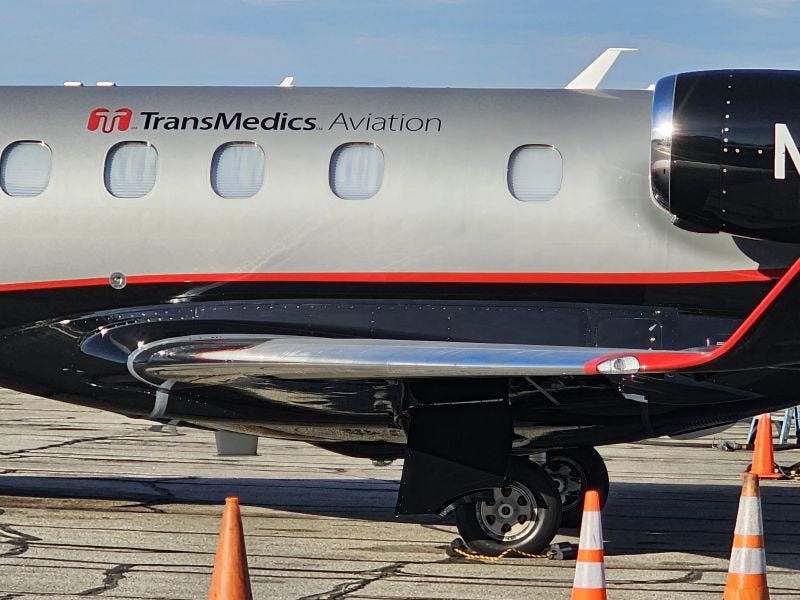
The Summit Aviation Acquisition: Owning the Sky
When TransMedics acquired Summit Aviation in 2023, a premier charter and aircraft management company, it wasn’t just buying planes, it was buying certainty. In the high-stakes world of organ transplantation, logistical failure is often the difference between life and death.
The Strategic Rationale: Solving the Flight Risk
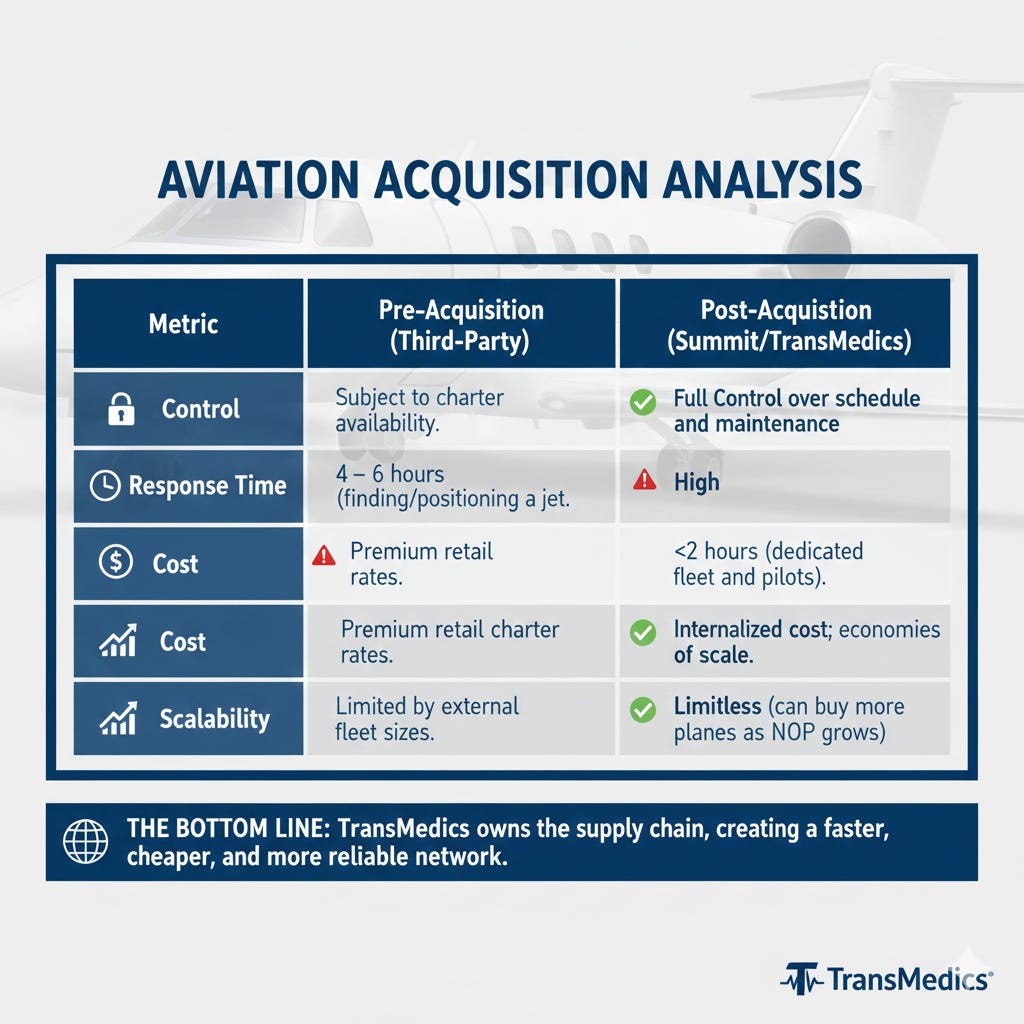
Before this acquisition, TransMedics relied on third-party private jet charters to move organs. This created three massive problems:
Reliability: Third-party jets could be delayed, grounded for maintenance, or booked by other clients, leading to wasted organs.
Cost Volatility: Charter prices fluctuated wildly, eating into TransMedics’ margins.
Availability: During peak times, finding a jet capable of carrying the OCS system and clinical team was often a bottleneck for the National OCS Program (NOP).
By bringing aviation in-house, TransMedics ensured that when a liver or heart becomes available, they have a plane ready to go 24/7/365, optimized specifically for OCS transport.
Vertical Integration: The Amazon of Organs
This acquisition made TransMedics the only vertically integrated organ transplant company in the world.
The Hardware: They own the OCS device.
The Labor: They own the NOP clinical teams.
The Transport: They own the fleet.
This full-stack approach allows them to capture the entire economic value of a transplant. Instead of just selling a $50k disposable kit, they are now managing a $100k+ end-to-end service.
Operational Scale and Efficiency
As of late 2024 and heading into 2025, the aviation arm has scaled significantly:
The Fleet: TransMedics has grown its fleet to approximately 15–20 aircraft (primarily Pilatus PC-12s and larger jets), strategically stationed across the U.S. to ensure a 2-hour response time to any major donor hospital.
Margin Expansion: While buying planes is expensive (CapEx), the long-term cost per flight is significantly lower than renting from third parties. This is a key driver for TransMedics’ path to sustained profitability.
The Moat: Any competitor wishing to challenge TransMedics now has to not only build a better machine but also build a nationwide airline.
The National OCS Program (NOP): Moving from Products to Platforms
The launch of the NOP marked TransMedics’ evolution from a medical device manufacturer into a full-scale healthcare services provider. It was a strategic masterstroke designed to remove the human barrier to adopting new technology.
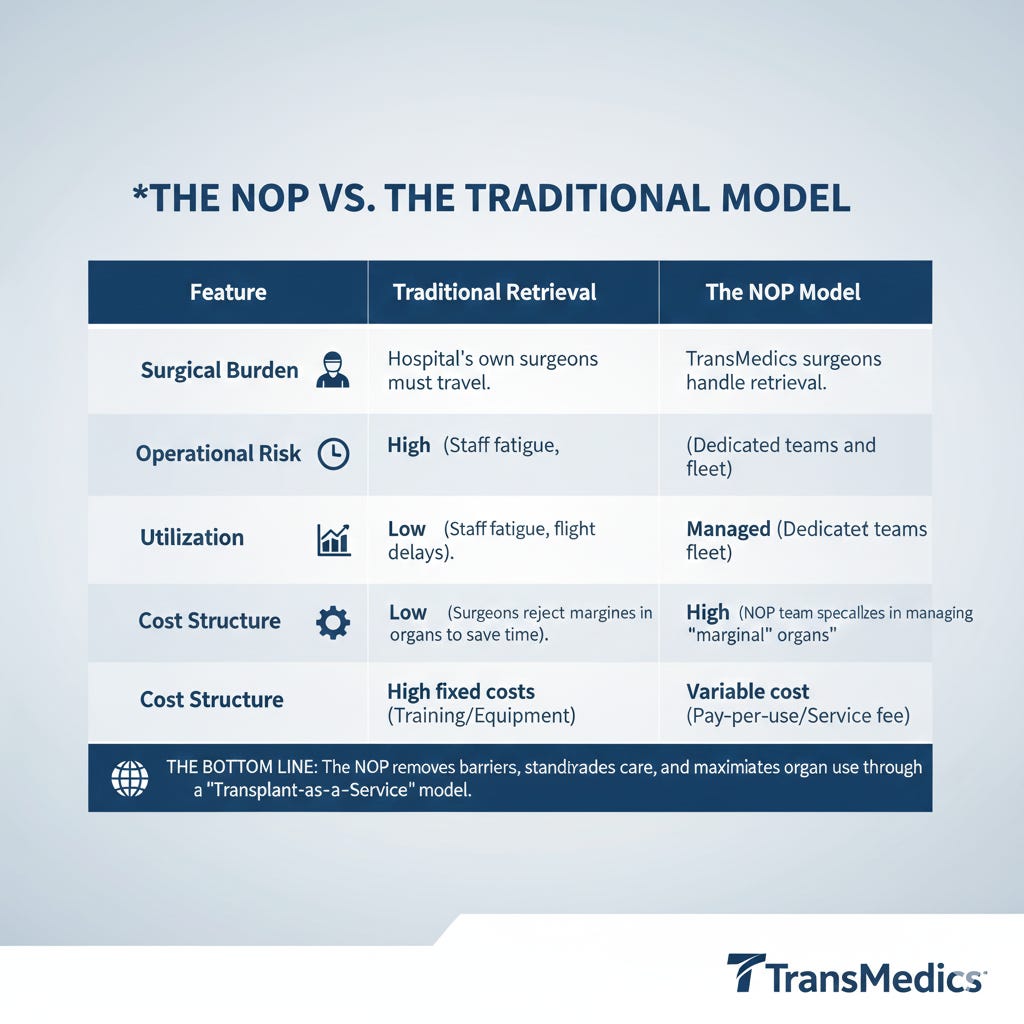
The Problem: The Surgical Bottleneck
Before the NOP, a hospital that wanted to use the OCS faced a massive logistical hurdle. They had to:
Purchase the expensive OCS hardware (CapEx).
Train their own surgical and perfusion teams to operate the complex device.
Deploy their own surgeons on long, grueling flights to donor hospitals, often in the middle of the night.
Because of this, many transplant centers, even those that loved the technology, simply didn’t have the staffing or the budget to use it consistently.
The Solution: A Turnkey Clinical Service
The NOP changed the model to Transplant-as-a-Service. TransMedics established a network of clinical hubs across the United States, staffed with their own specialized personnel.
The Retrieval Team: When an organ becomes available, a TransMedics-employed surgical and clinical team (trained specifically in OCS technology) goes to the donor hospital.
The Management: They perform the retrieval, put the organ on the OCS, and manage the organ’s health during the flight.
The Delivery: They deliver a “ready-to-implant” organ directly to the recipient’s hospital.
Strategic Impact: Why the NOP Changed Everything
1. Exponential Scaling
By providing the labor, TransMedics removed the need for hospitals to hire and train specialized staff. This allowed the company to scale into smaller and mid-sized transplant centers that previously couldn’t afford the overhead. Today, the NOP drives the vast majority of the company’s revenue growth.
2. Quality Control & Standardization
When the manufacturer of the device is also the one operating the device, the success rates improve. TransMedics personnel use the OCS every single day, leading to highly standardized care and better clinical outcomes for the organs being transported.
3. Maximizing the Aviation Moat
The NOP is the reason the 2023 acquisition of Summit Aviation was so critical. By owning the planes, TransMedics controls the entire chain:
The Tool: The OCS Machine.
The Talent: The NOP Clinical Team.
The Transport: The TransMedics Fleet.
The Economic Impact: Beyond the Device Price Tag
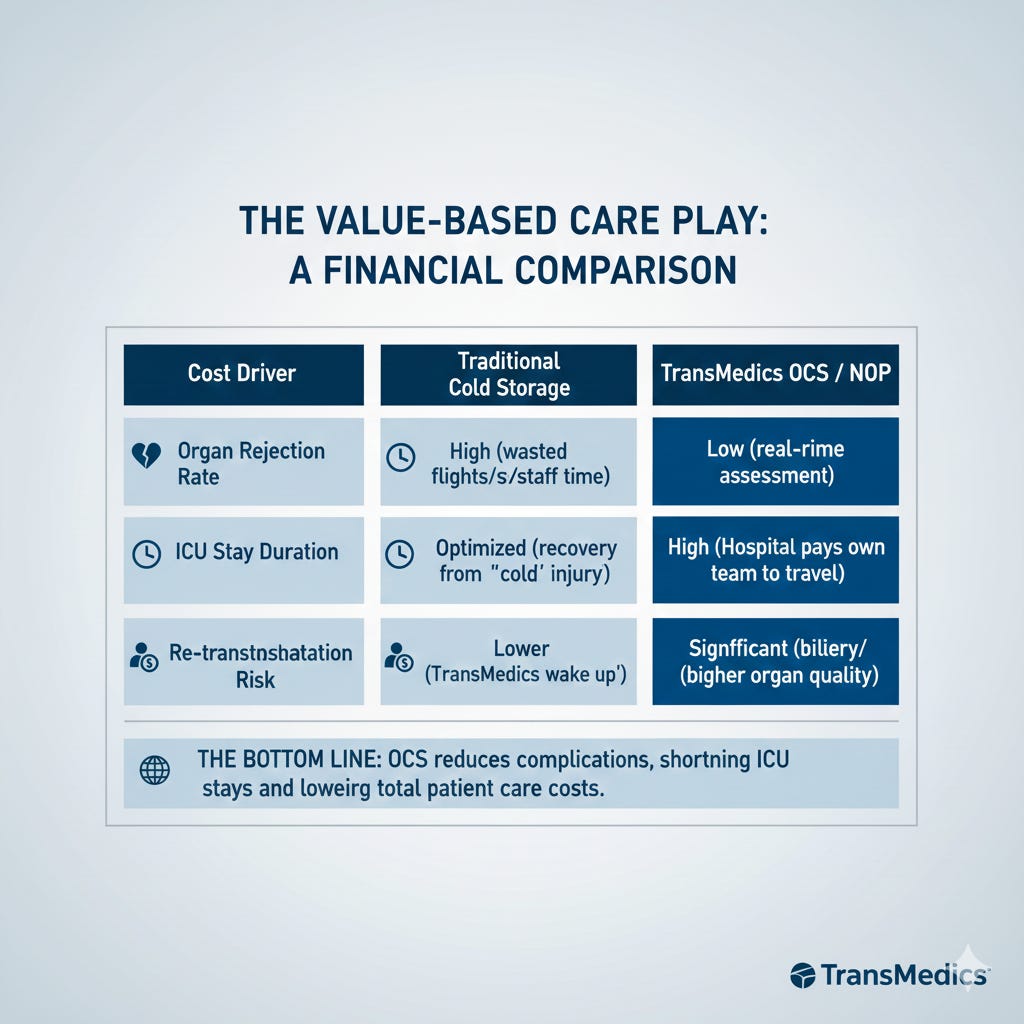
While the OCS disposables and NOP services carry a higher upfront cost than a $20 bag of ice, the “total cost of care” is where TransMedics makes its financial case. By improving the quality of the organ, they drastically reduce the most expensive part of a transplant: the post-operative recovery.
Reducing ICU and Hospital Length of Stay (LOS)
The most significant “wallet-drain” for a transplant center is a patient who remains in the ICU for weeks due to an organ that is slow to start (Delayed Graft Function).
The Data: Clinical trials for the OCS Liver showed a significant reduction in Early Allograft Dysfunction (EAD). Patients with high-functioning organs move out of the ICU and into general wards faster.
The Saving: In the U.S., an ICU bed can cost between $5,000 and $10,000 per day. Shortening a stay by even 3–4 days can offset the entire cost of the OCS procedure.
Minimizing Costly Complications
“Cold” organs are prone to specific, expensive complications:
Heart: Primary Graft Dysfunction (PGD) often requires the use of an ECMO machine (temporary life support), which costs tens of thousands of dollars in equipment and specialized staffing.
Liver: Ischemic Cholangiopathy (bile duct scarring) often requires repeat surgeries or even re-transplantation. By keeping the liver “warm,” OCS significantly lowers the rate of these complications, protecting the hospital from the massive financial loss of a “failed” transplant.
The NOP Efficiency: Outsourcing the Logistics
Before the National OCS Program (NOP), a transplant center had to pay its own surgeons and staff to fly across the country to retrieve an organ. This led to:
Surgeon Burnout: High-value surgeons spent 12 hours traveling instead of performing surgeries.
Overtime Pay: Surgical teams staying on call for organs that might eventually be rejected upon arrival.
The Pivot: By using TransMedics’ NOP, hospitals effectively outsource the risk and the labor. They only pay for a “ready-to-implant” organ, allowing their staff to focus on the actual transplant surgery, which is the hospital’s primary revenue driver.
Why TransMedics Fired the Middleman
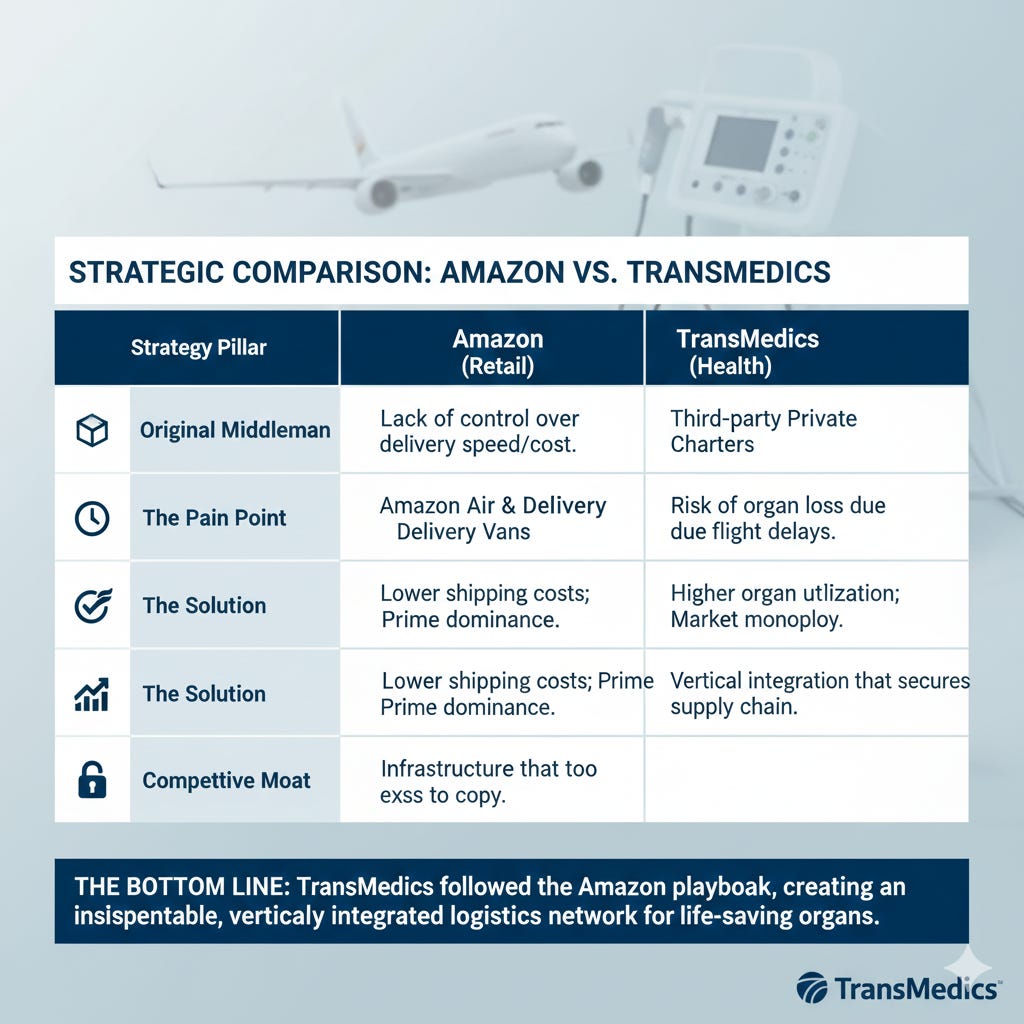
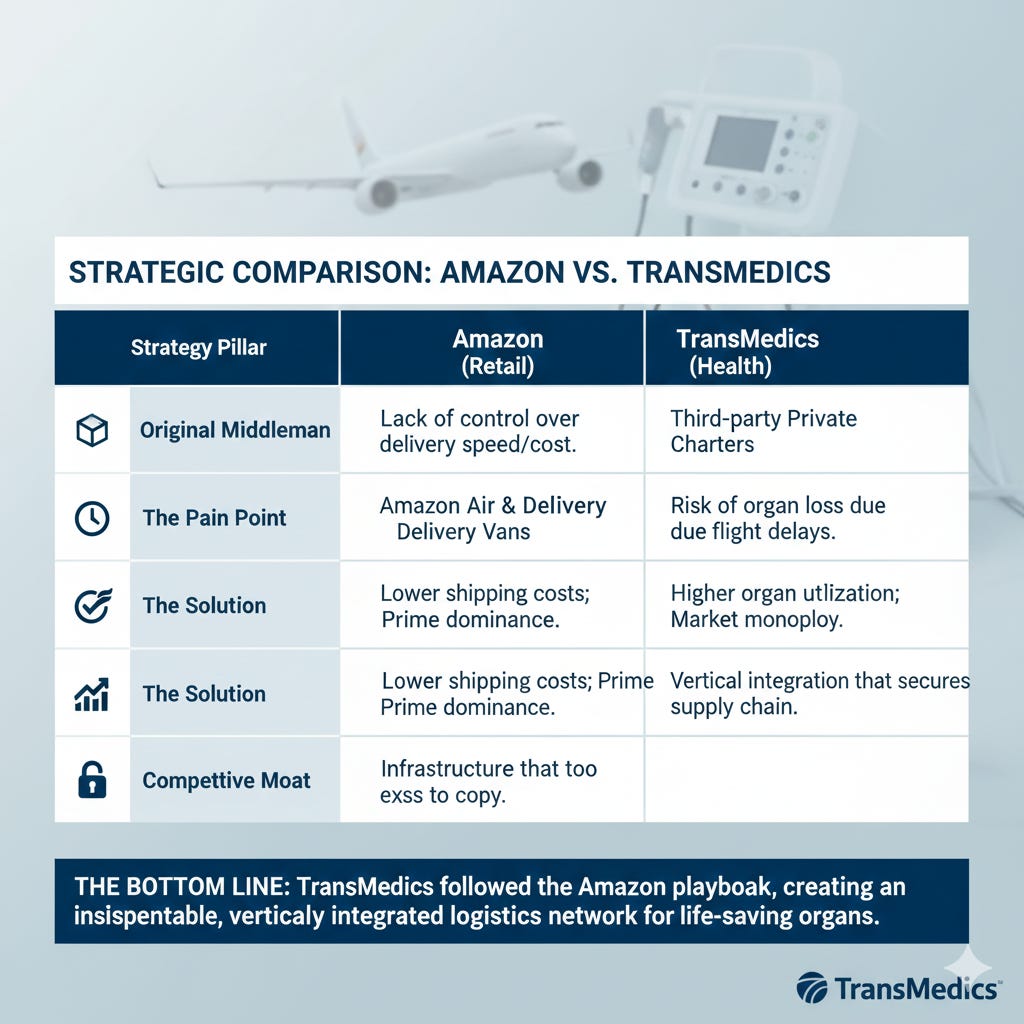
In the investment world, the highest praise for a company is often that they are building a moat. By acquiring Summit Aviation, Dr. Waleed Hassanein didn’t just buy a fleet; he executed a strategy famously pioneered by Jeff Bezos. To understand the future of TransMedics, one must look at why Amazon eventually stopped relying on FedEx and UPS.
The Logistics Trap
For years, Amazon was at the mercy of FedEx and UPS. If a FedEx driver was late, or if UPS increased their holiday rates, Amazon’s brand took the hit, even though they didn’t own the trucks. Amazon realized that as long as they were renting their delivery network, they couldn’t control the customer experience or their own profit margins.
TransMedics faced an identical Transplant Trap:
The Vulnerability: Before 2023, TransMedics could have the most advanced organ-saving technology in the world, but if a third-party charter flight was delayed due to a mechanical issue or a scheduling conflict, the organ would die, and the transplant would fail.
The Brand Risk: In the eyes of the surgeon and the patient, a failed transport is a failure of the TransMedics system, regardless of who owned the plane.
Vertical Integration as a Weapon
Amazon solved their problem by launching Amazon Air and building their own Last Mile delivery network. TransMedics followed this exact playbook by acquiring Summit Aviation.
By moving from a Medical Device Company to a Logistics Powerhouse, TransMedics achieved three key Amazon-esque advantages:
Eliminating the Margin Stack: In the old model, the charter company took a profit, the logistics broker took a profit, and TransMedics took a profit. By owning the planes, TransMedics keeps the entire fee, allowing them to lower prices for hospitals while increasing their own internal margins.
Unrivaled Reliability: Just as Amazon Prime’s One-Day Delivery is only possible because they own the planes and trucks, TransMedics’ promise of a Ready-to-Implant Organ is only possible because they own the flight path.
The Impossible Moat: It is relatively easy for a startup to invent a new medical pump. It is nearly impossible for a startup to build a nationwide network of surgical teams (NOP) and a private air fleet to support them.
Investment Thesis: The Infrastructure of Human Life
TransMedics is no longer a speculative medical device company; it has evolved into a high growth, vertically integrated logistics platform that owns the standard of care for organ transplantation. The thesis for the company rests on its ability to turn a fragmented, inefficient medical process into a streamlined industrial service.
The 10,000 Transplants North Star
The most critical component of the TransMedics thesis is the CEO’s stated goal: Achieving 10,000 OCS-managed transplants per year by 2028.
The Current Gap: Currently, thousands of donated organs are wasted annually in the U.S. due to the limitations of cold storage and transportation logistics.
The Opportunity: By proving that OCS can rescue marginal organs and extend the distance they can travel, TransMedics is essentially expanding the total addressable market (TAM) of the transplant industry itself.
Economic Scaling: As the company approaches this 10,000 organ milestone, the fixed costs of its aviation fleet and clinical hubs (NOP) are spread across more procedures, leading to significant margin expansion and operational leverage.
The Monopoly on Living Logistics
TransMedics has created a Triple Moat that is nearly impossible for competitors like OrganOx or XVIVO to replicate in the near term:
Regulatory Moat: They are the only company with FDA Premarket Approval (PMA) for heart, lung, and liver perfusion.
Operational Moat: The National OCS Program (NOP) provides a nationwide network of surgical specialists that hospitals now rely on for their daily operations.
Aviation Moat: By owning the fleet (Summit Aviation), they have removed the single greatest point of failure in the transplant chain.
The Shift to Positive Cash Flow
A major turning point for the investment thesis occurred in 2024, when TransMedics achieved its first full year of positive cash flow.
Revenue Growth: The company has consistently maintained a high double-digit (and sometimes triple-digit) year-over-year revenue growth rate.
Pricing Power: Because the OCS and NOP provide such a massive Value-Based benefit to hospitals (as detailed in the earlier sections), TransMedics maintains significant pricing power in a market with no direct, full-service competitors.
Revenue growth
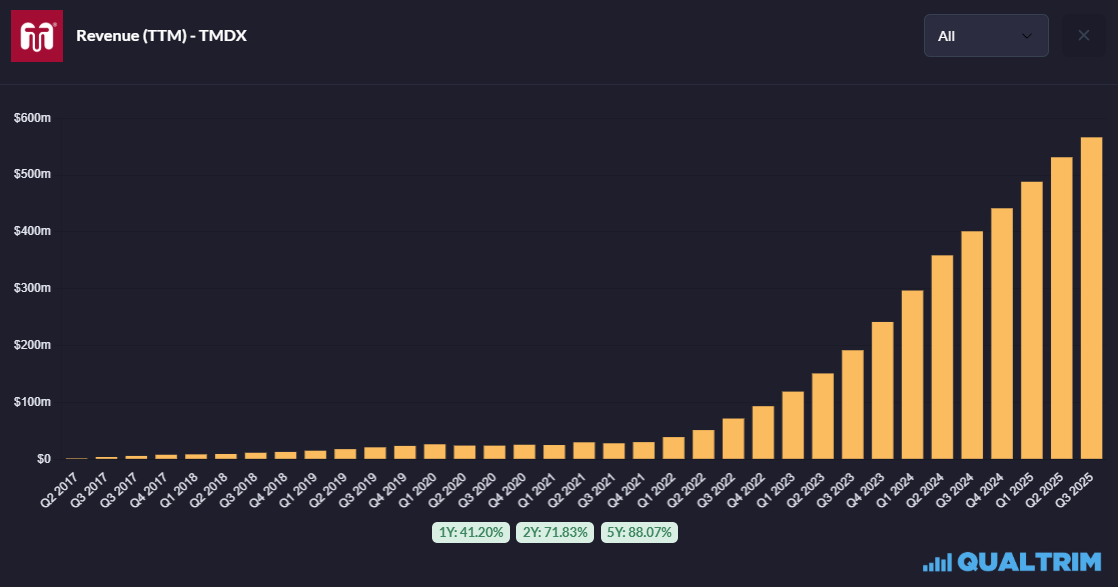
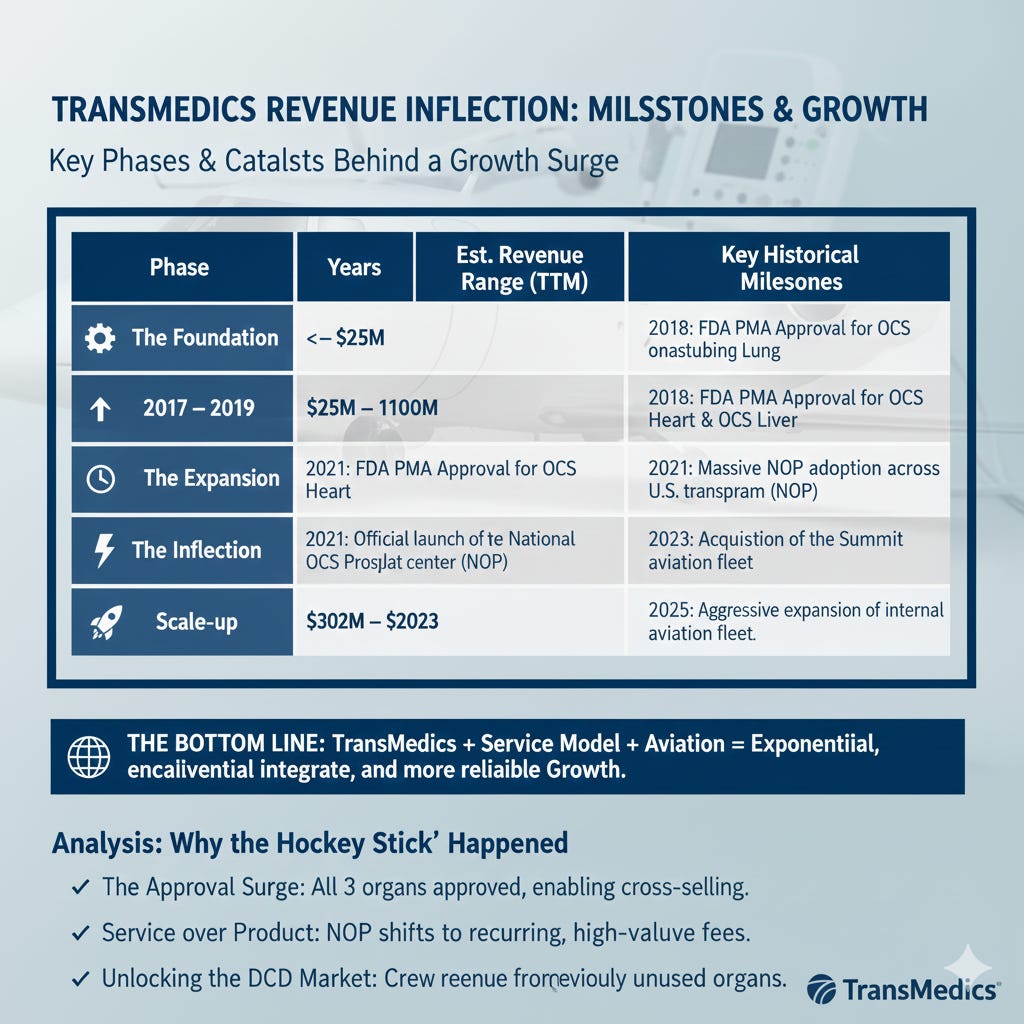
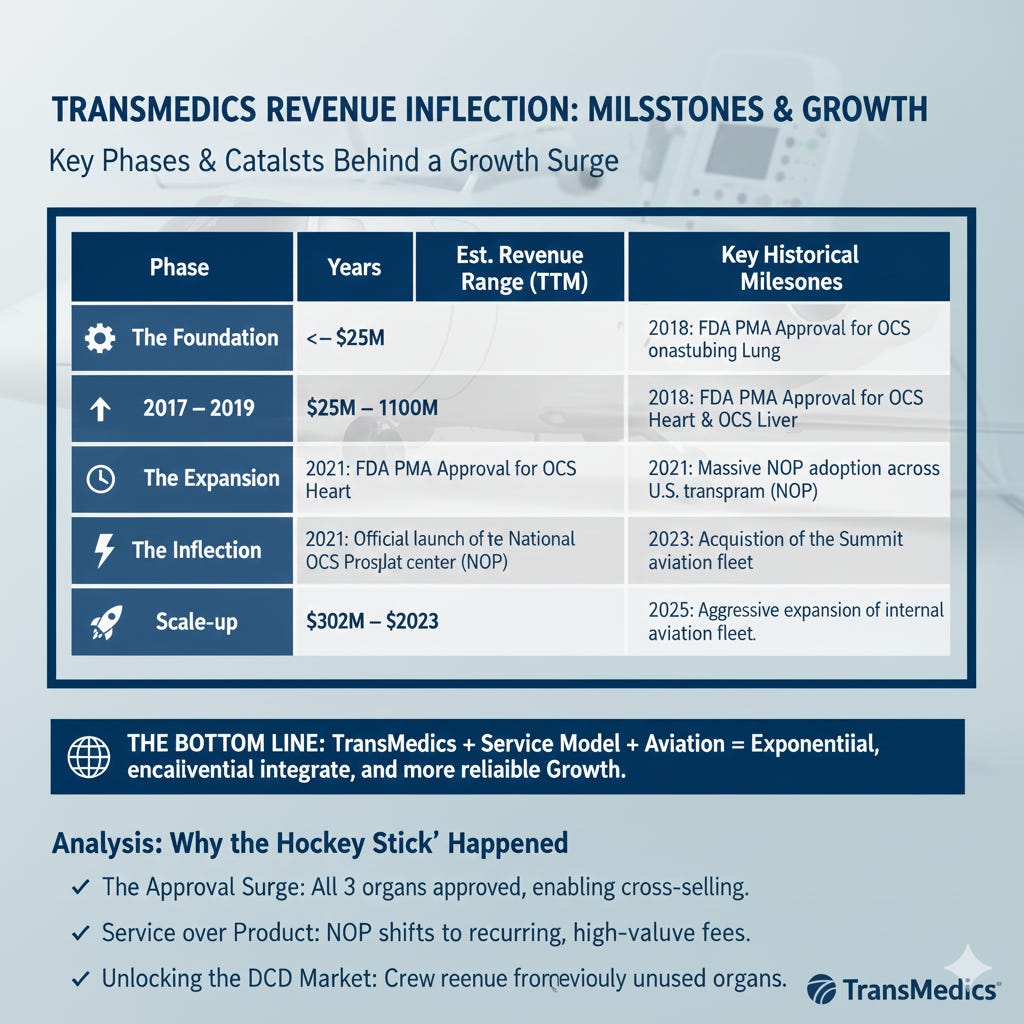
TransMedics has experienced an extraordinary revenue inflection point starting in early 2022, transitioning from a niche medical device player to a high-scale clinical platform. Between Q2 2017 and Q4 2021, revenue growth was steady but modest, rarely exceeding the $50 million Trailing Twelve Month (TTM) mark. However, following the 2021-2022 triple FDA approval for heart, lung, and liver, and the aggressive rollout of the National OCS Program (NOP), the trajectory turned nearly vertical. By Q3 2025, TTM revenue soared toward the $600 million range, representing a massive 5-year growth rate of 88.07%. This hockey-stick growth reflects the company’s successful pivot from selling hardware to providing a full-service logistics and clinical ecosystem, capturing a much larger share of the total transplant spend.
Why the Hockey Stick Happened
The Approval Surge: Having all three major organs (Heart, Lung, Liver) approved allowed the company to cross-sell into entire transplant departments rather than just single surgical units.
Service over Product: The NOP changed the revenue model from a one-time equipment sale to a recurring, high-value service fee for every organ transported.
Unlocking the DCD Market: By making DCD (Donation after Circulatory Death) organs viable, TransMedics effectively created new revenue where none previously existed in the industry.
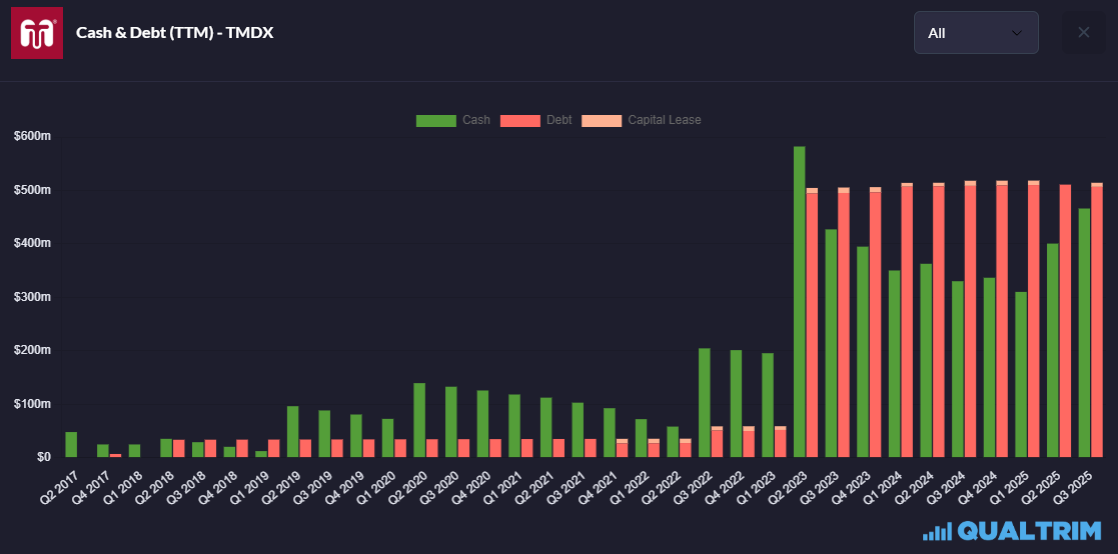
Balance Sheet
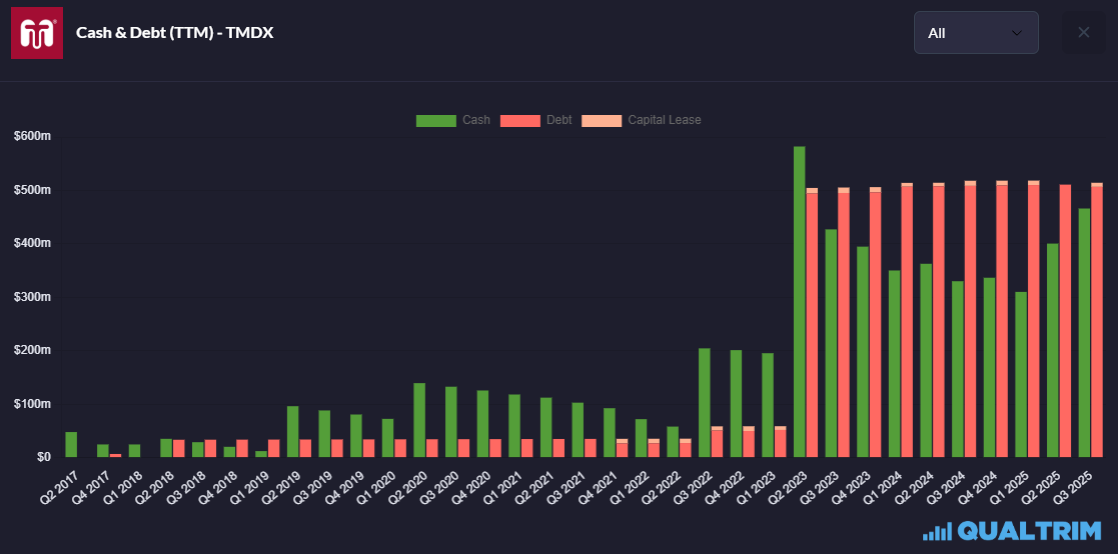
TransMedics' balance sheet underwent a significant structural shift in Q2 2023, characterized by a massive increase in both cash reserves and long-term debt. Prior to this, the company maintained a relatively lean profile with cash and debt levels generally remaining below the $200 million mark. However, as of Q3 2025, the balance sheet reflects a position with over $400 million in cash, providing substantial liquidity for its aggressive vertical integration strategy. This is balanced against roughly $500 million in total debt, a figure that has remained fairly stable since the initial spike in mid 2023. This spike in debt can likely tied to its acquisition of Summit and subsequently the growing aviation fleet. The robust cash position, despite the debt load, resembles that of a strategic war chest designed to fund the expansion of the National OCS Program and the acquisition of additional aircraft as the company moves toward its 10,000-transplant goal.
Navigating Growth: The Reality of Share Dilution
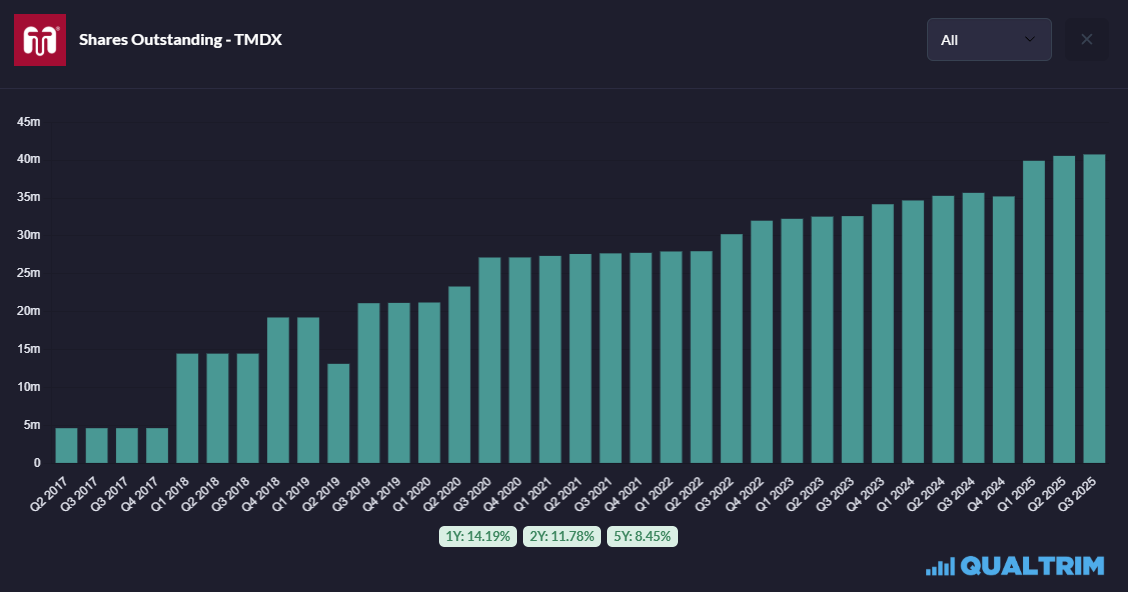
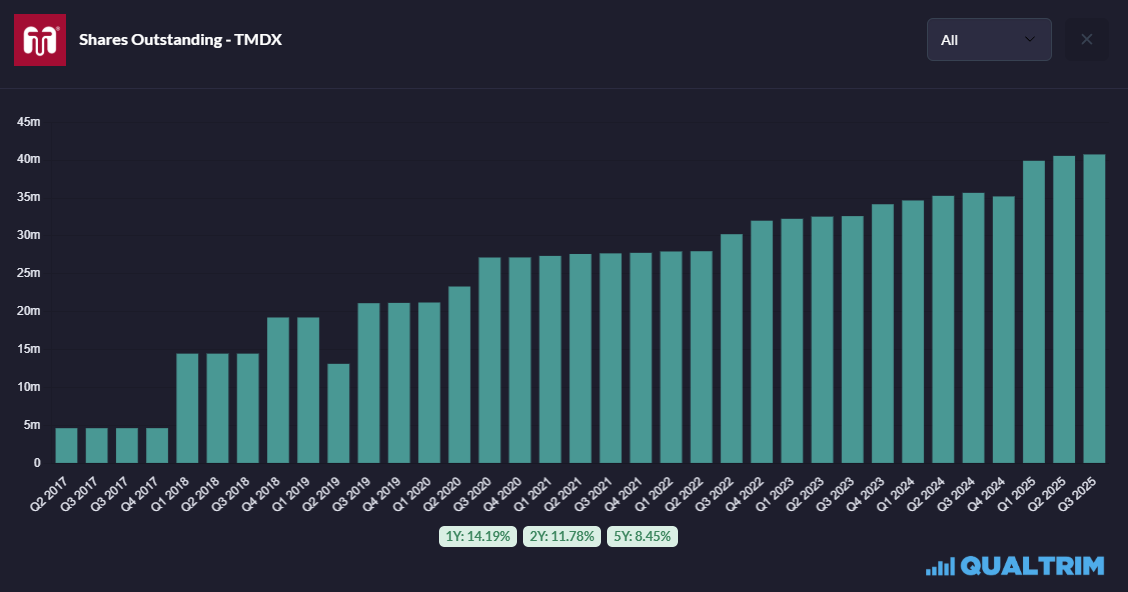
As TransMedics scaled from a clinical stage startup to a multi billion dollar platform, it utilized equity as a primary fuel for expansion. Shares outstanding have climbed significantly from approximately 5 million in Q2 2017 to over 40 million by Q3 2025. This represents a 5-year average annual dilution rate of 8.45%, with more aggressive jumps occurring during key capital-intensive phases, such as the 2019 IPO and the 2022 rollout of the National OCS Program (NOP). While dilution is often a red flag for investors, in TransMedics’ case, it has been used to fund the vertical integration and aviation infrastructure that ultimately drove the 88% 5-year revenue growth mentioned earlier. The stabilization of share counts between Q1 2025 and Q3 2025 suggests that the company may be entering a more mature phase where it can rely more heavily on its now-positive cash flow rather than further equity raises.
The Founder’s Conviction: Insider Buying
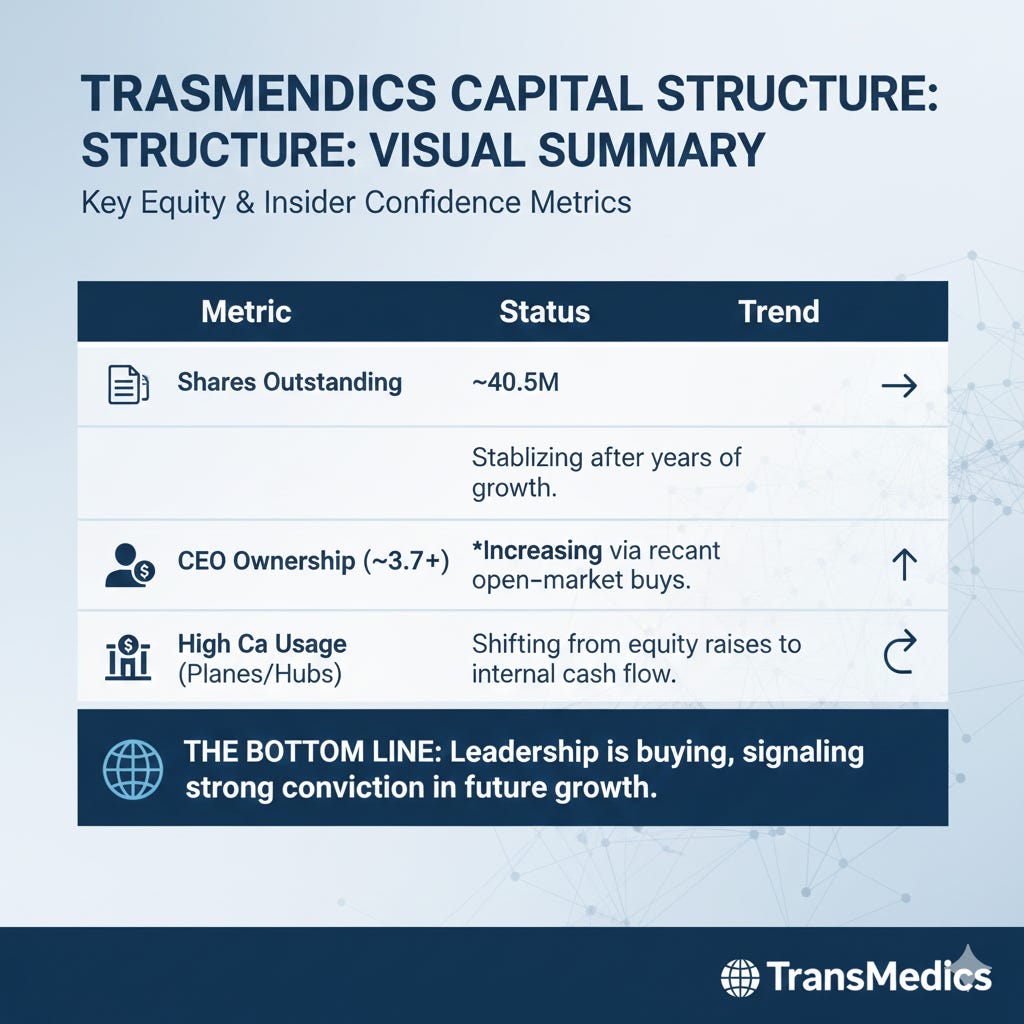
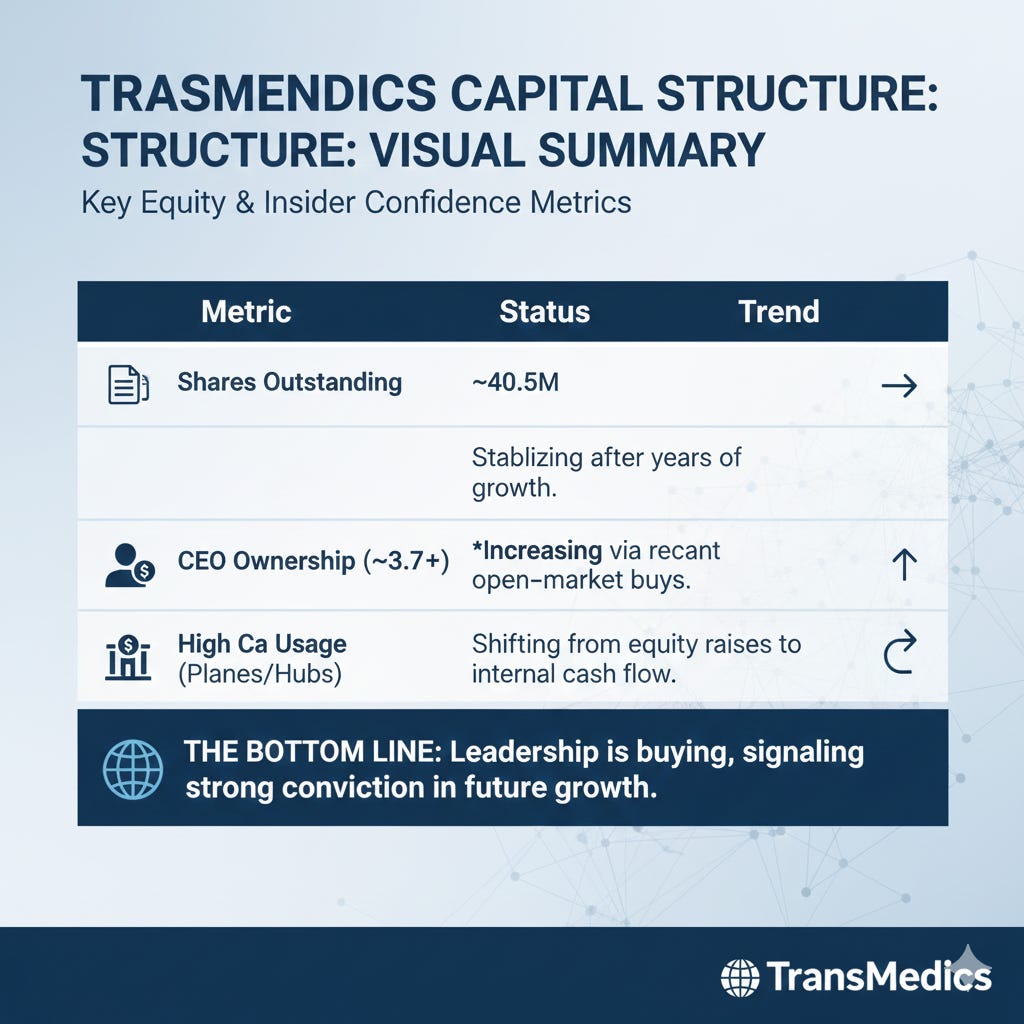
Counterbalancing the dilution is the aggressive conviction shown by Dr. Waleed Hassanein. As the architect of the company, Hassanein has historically maintained a significant ownership stake, but his recent actions in late 2024 and 2025 have been particularly notable for investors. Following a period where the stock faced volatility due to the costs of the Summit Aviation acquisition, Hassanein signaled his confidence by purchasing additional shares on the open market. This move reinforced his position as one of the company’s largest individual shareholders, with a stake typically estimated around 3.5% to 4% of the total company.
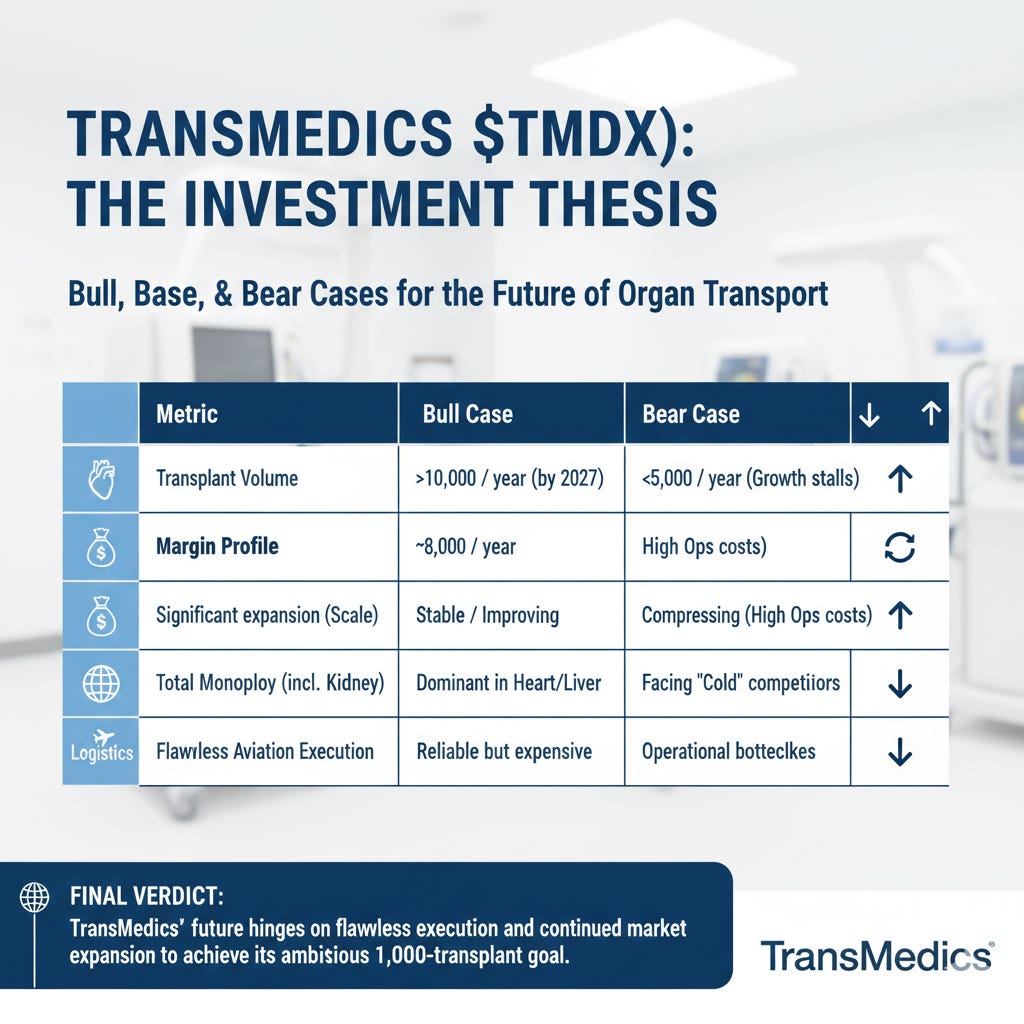
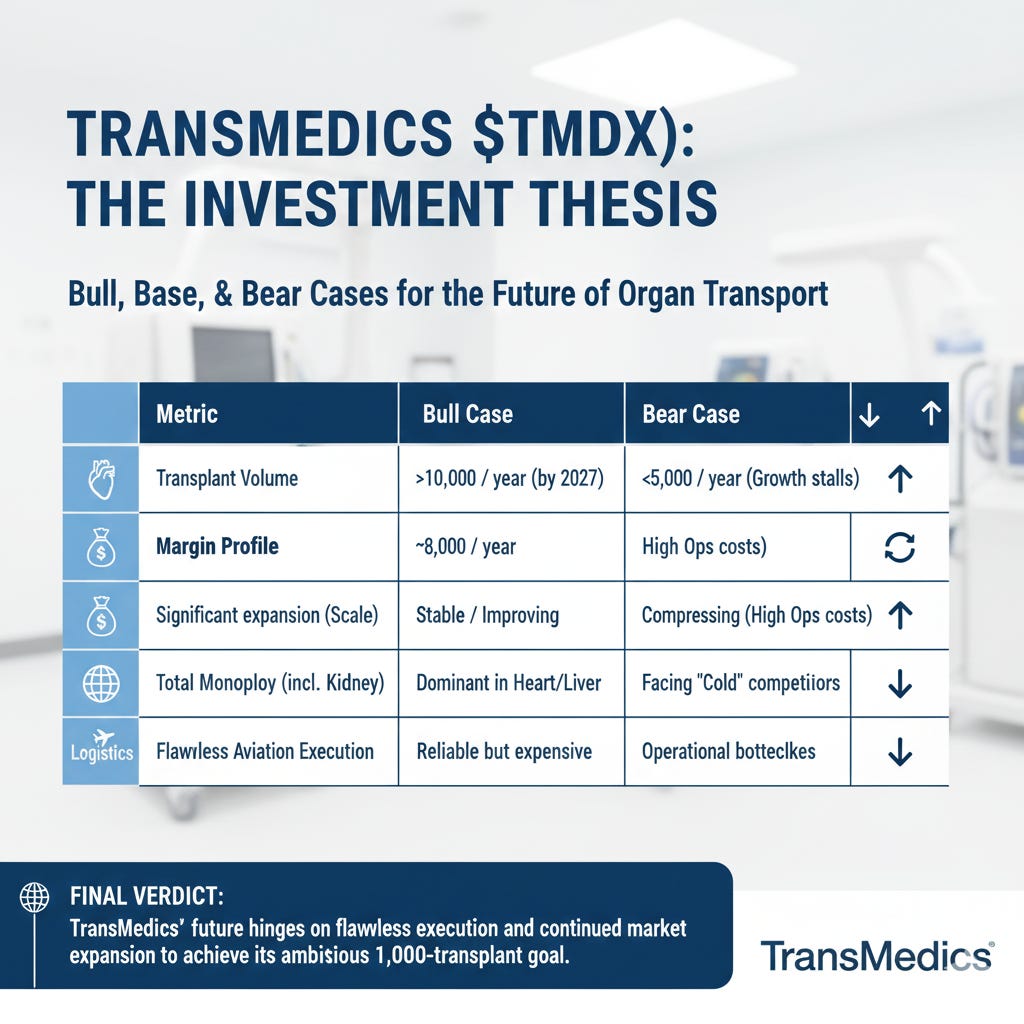
The Base Case: The Standard of Care
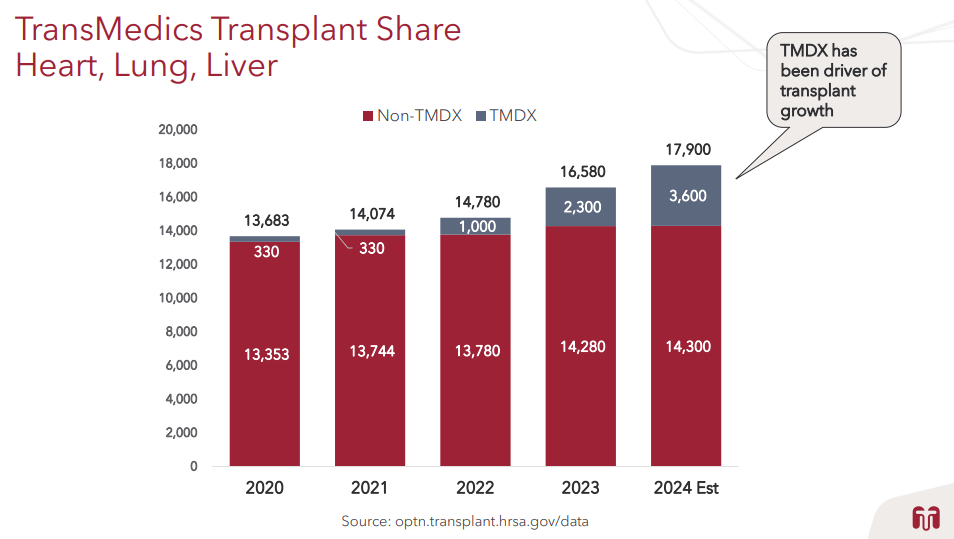
The Catalysts: The company maintains its steady climb toward the 10,000-transplant goal, though it may take until 2028–2029 to reach it. Adoption of the OCS for Heart and Liver remains high, while the Lung market grows at a moderate pace.
Economic Outcome: The company remains consistently cash-flow positive. The aviation arm (Summit) operates reliably but faces standard industry headwinds like rising jet fuel prices or pilot labor shortages.
Valuation Drive: TransMedics is valued as a Steady Compounder. It trades at a slight premium because of its massive moat, acting as a critical utility for the U.S. healthcare system.
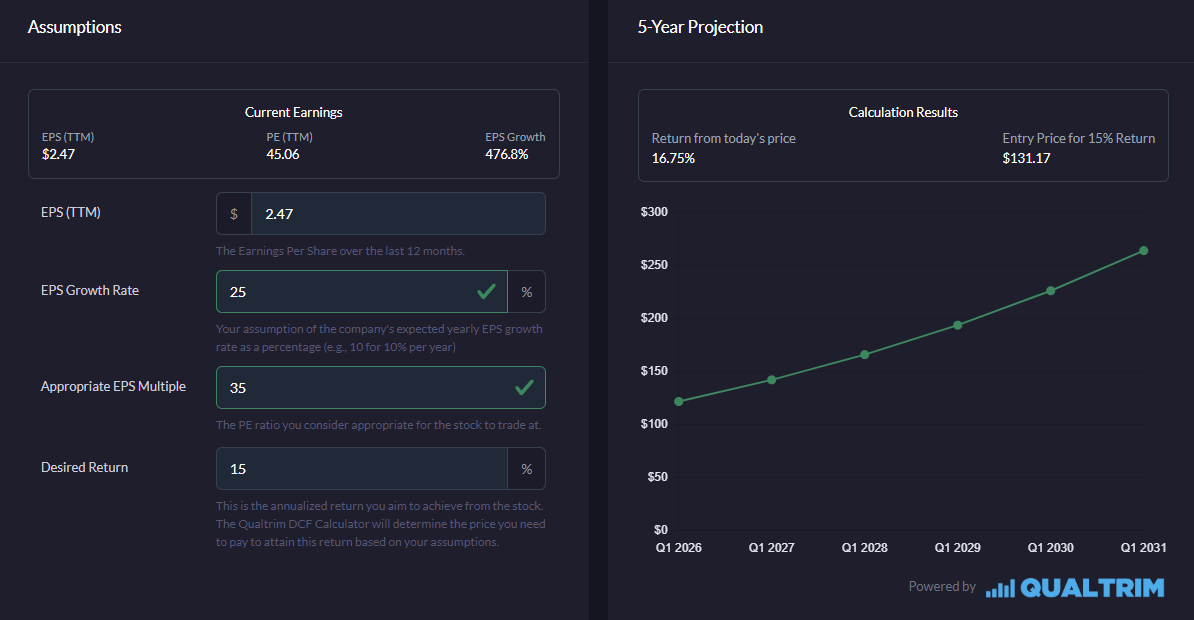
In my base case scenario I see TransMedics taking off full steam ahead growing its EPS at a CAGR of 25%. I primarily view this coming from revenue growth, but also some margin expansion to the tune of 1-2% annually. Being a dominate fast growing player in the med tech space I think TransMedics is likely to trade at a slight premium to the majority of the market and have set an exit multiple of 35x.
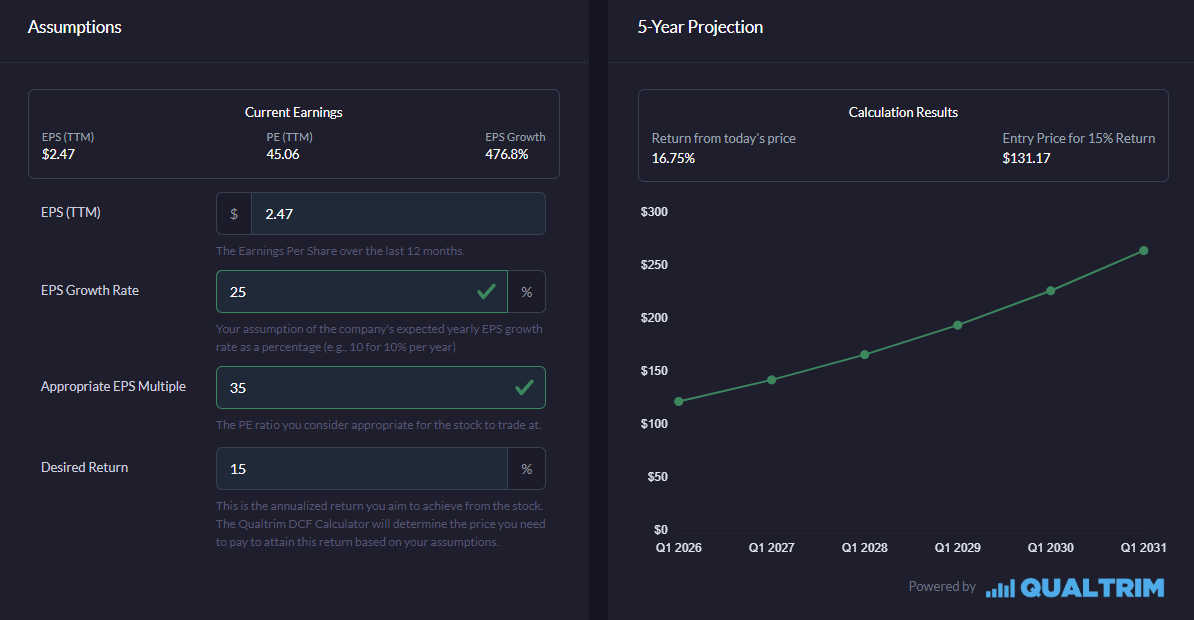
In this scenario, I see TransMedics returning 16.75% annually over the next 5 years representing a solid, projected market beating return.
The Bear Case: The Complexity Wall
The Catalysts: A major logistical or clinical failure, such as a series of grounded flights or a regulatory shift in how Medicare reimburses for service-based organ retrieval—stalls growth. A competitor develops a simpler, cheaper cold perfusion technology that doesn’t require a private airline.
Economic Outcome: Managing a fleet of planes and a nationwide surgical staff proves to be too complex and heavy, causing margins to compress. The share dilution seen in the past becomes a recurring necessity to fund high operational costs.
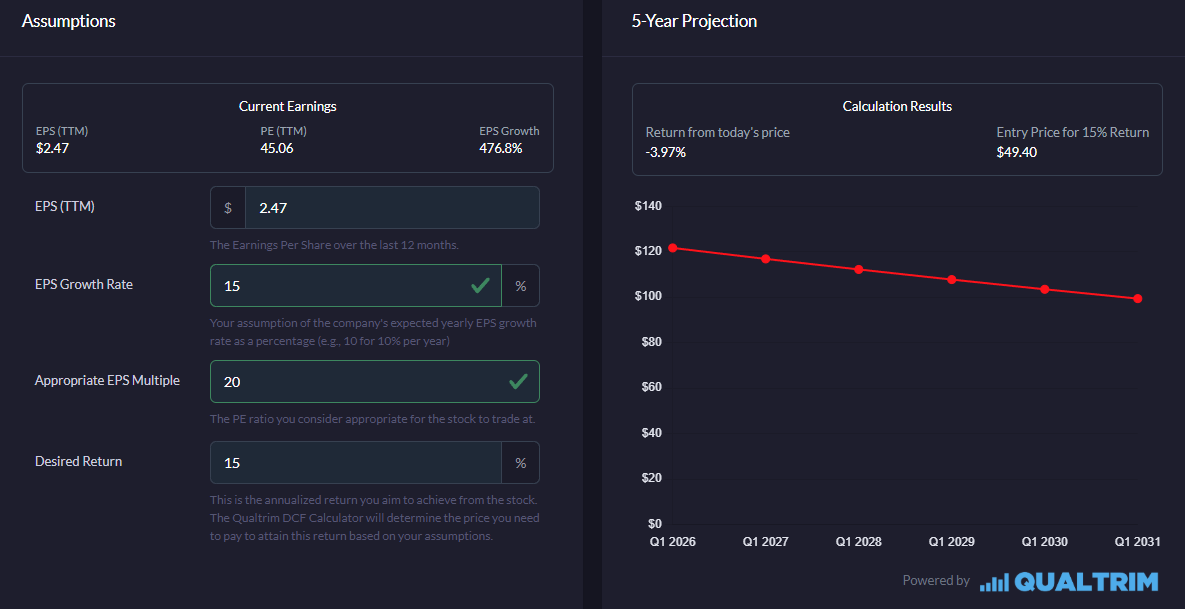
Valuation Drive: The market re-rates the company from a MedTech/Platform multiple to a Logistics/Aviation multiple, which is significantly lower. Growth slows to the 15% range as the company hits a ceiling in the U.S. market.
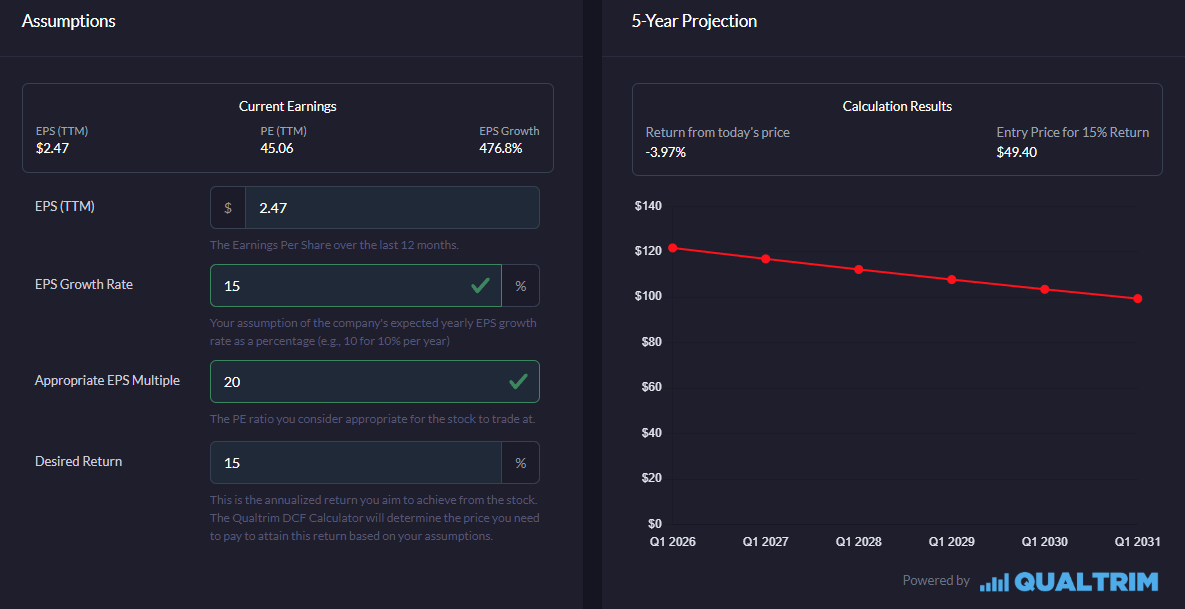
In this model we haven’t quite thrown the kitchen sink at it but we are very close. In my bear case I see revenue coming down from a 5 year CAGR of 88% to 15% and see the companies TTM P/E contracting from 45x to 20x. In this scenario the stock performs poorly with a CAGR of -4%, however this bear case may be unlikely to occur.
The Bull Case: The Amazon of Organs
The Catalysts: TransMedics successfully hits its 10,000-transplant goal ahead of schedule, proving that its aviation and NOP infrastructure can scale efficiently. The company expands into kidney transplantation, the largest organ market by volume.
Economic Outcome: As flight volumes increase, the company’s internal margins explode because the cost per flight drops. TransMedics becomes the undisputed monopoly, making the ice box method obsolete and perhaps even illegal for certain high-risk transplant categories.
Valuation Drive: Revenue growth stays above 30%, and the company begins returning capital to shareholders or acquiring smaller innovative biotech firms to further improve organ health.
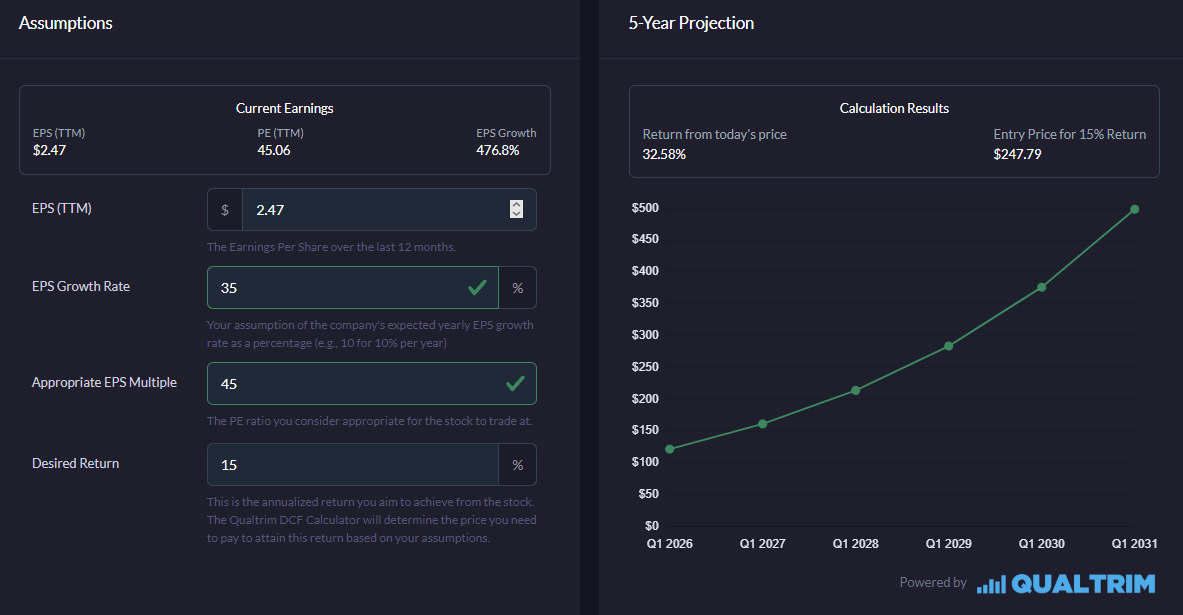
In the bull case scenario, I see TransMedics growing earnings at a 35% CAGR, a slight drop but still relatively in line with historic growth rates. I model an exit multiple of 45x in line current multiples.
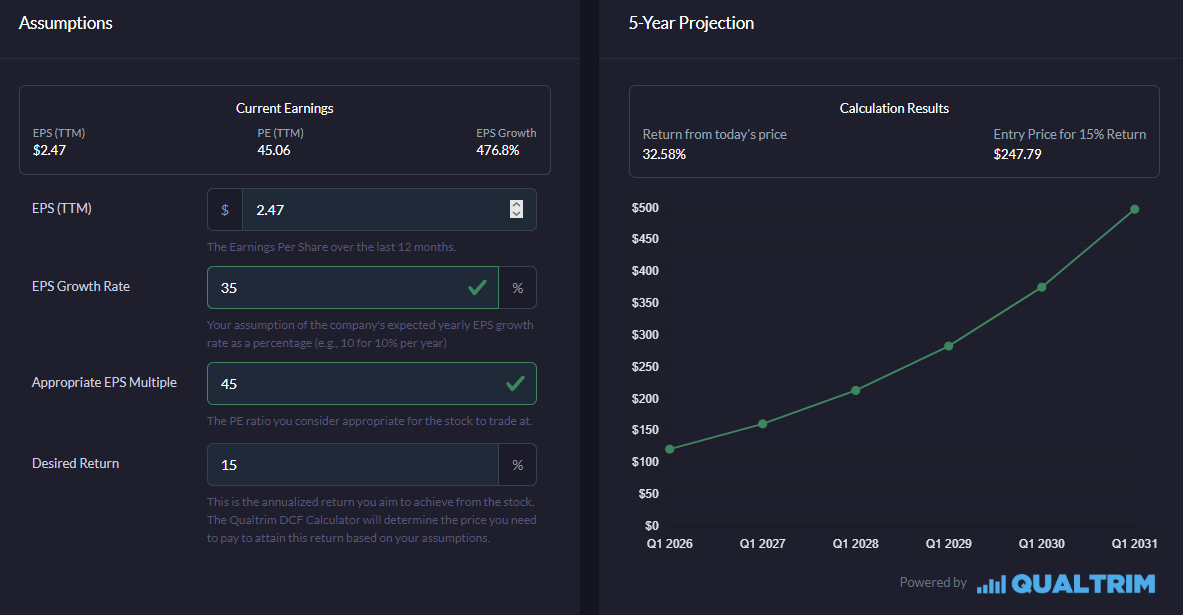
In this scenario, I see a very impressive 32.58% CAGR, signaling there is plenty of upside in TransMedics stock depending on your estimates.
Final Thoughts
TransMedics represents a rare convergence of clinical breakthrough and industrial disruption. By aggressively verticalizing (owning the technology), the specialized clinical labor through the National OCS Program (NOP), and the aviation fleet—Dr. Waleed Hassanein has built a competitive moat that is as much about infrastructure as it is about medicine. While the company faces the inherent complexities of managing a private airline and a nationwide surgical staff, its march toward the 10,000 Transplants North Star remains the ultimate gauge of success. Whether it achieves the hyper-growth of the Bull Case or settles into the role of a compounding healthcare utility, TransMedics has fundamentally shifted the transplant paradigm. For patients on the waiting list and investors alike, the company’s story is no longer just about preserving organs; it is about the relentless pursuit of making every transplantable life a certainty rather than a gamble.
Great writeup. Do you know why they buy planes outright instead of lease them?
Thanks for the thoughtful, well-researched write-up. High quality content as always.
I am much more negative on TMDX. I think it's a low quality business that won't hit volume or margin targets due to competitive pressures that will emerge in the next few years. My reasons below:
1) Undifferentiated business model
The NOP model actually lowers stickiness and barriers to entry. Medical devices are typically "sticky" because hospital staff need to be trained, with multi-year contracts reinforcing product adoption. The NOP model of bundling service and product - streamlining the process to a simple phone call - eliminates switching costs and commoditizes the business model.
This would be fine if the technology was somehow differentiated, but it's not. This isn't complex tech at all. And there isn't evidence to show that that TMDX is superior to OrganOx, Liver Transport, or VitaSmart in liver viability ex-vivo. OrganOx got transport approval in September of last year. The CEO responded to this clear competitive threat by saying OrganOx can't compete in transport because their device "can't fit on a plane" (paraphrasing) Not kidding - google the device right now and see if you agree with this take.
I don't believe owning a fleet of planes is a differentiator. If the ROI is there, OrganOx will undertake the capex project, or just lease the planes. The whitespace is white enough for multiple players each with fleets.
Once TMDX starts getting competed against directly, the choice for customers quickly becomes “who gives me acceptable outcomes at the lowest cost with decent service,” especially given OrganOx is roughly one‑third the cost.
2) Unrealistic Volume Target
The 10,000‑organ target is very unrealistic. It leans heavily on DCD (donation after criculatory death) growth that would require uncontrolled DCD to work and be adopted at scale, which recent U.S. data and European experience don’t really support yet. It's a very novel idea.
Beyond DCD, the Company also points to an opportunity in kidney transplantation, a lower-ASP market already dominated by LifePort, which has utilized perfusion technology for decades. This is also not to mention the negative tailwinds associated with kidney transplant volumes long-term (GLP-1s lowering incidence of diabetes - the primary reason for kidney transplantation)
3) NRP is a threat
Management likes to play up NMP (normothermic machine perfusion - the tech TMDX uses) vs cold storage. This is a strawman. The real argument is NMP vs NRP (normothermic regional perfusion).
NRP can cover multiple organs per run (and thus is usually cheaper on a per-organ basis). It also shows DCD outcomes comparable to DBD—often at a lower per‑organ cost.
While NRP is used at both the hospital and organ procurement organization (OPO) levels, TransMedics is structurally limited in its ability to compete with OPO-driven NRP solutions, as the company sells exclusively to hospitals.