In the world of law enforcement and national security, data is the new DNA. At the center of this shift sits Cellebrite (NASDAQ: CLBT), a company that has transformed from a humble startup into the global gold standard for digital forensics.
Here is everything you need to know about the company’s evolution, leadership, and the high-stakes world of Digital Intelligence

Origin Story: The Retail Pivot
Founded in 1999 in Petah Tikva, Israel, by Avi Yablonka, Yaron Baratz, and Yuval Aflalo, Cellebrite didn’t start in a crime lab.
Initially, the company served cellular retailers. Their Universal Memory Exchanger (UME) was a staple in phone stores worldwide, allowing employees to transfer contacts and photos when a customer upgraded their mobile devices. This “retail” DNA (later rebranded as Mobilogy) gave them a decade long head start in understanding the complex, fragmented world of mobile operating systems expertise that would soon become invaluable to investigators.

Cellebrite’s trajectory mirrors the explosion of the smartphone era. They didn’t just move data; they learned how to interrogate it.
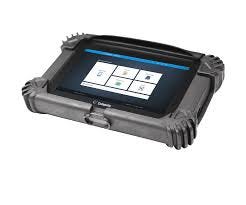
The UFED Revolution (2007): The Universal Forensic Extraction Device changed the game, allowing law enforcement to bypass locks and extract deleted or encrypted data, primarily from cellular devices.
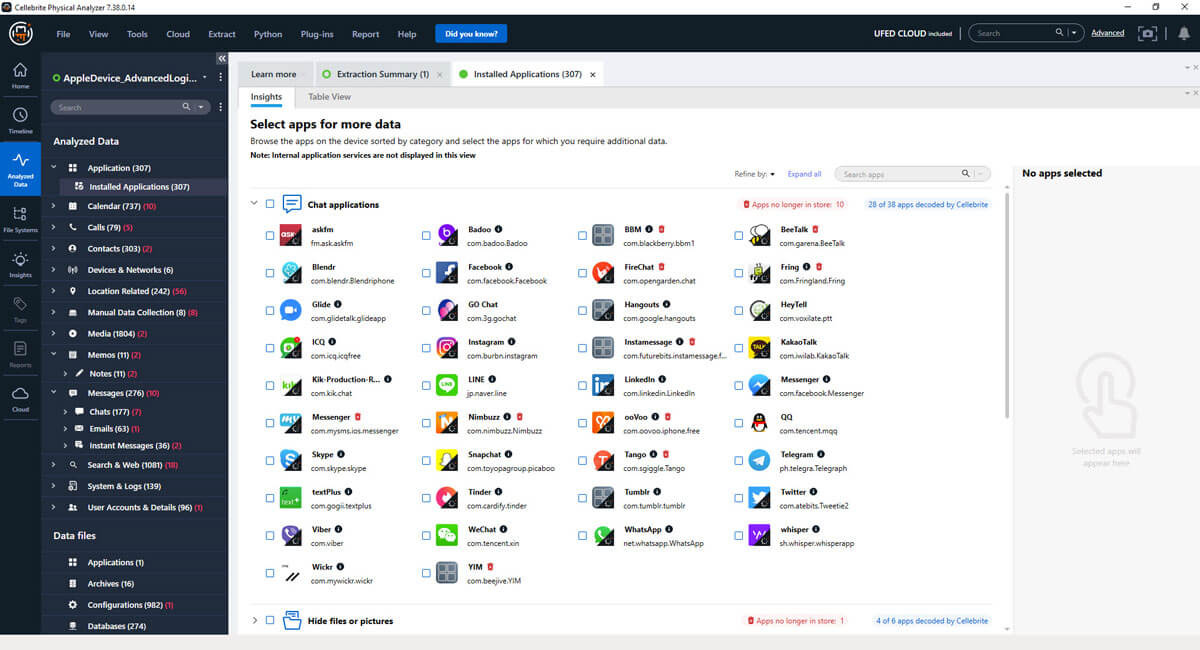
The Analytical Layer: Products like Physical Analyzer turned raw data into actionable intelligence, helping investigators visualize timelines and locations.
The Modern Stack: In 2025, the company is doubling down on AI with its Case-to-Closure (C2C) platform.

Cellebrite’s financial journey reached a milestone on August 31, 2021, when it went public via a SPAC merger with TWC Tech Holdings II Corp.
Valuation: The deal valued the company at $2.4 billion.
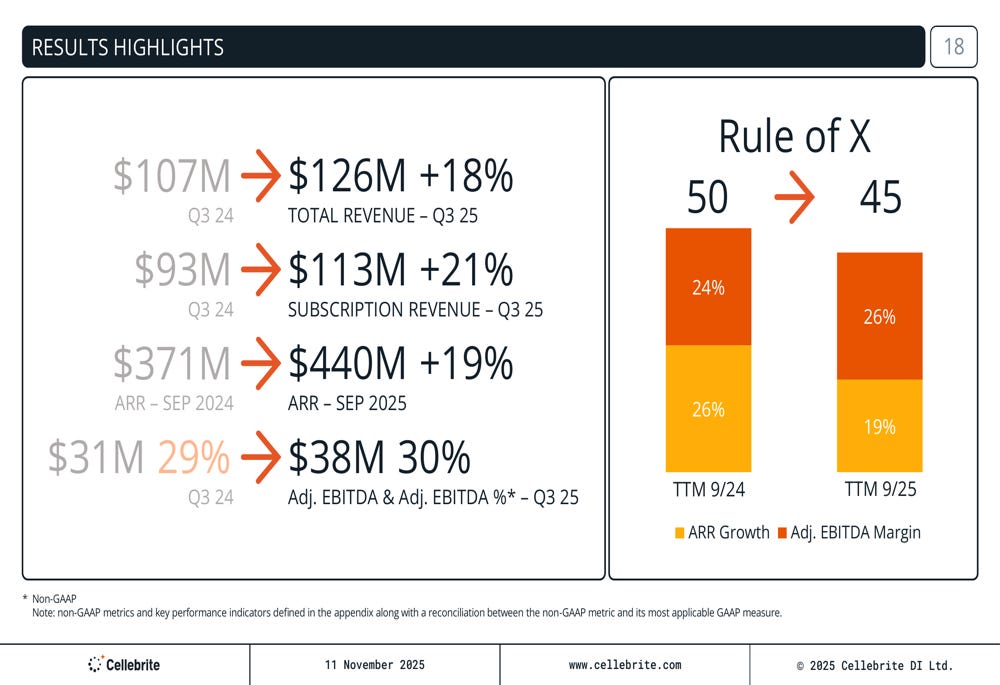
The Revenue Shift: Since the IPO, Cellebrite has successfully transitioned from one-off hardware sales to a high margin SaaS model, providing more predictable, recurring revenue.
The 2025 Leadership Shuffle
The company recently entered a new chapter with a major leadership refresh aimed at scaling its presence:
Thomas E. Hogan (CEO): After a stint as Interim CEO, Hogan took the permanent helm in August 2025. He brings a Wall Street ready approach, succeeding long time leader Yossi Carmil.
David Barter (CFO): A veteran of Microsoft, Barter was brought in during July 2025 to tighten the financial ship.
Adam H. Clammer (Chairman): A founding partner of True Wind Capital, Clammer represents the interests of the company’s most significant institutional backers.
Follow the Money: Major Investors
While many are unfamiliar with Cellebrite, its investors are world renowned. With one investor who’s stake is so large it might actually become a problem for Cellebrite.
Sun Corporation (Japan): The grandfather investor. They bought a majority stake in 2007 and remain one of the most influential voices on the board.
True Wind Capital: The private equity force behind the SPAC merger that took the company public.
Israel Growth Partners (IGP): The local champions who that prepared the firm for its Nasdaq debut.
Sun Corporation acquired Cellebrite in July 2007 for just $17.5 million. At the time, Cellebrite was a small Israeli firm focused on mobile data transfer. Over the next 15+ years, Cellebrite pivoted to digital forensics and has become the global leader in the space. Sun Corp has essentially functioned as a passive holding company for Cellebrite, never investing additional capital but maintaining board control.
Sun Corp’s stake in CLBT are as follows
Total Shares: Approximately 102.5 million shares.
Percentage Stake: Roughly 42%, down from a pre-SPAC majority of over 70%.
Since late 2023, Sun Corporation has been under intense pressure from activist investors to divest or spin off its CLBT stake.
Leopard Asset Management (LAM): This activist firm has been the most vocal, urging Sun Corp to distribute its CLBT shares to shareholders as a “dividend in kind.” LAM argues that Sun Corp management is “hoarding” the asset to mask the poor performance of its own core businesses (entertainment and IT).
The Dividend Dispute: Sun Corp management has resisted a direct distribution of shares, claiming that a large portion of its Japanese retail investor base cannot legally or easily hold US-listed securities.
True Wind Capital & ValueAct: In 2024, True Wind Capital (the SPAC sponsor that took Cellebrite public) launched a tender offer for a 19% stake in Sun Corp specifically to gain influence over the parent company’s handling of the Cellebrite stake. ValueAct Capital has also built a significant position (~7.8%) in Sun Corp to push for strategic changes.
For Cellebrite investors, Sun Corp’s stake is considered an overhang. The market knows that eventually, Sun Corp will likely be forced either by activists or by the need to realize to sell a large portion of its shares. This potential for a massive sell-off can sometimes keep a lid on CLBT’s share price, as the market fears the downward pressure of 100 million shares hitting the market.
Product Suite Today
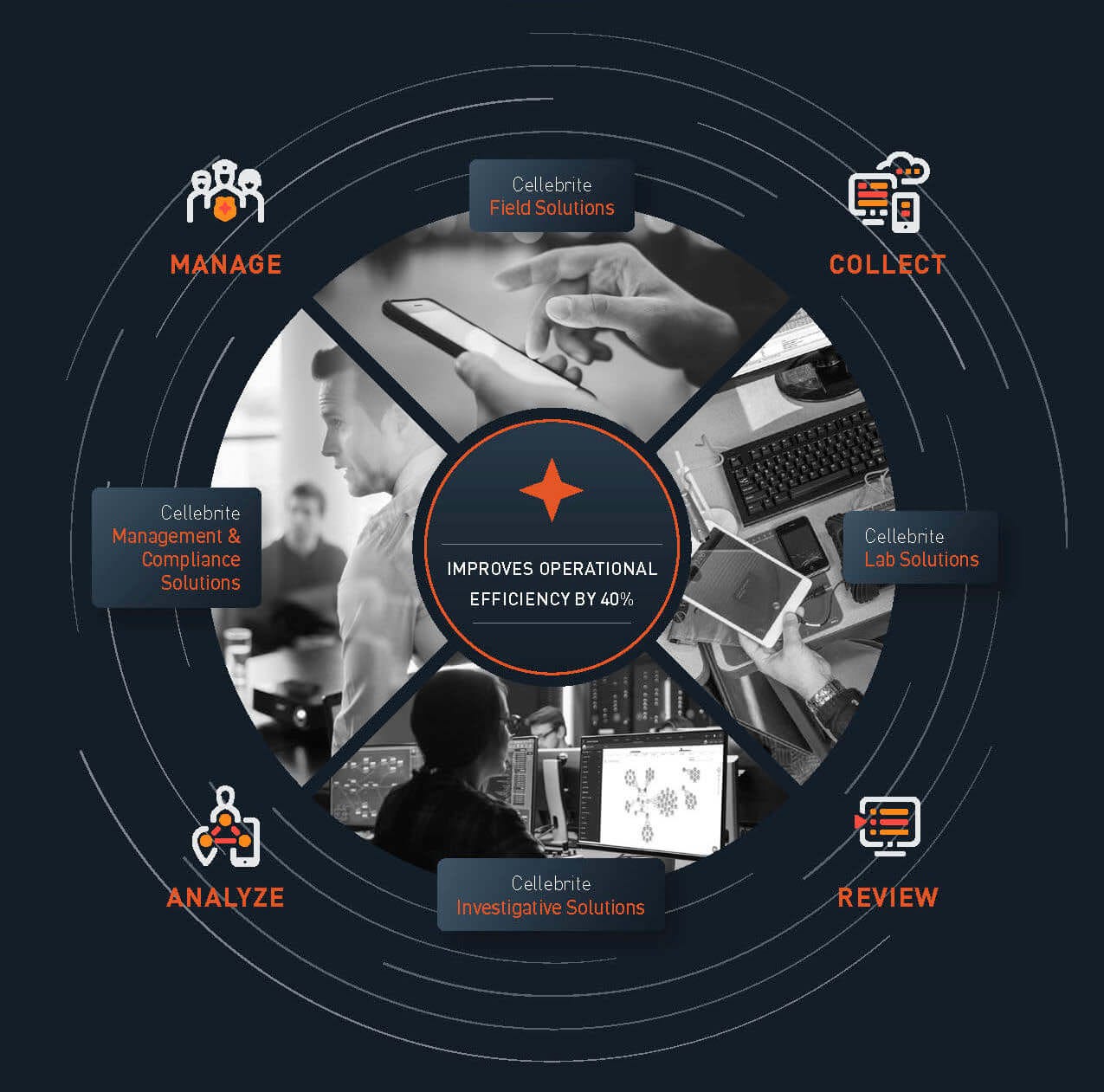
As of late 2025, Cellebrite has transitioned from selling individual tools to a unified Digital Investigation Platform (often referred to as the Case-to-Closure or C2C platform). The suite is now categorized into four main investigative pillars: Collect, Examine, Analyze, and Manage.
The Core of Forensics: Cellebrite Inseyets
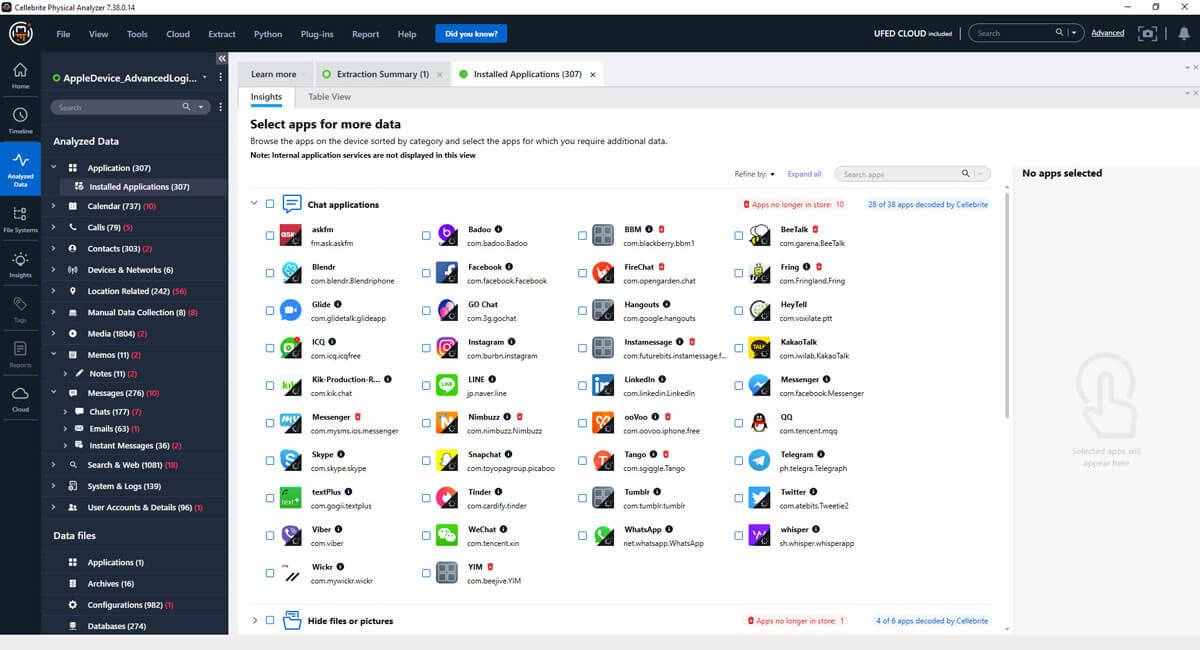
Launched as the successor to the traditional “UFED and Physical Analyzer” setup, Inseyets is the flagship software package designed to maximize data extraction speed and depth.
Inseyets UFED: The industry standard for mobile data extraction. It supports “Full File System” (FFS) extractions for the latest iOS and Android models, bypassing advanced encryption.
Inseyets Physical Analyzer (PA): The decoding engine. It parses complex data from 10,000+ apps. Version 10.x introduced “Geo-Location Semantics” and AI-driven media classification.
Streamline: A one-click automation tool that moves a device from initial connection to a finished investigative report without manual intervention.
Autonomy: A force-multiplier that allows a single workstation to process multiple devices simultaneously in the background.
Triage & Quick View: Allows investigators to “peek” into a device before a full extraction to see if it contains relevant evidence (e.g., last 10 searches or top messaging partners).
Investigative Analytics: Cellebrite Pathfinder
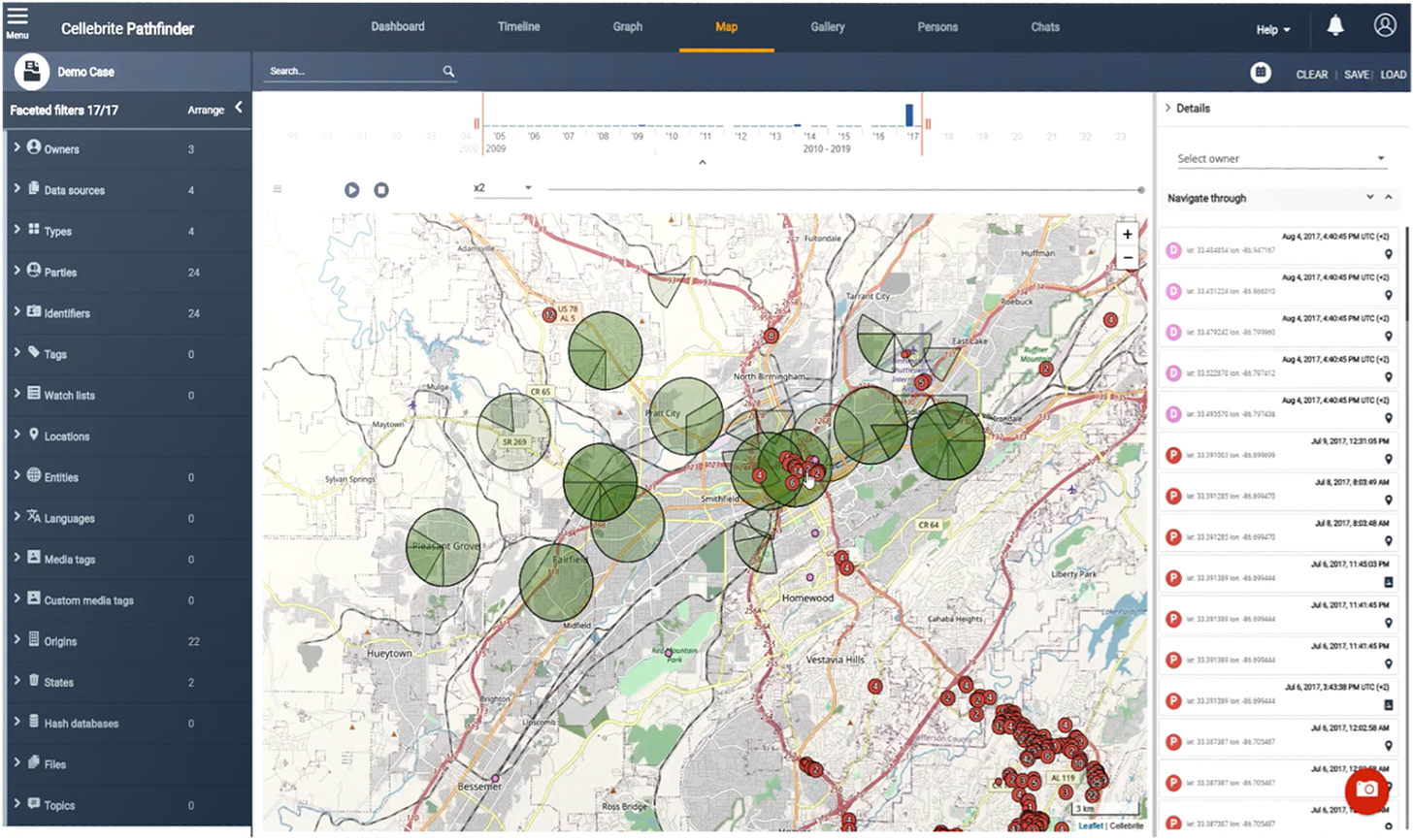
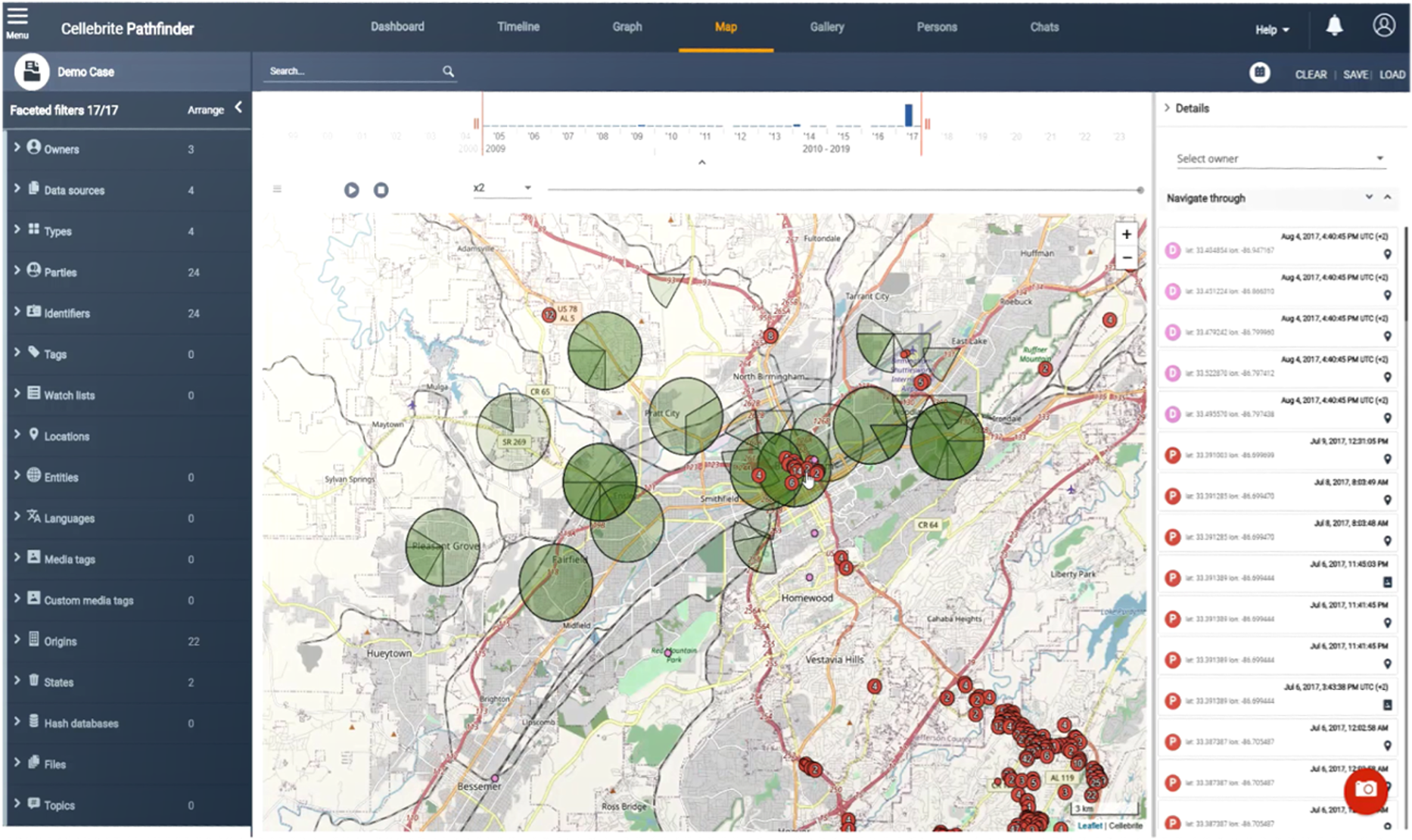
Pathfinder is the brain of the operation. It uses AI to ingest massive amounts of data from multiple devices and sources to “connect the dots.”
Link Analysis: Automatically maps relationships between suspects based on calls, messages, and shared locations.
Smart Search: An OSINT (Open-Source Intelligence) tool that searches public records and social media to build a profile of a suspect.
Watchlists: A new 2025 feature that automatically flags specific keywords or phrases across all files in a case.
Media Analytics: Uses machine learning to automatically categorize images and videos (e.g., flagging weapons, drugs, or child exploitation material).
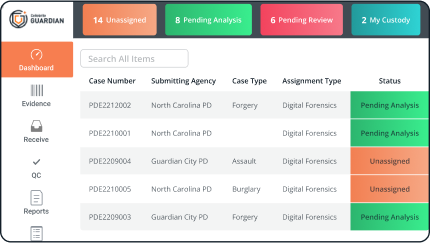
Evidence Management: Cellebrite Guardian
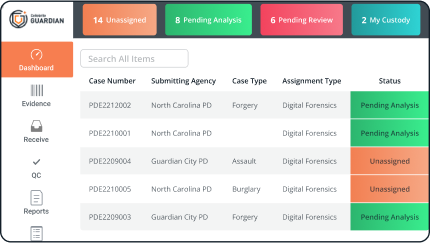
Guardian is a secure, cloud-hosted (SaaS) environment for storing and sharing evidence legally and defensibly.
Guardian Investigate: An AI-powered tool (launching early 2026) that helps investigators build a “case narrative” by summarizing complex digital evidence into a format ready for prosecutors.
Reviewer: A browser-based tool that allows non-technical investigators or prosecutors to view evidence without needing specialized software.
Chain of Custody: Automatically logs every person who views or touches the digital evidence to ensure it stands up in court.
Cybersecurity & Virtualization: Corellium Integration
Following the 2025 acquisition, Cellebrite now offers advanced mobile virtualization for defense, intelligence, and high-level cybersecurity.
Corellium Viper: A tool for mobile application penetration testing. It allows security teams to test apps on “virtual” iPhones or Androids to find vulnerabilities.
Corellium Falcon: Used for deep threat research and malware analysis. It allows researchers to “detonate” malware on a virtual device to see exactly how it behaves.
Project Mirror: Creates a forensically sound virtual “twin” of a suspect’s device. This allows a jury to see exactly how a phone looked and functioned at the time of a crime.

Specialized & Enterprise Tools

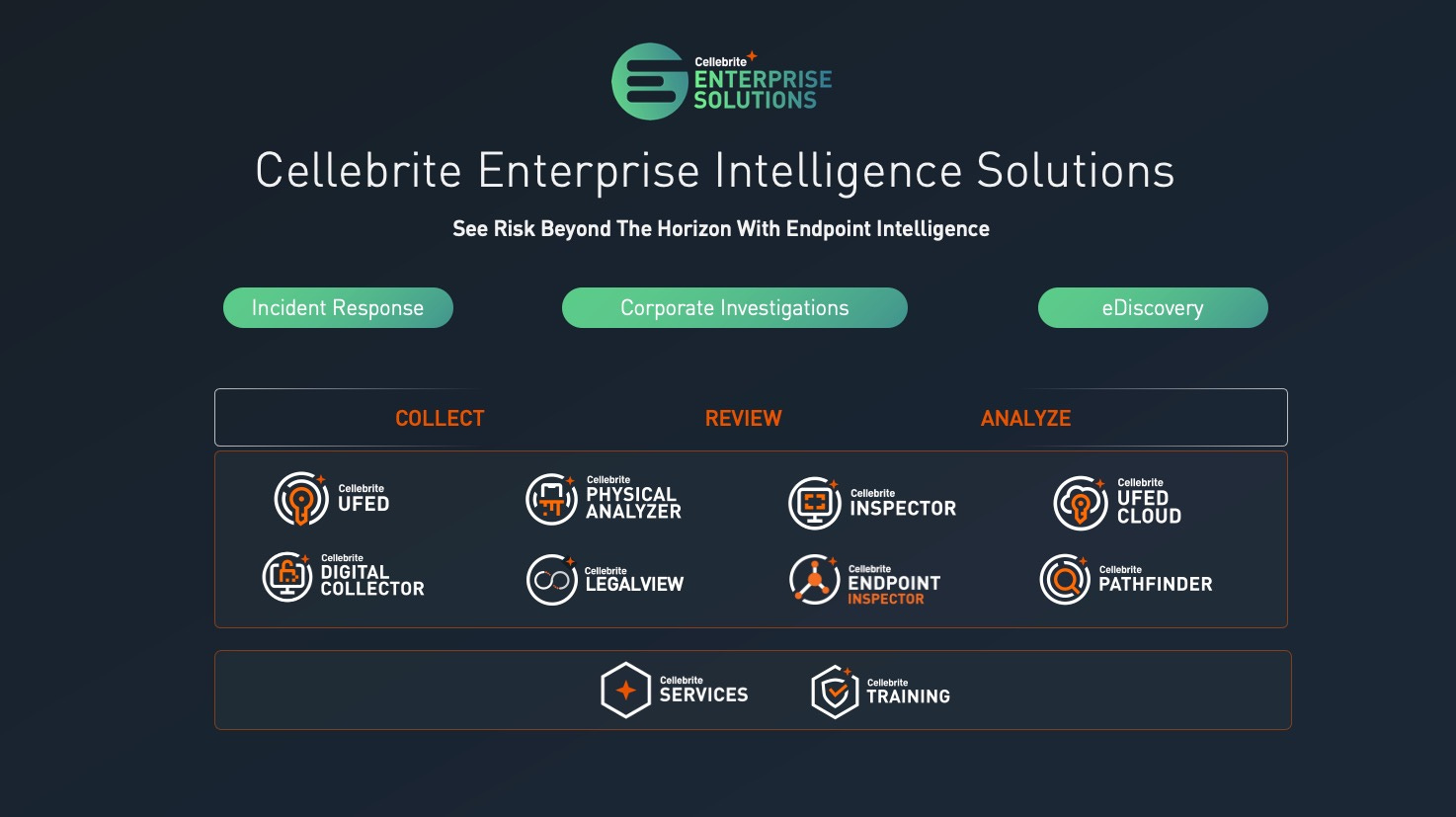
Digital Collector: Specifically designed for the forensic imaging of Windows and Mac computers.
Endpoint Inspector: A tool for corporate internal investigations (HR, fraud, or IP theft) that allows for the remote collection of data from employee laptops or mobile devices without them being physically present.
The Case-to-Closure Moat
With the vast array of product offering today, Cellebrite has successfully evolved from a collection of standalone tools into a unified full stack platform. This Case to Closure strategy creates a massive competitive advantage:
Platform Stickiness: By providing the software for extraction (Inseyets), analysis (Pathfinder), and evidence management (Guardian), Cellebrite becomes the operating system for the entire investigation. It is much harder for a competitor to displace a whole workflow than a single tool.
Speed as a Product: The integrated stack reduces time-to-evidence by up to 40%. In an era of massive backlogs, speed is the primary reason agencies renew their $100k+ subscriptions.
The Data: Each successful extraction from a new iOS or Android version reinforces their lead. With over 1.5 million investigations globally per year, their feedback loop for refining AI models is unmatched by smaller startups.
Cellebrite’s growth plan
Looking toward 2026 and beyond, Cellebrite is also expanding beyond traditional police work into higher margin sectors.
Through Endpoint Inspector, Cellebrite is aggressively targeting the private sector. Fortune 500 companies are using these tools for:
Intellectual Property (IP) Theft: Tracking data exfiltration by departing employees.
HR Investigations: Remote, stealth collection of evidence from employee use company devices in harassment or fraud cases.

After the acquisition of Corellium, Cellebrite is able to sell additional products into Three-Letter Agencies and military units. They are no longer just unlocking phones; they are providing the virtualization for national security research, malware analysis, and zero-day vulnerability testing.
Guardian Investigate (general availability in early 2026). Uses Agentic AI. AI that doesn’t just search, but actively assists by:
Automatically drafting investigative reports.
Suggesting leads by connecting disparate data points (e.g., a burner phone in one case matching a Wi-Fi log in another).
Performing Smart Triage to prioritize the most relevant devices in a multi-suspect raid.
With the US Department of Justice as a sponsor, Cellebrite is pursuing a full FedRAMP authorization. Once achieved, it will unlock massive, long-term cloud contracts across the entire US Federal government, which currently accounts for roughly 20% of their Public Sector revenue, despite not being able to sell its most lucrative offerings to a number of three-letter-agencies in the United States.
A growing market
Digital Intelligence and Digital Forensics is projected to see aggressive growth through 2030. Industry analysts estimate the market will grow from approximately $12–13 billion in 2025 to over $40 billion by 2035, maintaining a CAGR of 11% to 18%.

Modern law enforcement faces a crisis of scale. As of late 2025, it is estimated that over 90% of all crimes now involve a digital component, yet roughly 39% of law enforcement agencies report they cannot resolve investigations in a reasonable timeframe due to data backlogs.
Government Agencies are no longer just looking at one phone; they are looking at “digital ecosystems” (multiple phones, cloud backups, smartwatches, and car infotainment systems).
This gap forces governments to increase budgets for automated tools that can do the work of ten human analysts.
AI is the single biggest projected driver of growth going into 2026.
The Threat: Cybercriminals are using GenAI to create hyper personalized phishing, deepfake voice cloning for fraud, and automated Living off the Land attacks that bypass traditional antivirus.
The Solution: Forensic companies are responding with AI that can automatically categorize millions of images, flag suspicious intent in messages, and link disparate cases. This AI arms race ensures that forensic software must be updated and paid for via high-margin subscriptions indefinitely.
The sector will continue to expand because digital evidence is the only evidence that doesn't lie, forget, or change its story. As long as human activity generates a digital footprint, the tools required to decode and defend that footprint will remain at the top of government and corporate must-buy lists.
Competition
The digital forensics market in late 2025 has effectively become a high stakes race to Duopoly at the top tier, with Cellebrite facing its most significant challenge from the private equity-backed merger of Magnet Forensics and Grayshift.

While smaller players exist, the battle for the Case to Closure platform is largely a two horse race.
The Boss Battle: Cellebrite vs. Magnet Forensics
Following the $1.3 billion acquisition by Thoma Bravo, Magnet Forensics merged with Grayshift (the makers of GrayKey). This created a Super-Competitor that directly mirrors Cellebrite’s full-stack offering.
The Core Product Philosophy: Depth vs. Speed
Cellebrite: Operates on the philosophy of Maximum Forensic Depth. Their case to closure suite is designed for the high end lab expert who needs to scrape every single byte of data, including deep system logs and unallocated space. It can often be the tool of last resort for the most difficult devices.
Magnet: Operates on the philosophy of Investigative Efficiency. Magnet’s software is artifact-first, meaning it prioritizes the things humans actually use (chats, photos, searches) and presents them in a clean, web-like timeline. It is designed to be usable by any detective, not just a PhD in digital forensics.
Mobile Unlocking: The War
This is the most visible area of competition, as both companies race to crack the latest iOS and Android security.
Magnet GrayKey: Traditionally has had a slight edge in iOS same-day support. GrayKey is famous for its “hidden” exploits that often bypass the latest Apple security patches weeks before competitors. In 2025, GrayKey has marketed its “Same Day Access” as a major differentiator for state and local agencies.
Cellebrite Inseyets: Historically dominate on the Android landscape, particularly with the diverse range of chips (Qualcomm, MediaTek, Exynos). Following the 2025 Corellium acquisition, Cellebrite has significantly closed the iOS gap by using ARM-based virtualization to “brute-force” and test exploits in a virtual environment before deploying them to the field.
The Analytical Frontier: Pathfinder vs. Axiom
Cellebrite Pathfinder: Uses “Agentic AI” to act like a virtual assistant. It specializes in depth connecting a phone from Case A to a laptop from Case B to a suspect in Case C. It is a big data tool designed for massive agencies. This is the more powerful tool for complex networking,
Magnet Axiom: Wins on User Experience. It has a much lower time-to-first-lead. Axiom is faster at showing an investigator the “smoking gun” photo or message within 15 minutes of an extraction.
Who wins
Cellebrite wins if: You are a major federal lab or national security agency dealing with highly complex Android devices, encrypted burner phones, and massive data sets that require deep link analysis across years of evidence.
Magnet wins if: You are a state/local police department or a corporate investigations team that needs to get results fast, with a workforce that doesn’t have time for specialized training.
The European Stalwart: MSAB (XRY)
Based in Sweden, MSAB remains the primary European alternative to Cellebrite.
The Edge: MSAB is often seen as the neutral choice for agencies wary of Cellebrite or Magnet dominance. Their XRY tool is highly regarded for its precision and forensic integrity logs.
The Weakness: While excellent at extraction, their analytical suite has historically lagged behind Cellebrite’s case to closure offering.
The Artifact Specialist: Oxygen Forensics
Oxygen doesn’t try to beat Cellebrite at hardware; they try to beat them at Apps.
The Edge: Oxygen Forensic Detective is widely considered the best tool for “parsing” (decoding) difficult app data. If a suspect uses an obscure encrypted messaging app from Eastern Europe or Asia, Oxygen is often the first to support it.
The Competition: In 2025, Cellebrite closed this gap significantly by using a technique called auto-parsing. Using Generative AI to interpret data in real-time, a direct attack on Oxygen’s niche.
The Legacy Giant: OpenText (EnCase) & Exterro (FTK)
These are the “Grandfathers” of forensics, originally built for hard drives and PCs.
They remain the gold standard for Corporate eDiscovery and civil litigation. If you need to scan 1,000 corporate laptops for a lawyer, you use EnCase or FTK. They have struggled to pivot to the “Mobile-First” world however. In response, Cellebrite launched Endpoint Inspector in an attempt to steal their corporate customers by offering better remote mobile collection.
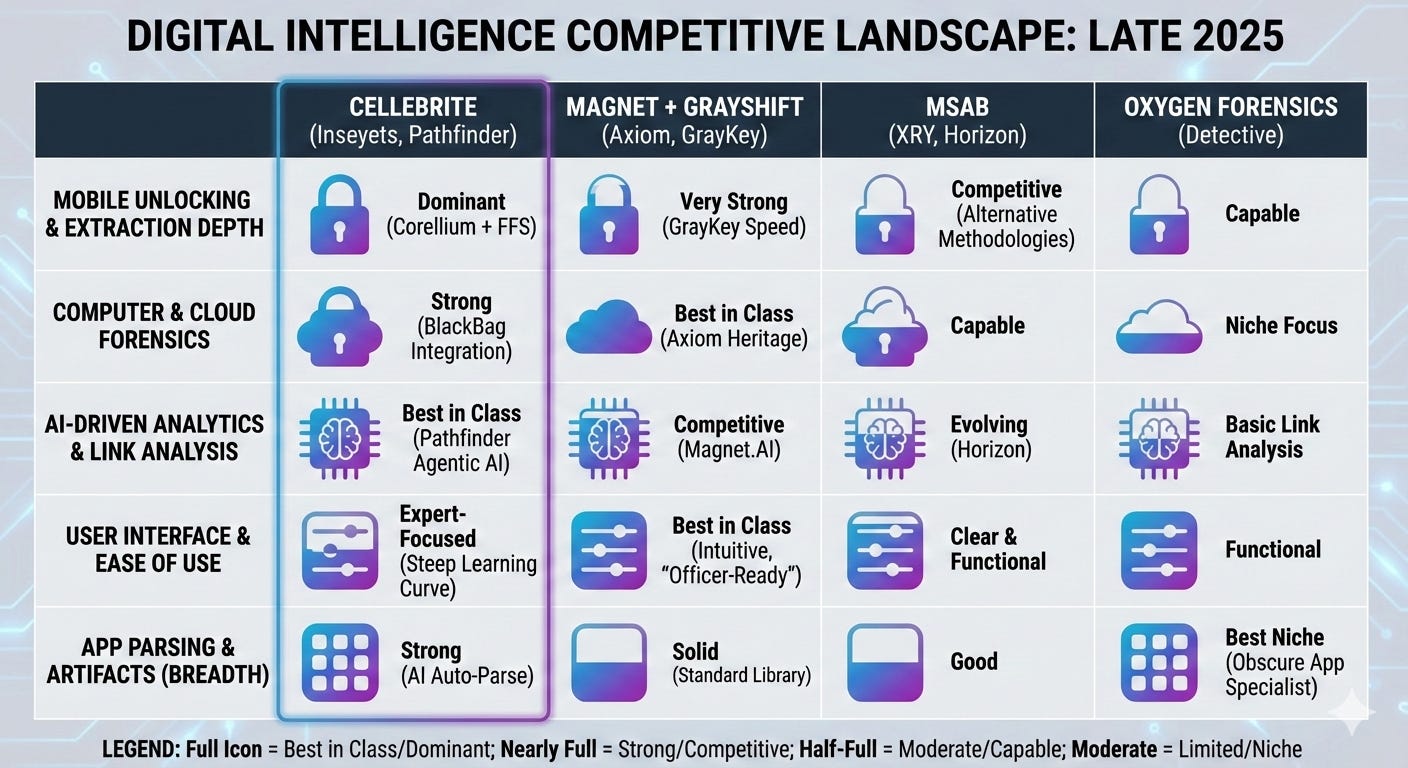
The biggest threat to Cellebrite might not be a better unlocking tool but Simplicity. Magnet Forensics is winning over some younger investigators who grew up with iPhones and expect software to be as easy to use as an app.
Cellebrite’s responded in late 2025 with a Inseyets UI refresh a direct responce to modernize their legacy interface to prevent Magnet from capturing the younger digital detectives.
With the Corellium acquisition, Cellebrite can also address Magnet Forensics first mover advantage when it comes to IOS updates. With Corellium, Cellebrite can now virtually test thousands of exploit combinations in the cloud. This allows them to stay weeks ahead of smaller competitors when Apple, Google, or any other company release a new security patch.
These changes along with Cellebrite’s new products to address the single app space (previously dominated by Oxygen), as well as new and revamped products to address corporate (Encase and FTK). Cellebrite is not only the most in depth full stack case to closure platform there is, but also becoming the ultimate forensics tool no matter your situation.
Balance Sheet and Income Statements
The financial health of Cellebrite reveals a company that has successfully transitioned to a high-margin, subscription-first SaaS model. Following their Q3 2025 earnings report, the company has demonstrated strong “Rule of 40” characteristics (growth + profitability