

The Green Owl’s Gambit
In the history of Silicon Valley, most empires are built on a foundation of stolen time, minutes reclaimed from our boredom to serve advertisements. But Duolingo was built on a different premise: human computation.
The story begins not in a garage, but in a Carnegie Mellon computer science lab, where Professor Luis von Ahn—the man who taught the world to digitize books via reCAPTCHA—posed a radical question: Could we harness the collective brainpower of the internet to educate the world for free?
What started as a clever way to crowdsource translation has morphed into a $8-billion-plus “everything app” for learning. Today, Duolingo is a laboratory of digital addiction, where data scientists use the same psychological triggers as casinos to make the “broccoli” of education taste like the “dessert” of social media.
But as the company pivots to an AI-first future, it faces a profound paradox. The very technology that allows it to scale—Generative AI—also powers its fiercest competitors. Can a green owl continue to win the war for our attention when the world is moving from “gamified lessons” to “instant translation”?
In this edition, we analyze the Duolingo engine: from its unhinged marketing moats and passive-aggressive engineering to a breakdown of its 2026 balance sheet.
Executive Summary: The Duolingo Paradox (2026)
For the busy reader, here is the high-level breakdown of Duolingo’s current market position and its trajectory through 2026.
The Core Thesis
Duolingo has evolved from a language app into a global learning utility. Its “Super App” strategy—integrating Math, Music, and Chess—aims to capture the entire lifecycle of a learner. While traditional EdTech is dated, Duolingo focuses on retention mechanics, making it more akin to a social media giant than a school.
Key Performance Indicators (Q3 2025/2026)
Scale: 135M Monthly Active Users (MAUs) and 50M+ Daily Active Users (DAUs).
Monetization: 8.5% paid penetration, with a shift toward high-margin Duolingo Max (AI-tutor tier).
Financial Health: Over $1.1 Billion in net cash with a debt-free balance sheet.
Efficiency: Generative AI has increased content production velocity by ~18x since 2021.
The “So What?”
The investment case for Duolingo hinges on its ability to win the war for attention. If it can successfully use AI to move users from “learning phrases” to “achieving professional proficiency” (B2 Level), it will become the undisputed infrastructure for digital education.
From CAPTCHA to Conjugation: The Duolingo Origin Story
In the tech world, most origin stories begin in a garage. Duolingo’s began in a computer science lab at Carnegie Mellon University.
It is the story of a professor, his star student, and a radical idea: what if the millions of hours humans spend proving they aren’t a robot online could be harnessed to educate the world?
The Professor and the Pivot (2009–2011)
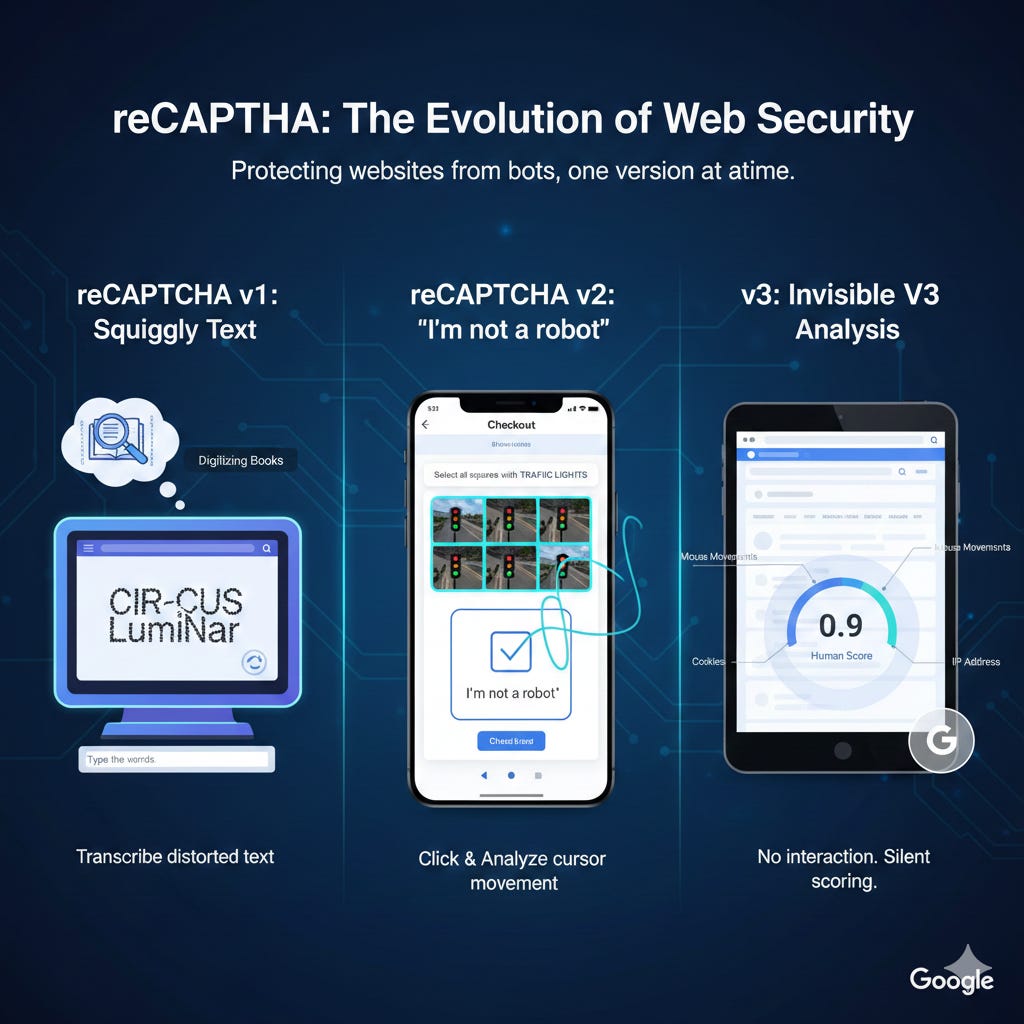
Before Duolingo, Luis von Ahn was already a legend in computer science. He was a MacArthur Genius Grant winner and the inventor of reCAPTCHA. Every time you typed “pedestrian crossing” or “storefront” to log into a website, you were actually helping von Ahn’s system digitize old books for the Internet Archive.
Google bought reCAPTCHA in 2009, making von Ahn a wealthy man. But he didn’t retire. Instead, he teamed up with his graduate student, Severin Hacker, to tackle a bigger problem: the high cost of education.
As a native of Guatemala, von Ahn saw that English proficiency was the single greatest lever for economic mobility, yet the best tools (like Rosetta Stone) cost hundreds of dollars. Their mission was born: Make language learning free and universally accessible.
The Visionary: Luis von Ahn
Before Duolingo, Luis von Ahn had already changed the internet twice. Growing up in Guatemala, he witnessed how access to education was often a luxury of the wealthy, a realization that would later fuel Duolingo’s mission of free education for all.
The Human Computation Pioneer: As a professor at Carnegie Mellon, von Ahn coined the term human computation—the idea of using human brainpower to solve tasks that computers cannot yet handle. This led to his invention of CAPTCHA and reCAPTCHA.
The Serial Inventor: He sold reCAPTCHA to Google in 2009, but rather than retiring, he used his Genius Grant from the MacArthur Foundation to focus on social impact.
The Mission: For von Ahn, Duolingo wasn’t just a business; it was a way to level the playing field. Having to fly from Guatemala to El Salvador just to take an English proficiency test as a student inspired him to later create the affordable Duolingo English Test.
The Architect: Severin Hacker
If von Ahn was the visionary, Severin Hacker was the technical architect who turned the happy mistake of an academic project into a world-class product. A Swiss-born computer scientist, Hacker moved to Pittsburgh to pursue his PhD at Carnegie Mellon under von Ahn’s supervision.
A Lifelong Gamer: Hacker’s obsession with technology started with a desire to build his own video games. This childhood passion became the DNA of Duolingo’s gamification strategy—the belief that the best way to learn is to forget you are actually studying.
The 100% Free Philosophy: From the start, Hacker was the fierce protector of the company’s accessibility. He famously insisted that the app remain “100% free,” ensuring that the most disadvantaged person with an internet connection would have the same tools as anyone else.
The Technical Lead: As CTO, Hacker led the engineering team to use machine learning long before it was a buzzword. He focused on retention mechanics, building algorithms that predict exactly when a user is about to forget a word, ensuring they stay engaged and hooked on learning.
The Invisible Business Model (2012–2014)
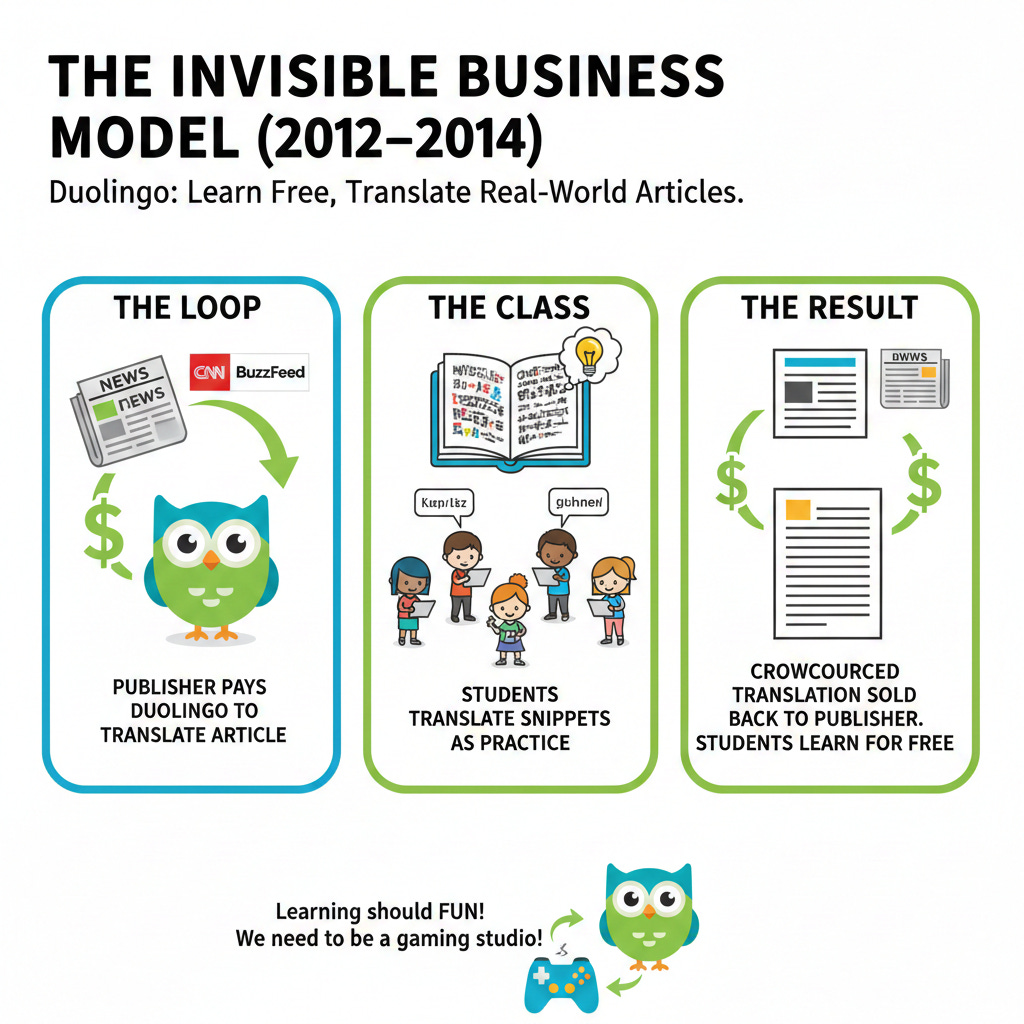
Duolingo launched in private beta in 2011 and opened to the public in June 2012. The early business model was ingenious but strange. Following the reCAPTCHA logic, users would learn by translating real-world articles.
The Loop: A company like CNN or BuzzFeed would pay Duolingo to translate an article.
The Class: Students would translate snippets of that article as part of their practice.
The Result: The student learned for free, and the crowdsourced translation was sold to the publisher.
However, the team soon realized that translating the news wasn’t as fun as playing a game. To survive, they had to pivot from being a translation agency to being a world-class gaming studio.
Gamification: The Green Machine (2015–2020)
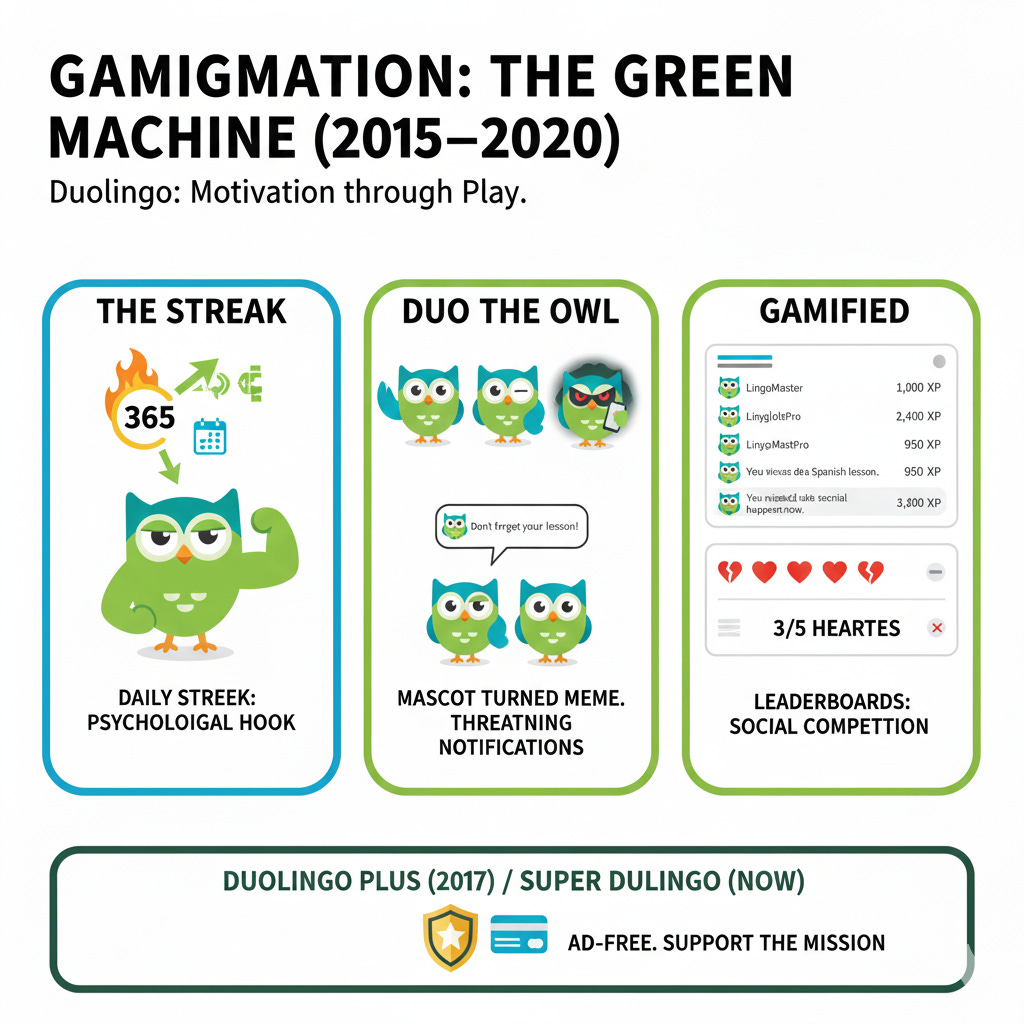
By 2015, Duolingo abandoned the translation model. They realized that the hardest part of learning a language isn’t the difficulty—it’s the motivation.
They began obsessively A/B testing every pixel of the app. This era saw the rise of:
The Streak: The psychological hook that keeps users coming back for years.
Duo the Owl: The mascot who transformed from a helpful guide into a passive-aggressive meme, famous for threatening users with notifications who missed their lessons.
Leaderboards and Hearts: Borrowing mechanics from Candy Crush and Clash of Clans to turn education into a social competition.
In 2017, they launched Duolingo Plus (now Super Duolingo). They proved that if you make the free version good enough, people will pay just to support the mission and remove ads.
Pittsburgh’s Laboratory of Addiction
While most educational companies hire linguists first, Duolingo hired data scientists and engineers. Their goal was simple but subversive: Make the “broccoli” of education taste like the “dessert” of social media. At their headquarters in Pittsburgh, the team operates more like a high-stakes casino or a social media giant than a school. Every single button, color, and notification is the result of thousands of micro-experiments.
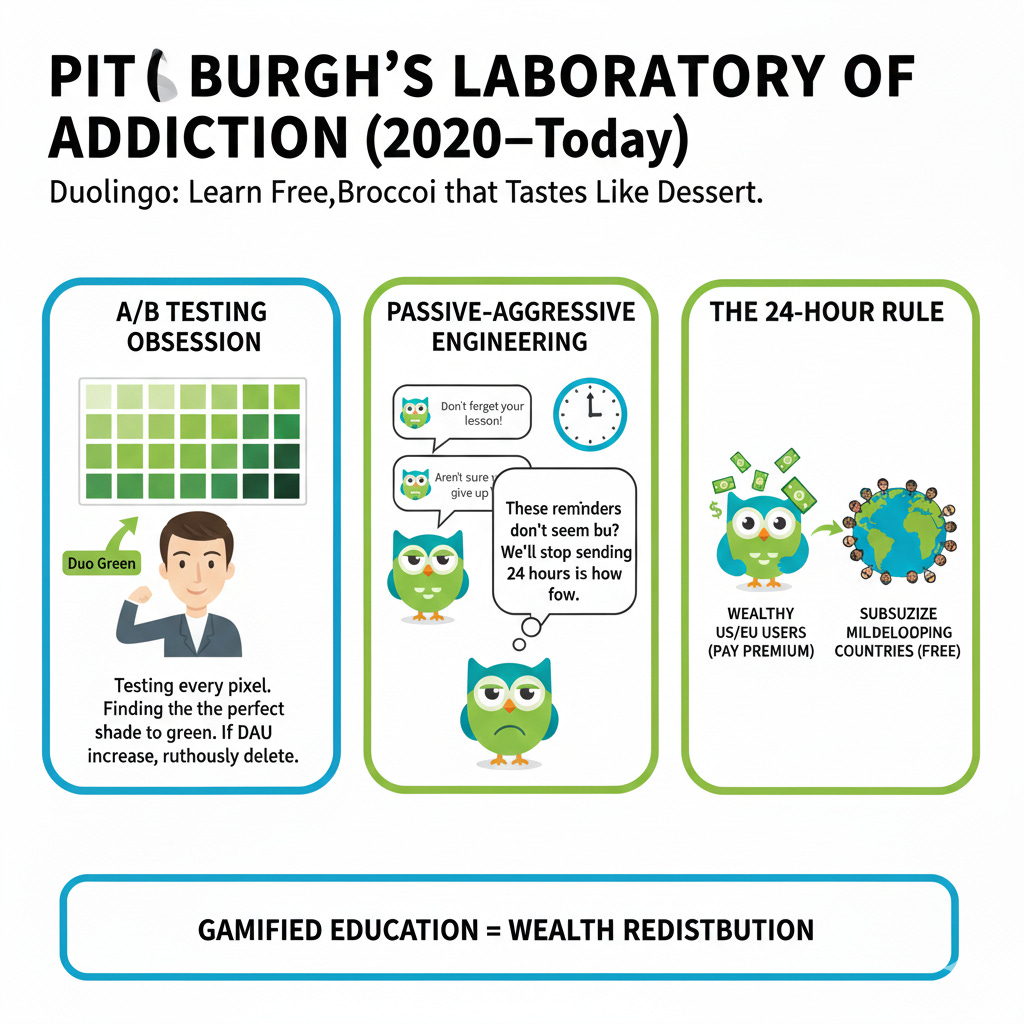
The A/B Testing Obsession: Luis von Ahn has famously stated that the company doesn’t just guess what works; they test it. They once spent months testing the exact shade of Duo Green to see which one maximized user clicks. If a new feature doesn’t move the needle on Daily Active Users (DAU), it is ruthlessly deleted—no matter how much the team likes it.
Passive-Aggressive Engineering: One of their most successful experiments was the “Passive-Aggressive Notification.” When users stop using the app for seven days, the app sends a final message: “These reminders don’t seem to be working. We’ll stop sending them for now.” The team discovered that this “guilt-tripping” notification was one of their most effective tools for re-engaging users who felt like the Green Owl had given up on them.
The 24-Hour Rule: Through millions of dollars in AI research, Duolingo discovered a simple truth: the best time to remind someone to study is exactly 24 hours after their last lesson. Why? Because if you were free at 3:00 PM yesterday, you are likely free at 3:00 PM today.
The Mission-Data Paradox: Despite the addictive mechanics, the culture remains mission-driven. They use a Freemium model as a form of wealth redistribution: the subscription fees from wealthy users in the US and Europe effectively subsidize the free education of millions in developing countries like Brazil, Vietnam, and von Ahn’s home country of Guatemala.
🦉 Duo the Owl: The Unhinged Marketing Moat
While Duolingo was founded by Luis von Ahn and Severin Hacker, the company’s current cultural dominance is largely driven by its mascot, Duo the Owl. Duo has evolved from a simple logo into a viral internet celebrity, serving as the cornerstone of a social-first marketing strategy that has redefined how brands interact with younger audiences.
Social Media Virality and Unhinged Branding
Under the direction of social media lead Zaria Parvez, Duolingo leaned into a high-risk, high-reward persona for Duo.
The “Threatening” Persona: Duolingo transformed its aggressive push notifications into a meta-joke, portraying Duo as a persistent, sometimes “unhinged” owl who will hunt you down if you skip a lesson.
TikTok Dominance: The brand’s TikTok account grew from 50,000 to over 16 million followers by 2025 by participating in trends, “simping” for celebrities like Dua Lipa, and maintaining a chaotic, authentic presence.
Viral Stunts: In early 2025, the company executed its most successful campaign to date by “killing” Duo, leading to 1.7 billion impressions across social platforms. The owl was only “resurrected” after users collectively completed over 50 billion XP in the app.
Efficiency: Lowering Ad Spend via Organic Reach
Duo’s viral status has allowed Duolingo to scale its user base with a fraction of the traditional marketing spend required by competitors.
Low Customer Acquisition Cost (CAC): Approximately 80% of new users join Duolingo organically, driven by word-of-mouth and social media memes rather than expensive paid advertisements.
Replacing Traditional Media: The company has significantly scaled back TV advertising in most regions, opting for “guerilla marketing” stunts that generate massive earned media.
Super Bowl Strategy: In 2024 and 2025, Duolingo opted for shorter, 5-second “stunt” ads that cost a fraction of 30-second spots but generated more social media mentions than major traditional campaigns from brands like Doritos.
Marketing as Product: By making the mascot a central part of the experience (e.g., Duo appearing “sad” or “angry” in the app based on user behavior), Duolingo turns engagement tools into marketing assets.
Impact on Growth and Retention
CEO Luis von Ahn has directly linked the “unhinged” social presence to the company’s financial success.
User Recovery: When the company briefly paused its chaotic social posts in late 2025 to build “brand love,” user growth slowed. Resuming the “unhinged” posts led to an immediate recovery in Daily Active Users (DAUs).
Cultural Relevance: Duo’s presence in movies like Barbie and SNL skits has solidified the brand as a pop-culture staple, making it a “must-have” utility for over 50 million daily users.
The Bottom Line for the Future
Duolingo’s history proves that in the 21st century, the most effective teacher isn’t necessarily the one with the best lesson plan—it’s the one that can win the war for your attention. By embracing the dark arts of gamification and social media psychology, von Ahn and Hacker didn’t just build an app; they built a global standard for how humans will learn everything from music to math in the future
The IPO and the $5 Billion Milestone (2021)
On July 28, 2021, Duolingo went public on the Nasdaq under the ticker $DUOL.
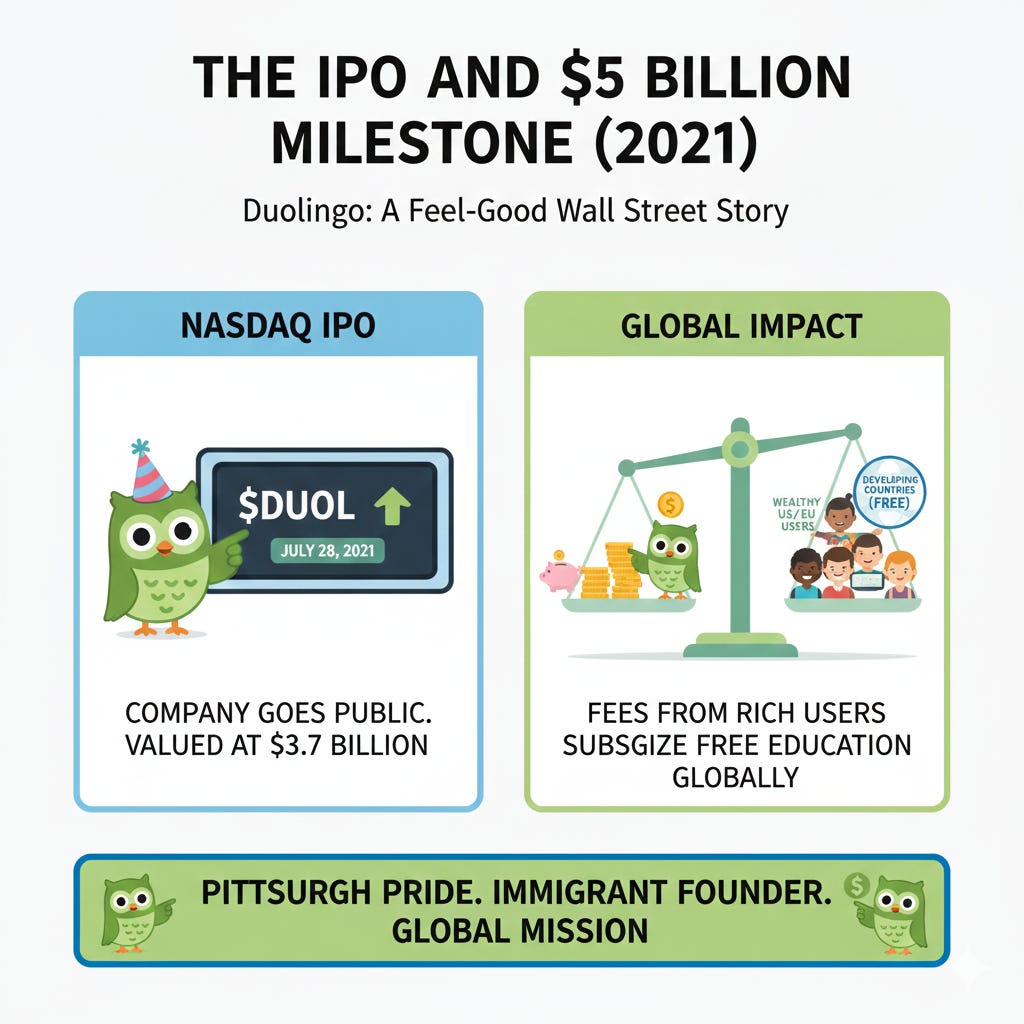
The IPO was a massive success, valuing the company at roughly $3.7 billion (and quickly climbing past $5 billion). It was a rare “feel-good” Wall Street story: a company founded by an immigrant, based in Pittsburgh (not Silicon Valley), and built on the idea that a kid in a favela should have the same learning tools as a billionaire’s son.
Modern Day: The AI Frontier (2024–2026)
Today, Duolingo is no longer just a language app. It is an everything learning company.
Multi-Subject: They have expanded into Math and Music, using the same gamified “circles” to teach fractions and piano chords.
The AI Pivot: In 2023, they were one of the first to integrate GPT-4 with Duolingo Max, introducing features like Roleplay (chatting with AI characters) and Explain My Answer.
The Proficiency Standard: The Duolingo English Test (DET) is now a legitimate competitor to the TOEFL and IELTS, accepted by over 5,000 institutions globally.
The Everything App for Learning
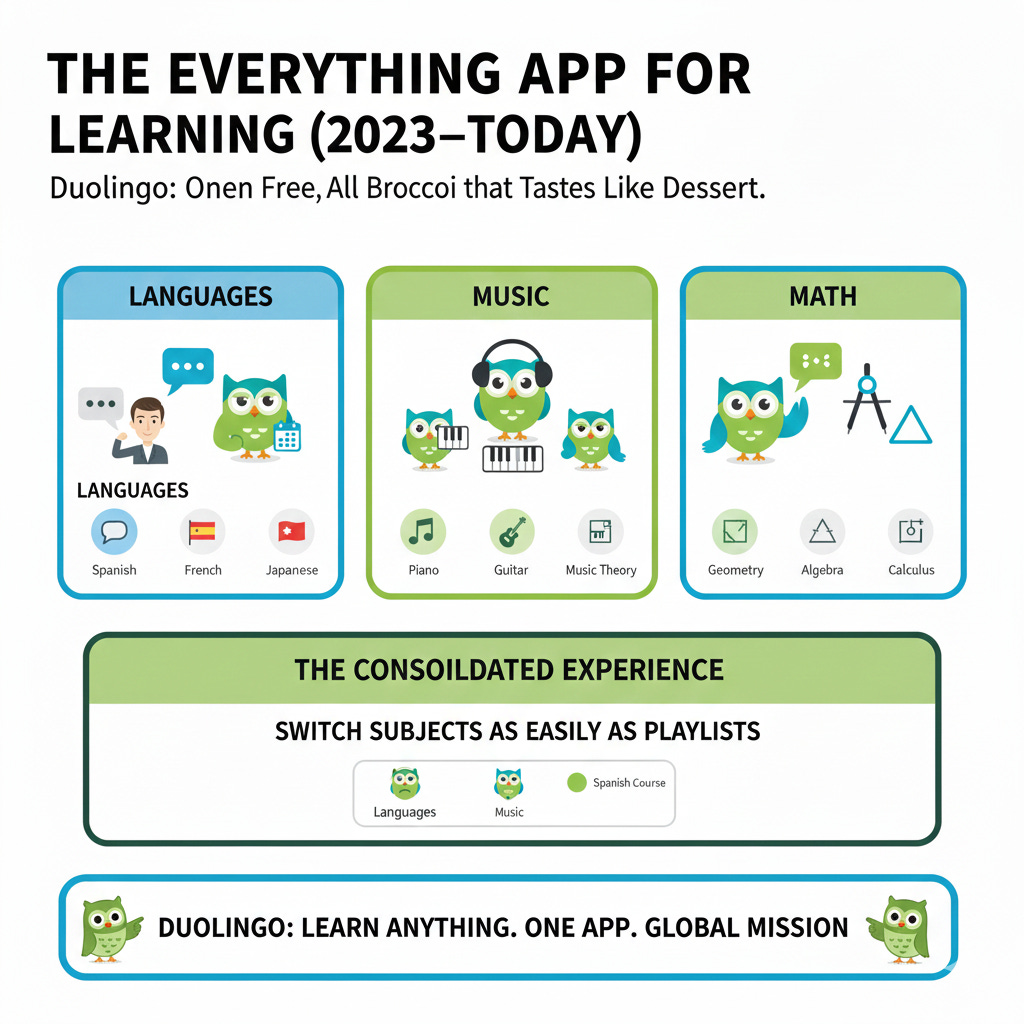
In 2023, Duolingo officially moved away from being just a language app, and consolidated its various subjects into a single, flagship experience. Today, you can switch between a Spanish lesson, a piano song, and a geometry puzzle as easily as switching playlists on Spotify.
Duolingo Languages
The core of the app, now offering over 42 languages ranging from global staples like Spanish and Japanese to endangered or fictional languages like Navajo and High Valyrian.
The Experience: A linear path of bite-sized lessons focused on reading, writing, listening, and speaking.
Free Features: Access to the full curriculum of all 40+ languages, interactive stories, and basic practice sessions. (Note: Free users are limited by a Heart system. Making five mistakes requires waiting for hearts to refill or buying them with in-app gems.
Duolingo Math
Launched to tackle “math anxiety,” this course focuses on foundational and everyday mathematics through a highly visual interface.
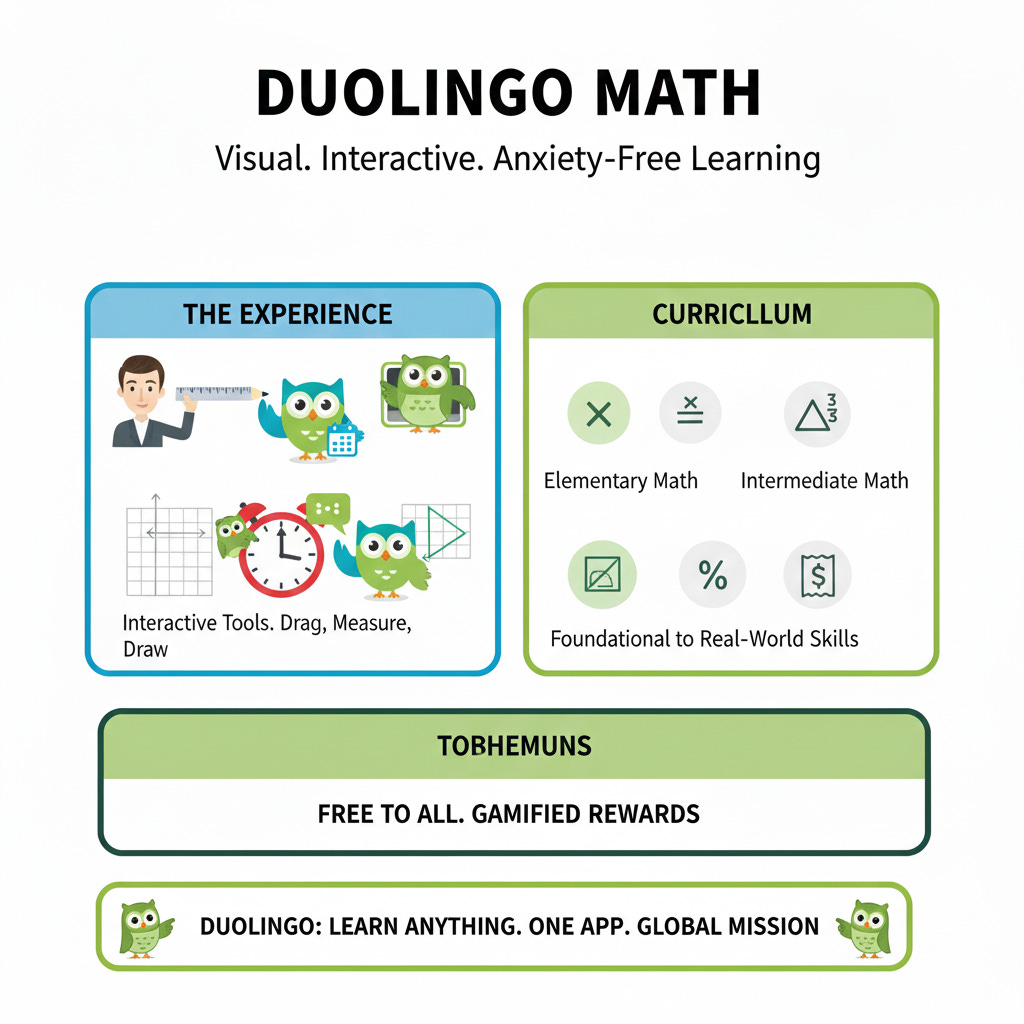
The Experience: Instead of multiple-choice questions, users interact with virtual tools—dragging clock hands to set time, measuring objects with digital rulers, or drawing shapes to calculate area.
Curriculum: Covers Elementary Math (multiplication, division, fractions, place value) and Intermediate Math (decimals, geometry, and real-world skills like calculating tips or hourly wages).
Free Features: The entire math curriculum is accessible for free, with the same gamified rewards (XP and streaks) found in the language courses.
Duolingo Music
Designed for absolute beginners, Duolingo Music teaches the basics of music theory and performance without requiring a physical instrument.
The Experience: The app uses a virtual on-screen piano. Lessons follow a Guitar Hero-style format where notes scroll across the screen, and you must tap the corresponding key in rhythm.
Curriculum: Teaches how to read sheet music (treble clef), understand rhythms/note lengths, and play over 200 familiar songs.
Free Features: Full access to the music path and the Instrument Tab (a free-play piano mode) is available to all users.
Duolingo Chess
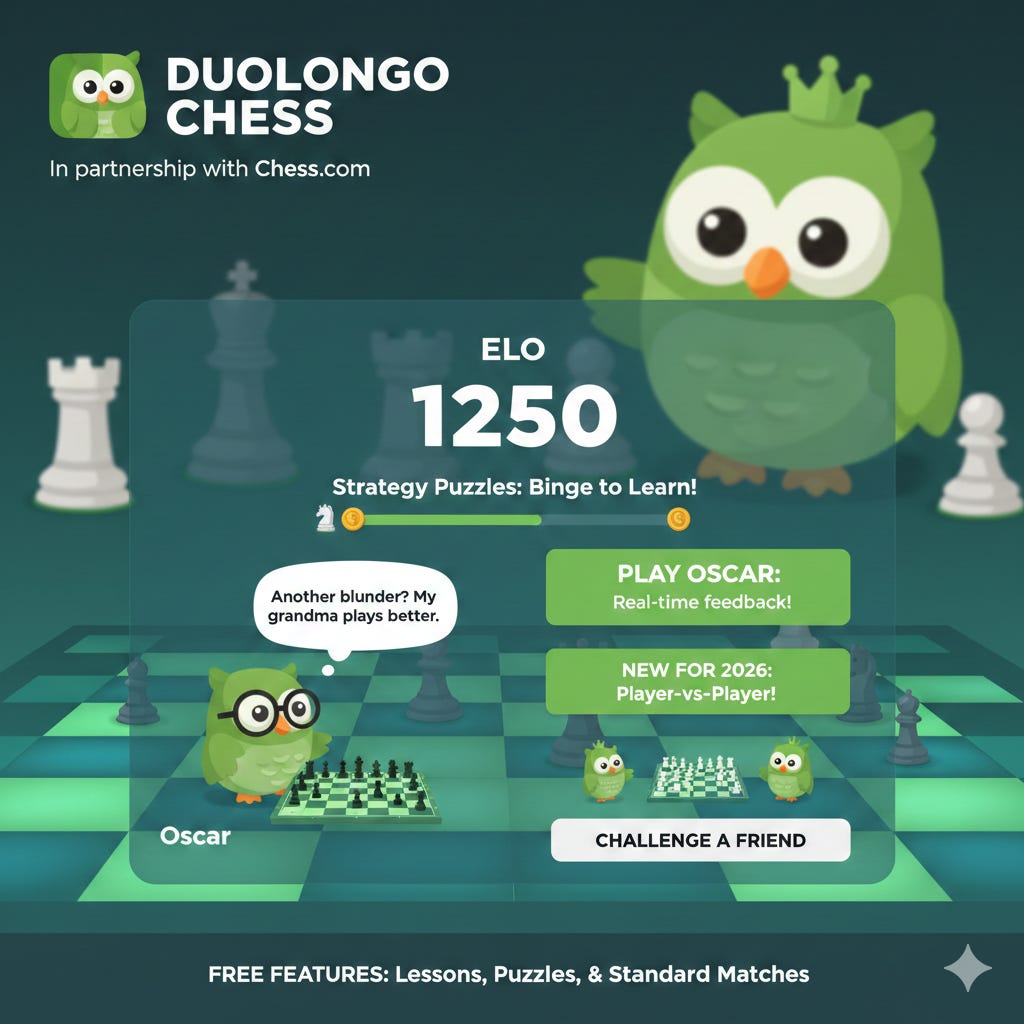
The newest addition to the lineup, developed following a massive partnership with Chess.com.
The Experience: Structured around the Elo rating system, it uses “bingeable” puzzles to teach strategy. You can play full games against Oscar, the virtual chess coach, who provides real-time feedback and sarcasm.
New for 2026: A Player-vs-Player (PvP) mode has been rolled out, allowing Duolingo users to challenge each other in real-time matches for the first time.
Free Features: All chess lessons, puzzles, and standard matches against Oscar are free.
Subscription Tiers: Super vs. Max
Duolingo uses a freemium model where the actual learning content is never behind a paywall, but the convenience and depth of that learning are.
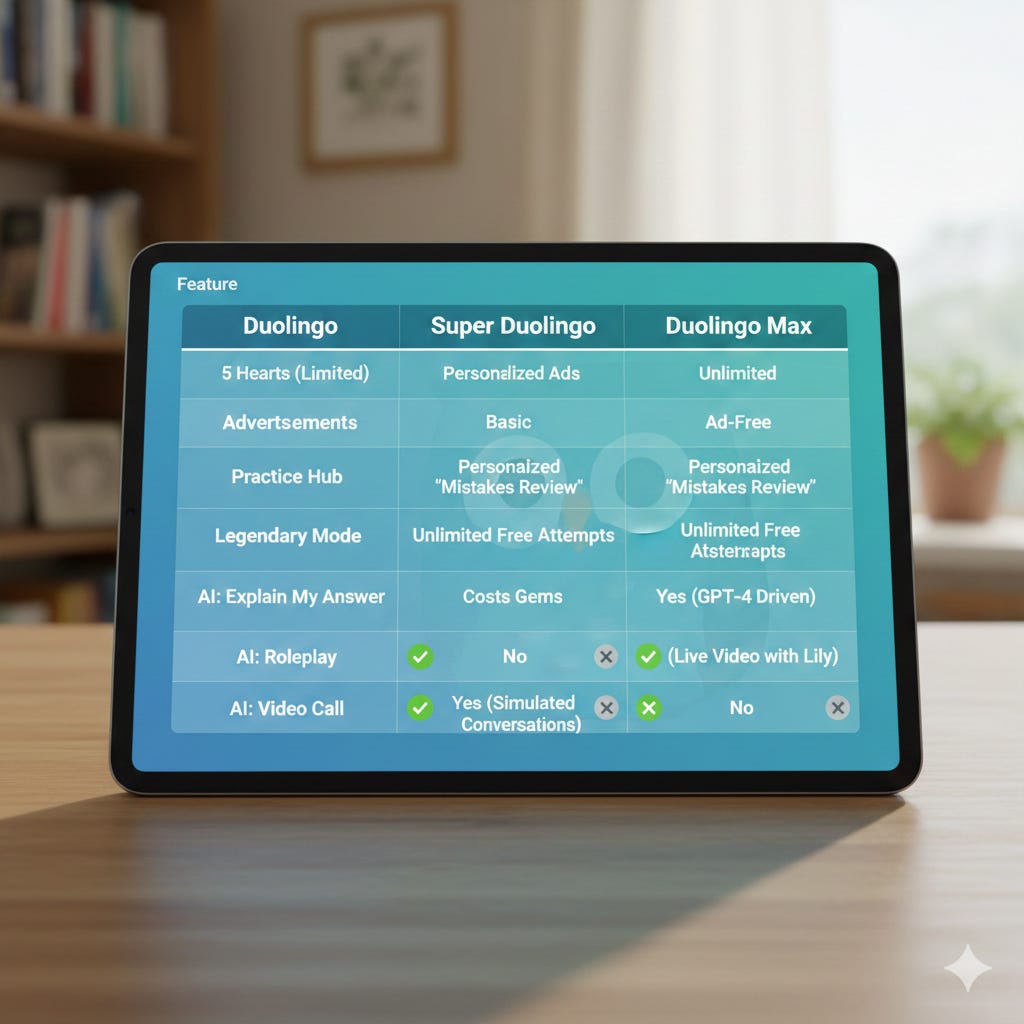
Super Duolingo: The Frictionless Tier
Cost: ~$12.99/mo (or ~$84/year).
Who it’s for: Serious learners who don’t want to be interrupted by ads or “locked out” of the app for making too many mistakes. It includes the Practice Hub, which generates custom quizzes based on your recent errors.
Duolingo Max: The AI Tutor Tier
Cost: ~$29.99/mo (Pricing varies by region).
Who it’s for: Learners aiming for fluency. Max leverages GPT-4 to provide features that previously required a human tutor:
Explain My Answer: If you get a question wrong, you can tap a button to get a detailed, conversational explanation of the grammar rule you missed.
Roleplay: You chat with the app’s characters (like Lin or Eddy) in specific scenarios, such as ordering a coffee or planning a trip, and receive feedback on your conversational accuracy.
Video Call: An immersive feature where you can practice real-time speaking through a simulated video call with Lily, the app’s iconic “unimpressed” teenager.
The Road to Mastery
Duolingo is no longer content with being an app you use just to get by on vacation. Under Luis von Ahn’s leadership, the company is undergoing its most significant evolution yet: attempting to move from language exposure to language proficiency.
The B2 Mission: Education for the Real World
Luis von Ahn has a specific, high-stakes goal: to make Duolingo’s core courses good enough to get a learner to a B2 proficiency level (Upper Intermediate) on the CEFR scale.
The Goal: B2 is often cited as the “professional” level—the point where a person can work in a foreign country or develop complex arguments in another language.
Job-Ready Skills: By 2026, Duolingo has redesigned its top nine courses (English, Spanish, French, German, etc.) to include professional-grade content, such as writing formal emails, planning business meetings, and passing industry-standard certification exams.
Reinventing High-Stakes Testing
The Duolingo English Test (DET) is the tip of the spear for this mission. Having experienced the barriers of high-stakes testing himself—once having to fly from Guatemala to El Salvador just to take an English exam—Luis has turned the DET into a global powerhouse.
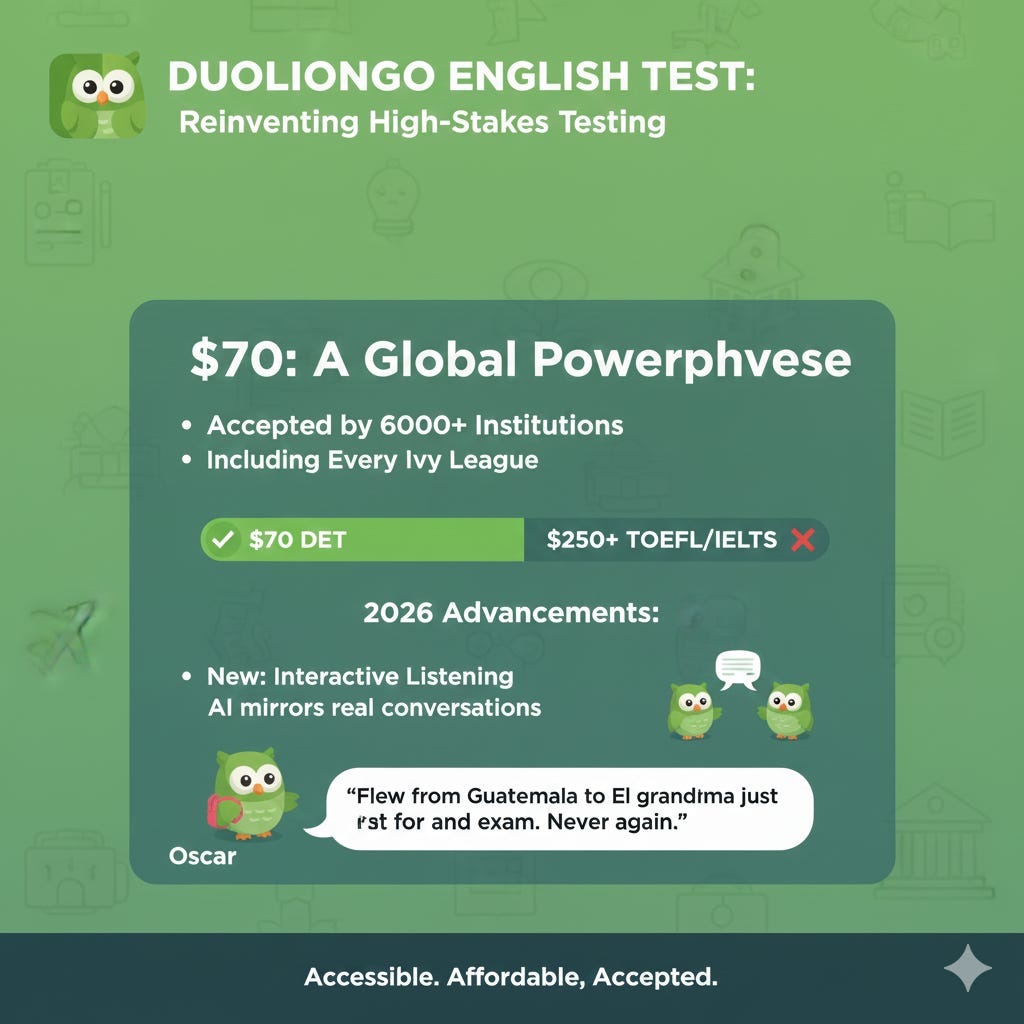
2026 Advancements: The test has phased out older question types (like “Listen and Select”) in favor of Interactive Listening, which uses AI to mirror real-world conversation patterns.
Acceptance: It is now accepted by over 6,000 institutions, including every Ivy League university, making it a legitimate, $70 alternative to the $250+ legacy exams like TOEFL or IELTS.
AI-First Evolution: The End of Guesswork
In late 2025, Duolingo declared itself an AI-First company. This isn’t just about chatbots; it’s about the entire architecture of learning:
Video Call with Lily: This feature has become a staple for Duolingo Max users, providing real-time, unscripted speaking practice that was previously only possible with expensive human tutors.
DuoRadio: To bridge the gap between “knowing words” and “understanding native speakers,” the app has rolled out thousands of hours of audio content that simulates podcasts and radio shows tailored to your exact vocabulary level.
LinkedIn Integration: In a move toward professional credibility, 2026 users can now sync their Duolingo Score directly to their LinkedIn profiles, providing a verified badge of their linguistic and mathematical skills to potential employers.
Expanding the Curriculum: Math and Music
The Green Machine is also scaling beyond languages.
Advanced Math: The curriculum has expanded into grades 6–9, covering Algebra, Geometry, and Statistics. Users can now browse and start any unit they need, rather than following a strict linear path.
Music Performance: The Music course now features an Instruments Tab for Android and iOS, allowing users to practice on a real-life digital piano layout and play popular tracks from major music artists.
The Cracks in the Shell: Threats to the Duo Empire
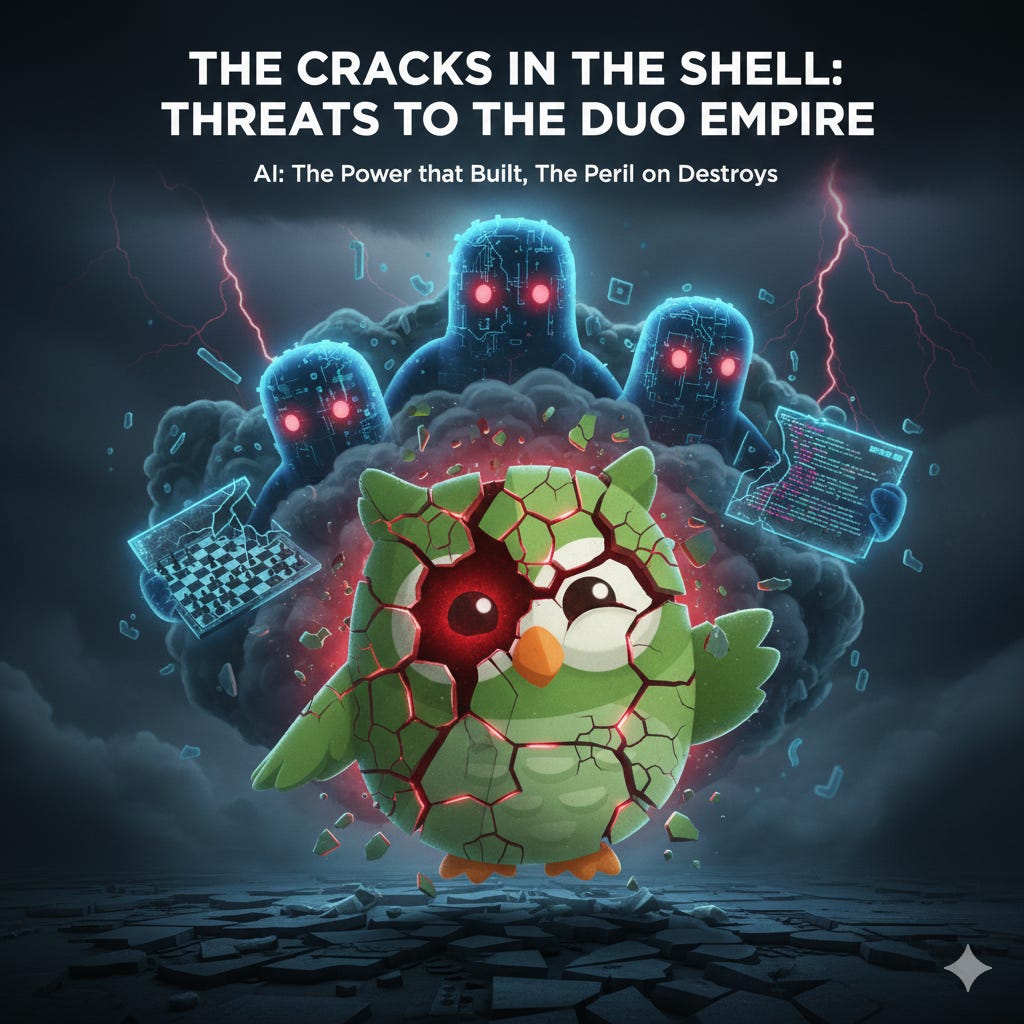
Despite its massive $8-billion-plus valuation and cultural dominance, Duolingo is currently navigating its most dangerous era since its founding. The very technology that fueled its growth—AI—now poses its greatest existential threat.
The AI Slop Backlash
In 2024 and 2025, Duolingo faced a massive community revolt after laying off roughly 10% of its contract translators to “make room” for AI-generated content.
The Quality Crisis: Power users and linguists began reporting that AI-generated lessons lacked the cultural nuance, slang, and “soul” of human-curated ones. Reddit and TikTok saw a wave of “rage-quitting,” with long-term users deleting 1,000-day streaks because the app began to feel like a “robotic vocabulary list” rather than a conversation partner.
Brand Risk: By becoming AI-first, Duolingo risks losing its identity as a quirky, human-centric educator and becoming just another software interface.
The Rise of AI-Native Rivals
While Duolingo is busy retrofitting AI into an old system, new competitors like ChatGPT, Praktika, and Speak were built inside the AI era.
The Tutor Threat: Why play a gamified matching game on Duolingo for 20 minutes when you can have a 5-minute, perfectly natural voice conversation with ChatGPT or a specialized AI tutor?
Depth vs. Engagement: Newer apps are focusing on “Deep Learning” (conversation and grammar) rather than “Shallow Gamification” (streaks and leaderboards). If users start valuing actual fluency over streak points, Duolingo’s engagement numbers could plummet.
High-Stakes Fatigue
By pushing into math, music, and professional certification (the DET), Duolingo is moving away from fun and into labor.
The Saturation Point: There is a limit to how many reminders a human can handle. If the app becomes a nagging machine for five different subjects, users may experience notification fatigue and delete the app entirely to reclaim their peace.
The Translation is Free Paradox
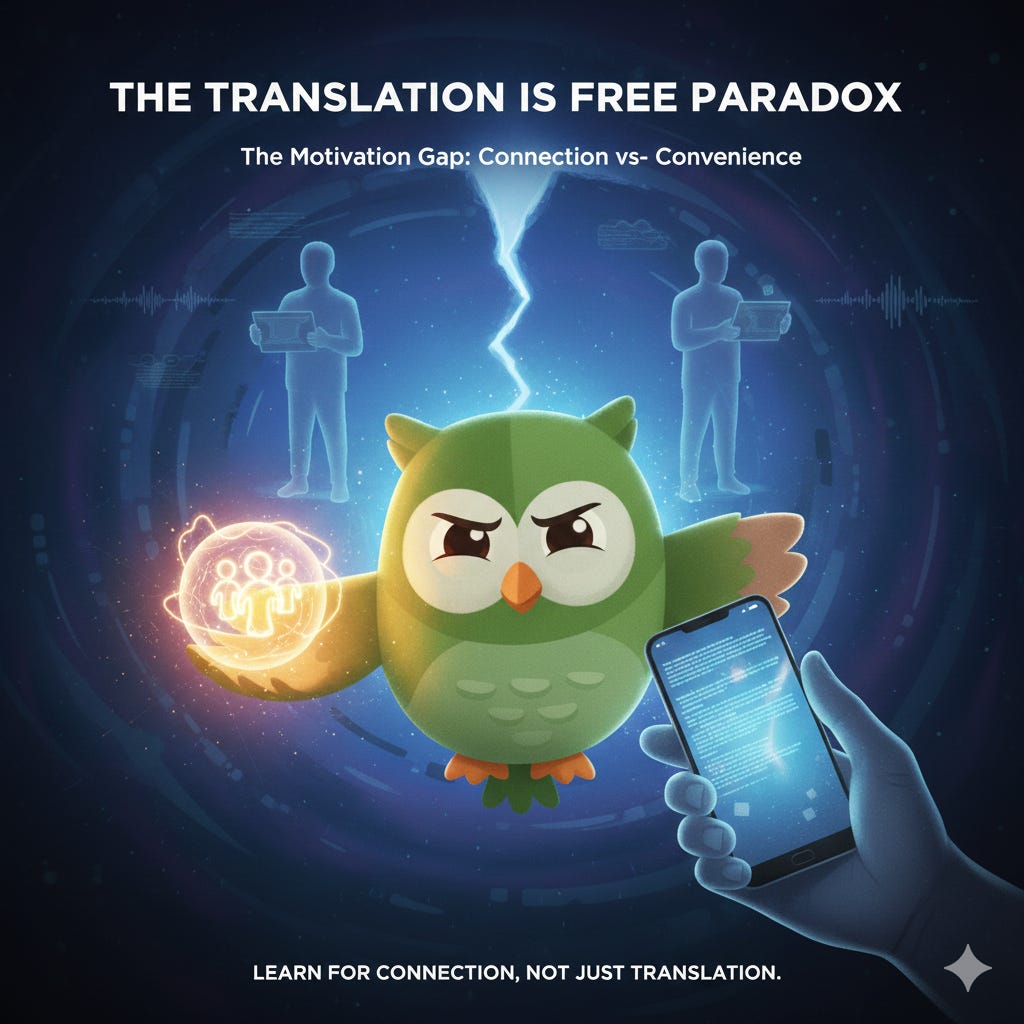
As real-time translation earbuds and live-translation features in smartphones (like those from Apple and Google) become perfect, the utility of learning a language for travel or basic business begins to drop.
The Motivation Gap: If a tourist can simply speak into their phone and have it perfectly translated in real-time, the “economic incentive” to spend 200 hours on Duolingo diminishes. Duolingo must convince the world that learning a language is about connection, not just translation.
Luis von Ahn on the AI Revolution
For Luis von Ahn, the transition to AI isn’t just a corporate pivot, it is a fulfillment of the mission he started at Carnegie Mellon. However, his AI-first stance has made him a lightning rod for controversy in the education sector.
