

The Century-Old Startup
In the world of equity research, true “Compounding Alpha” is rarely found in the flavor of the week; it is found in companies that possess the discipline to do one thing better than anyone else on the planet for a hundred years. Novo Nordisk (NVO) is the quintessential example of this “Vertical Specialization.” While its peers spent the last century diversifying into animal health and consumer generics, Novo remained obsessed with the endocrine system, quietly building a fortress in peptide chemistry that has now culminated in the GLP-1 revolution. Today, Novo Nordisk is no longer just a “diabetes company”—it is the architect of a new era in cardiometabolic medicine. With the launch of the Wegovy® pill and the integration of the Catalent manufacturing engine in 2026, the company is pivoting from a supply-constrained growth story to a high-volume, vertically integrated monopoly. This report deconstructs the “Triple Moat” of NVO, exploring how a century of specialized history has created a clinical and manufacturing lead that even the deepest pockets in Big Pharma are struggling to bridge.
The Century of Specialization
The history of Novo Nordisk is unique because it was born from a rivalry. For over 60 years, two Danish companies—Nordisk Insulinlaboratorium and Novo Terapeutisk Laboratorium—competed fiercely before merging in 1989 to become the world’s largest producer of insulin.
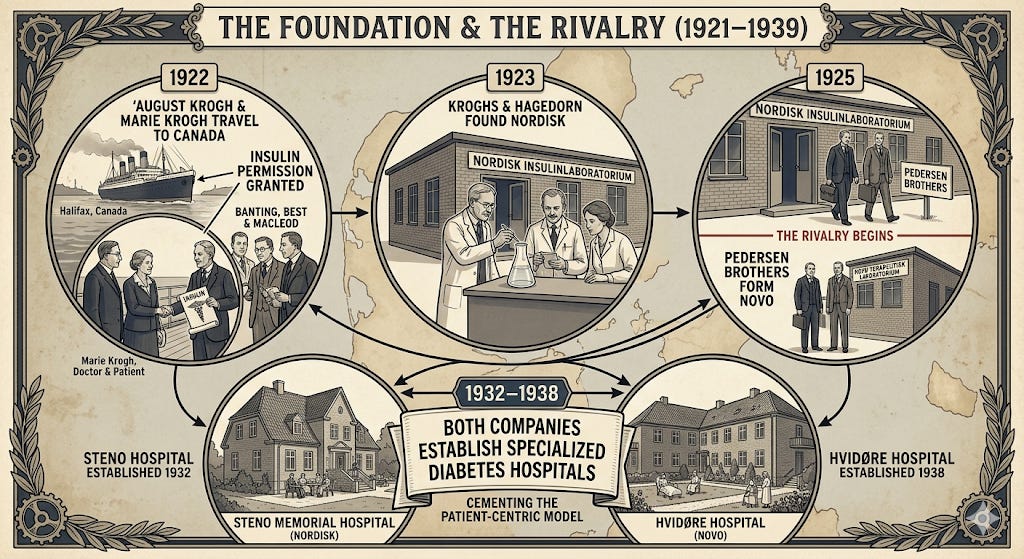
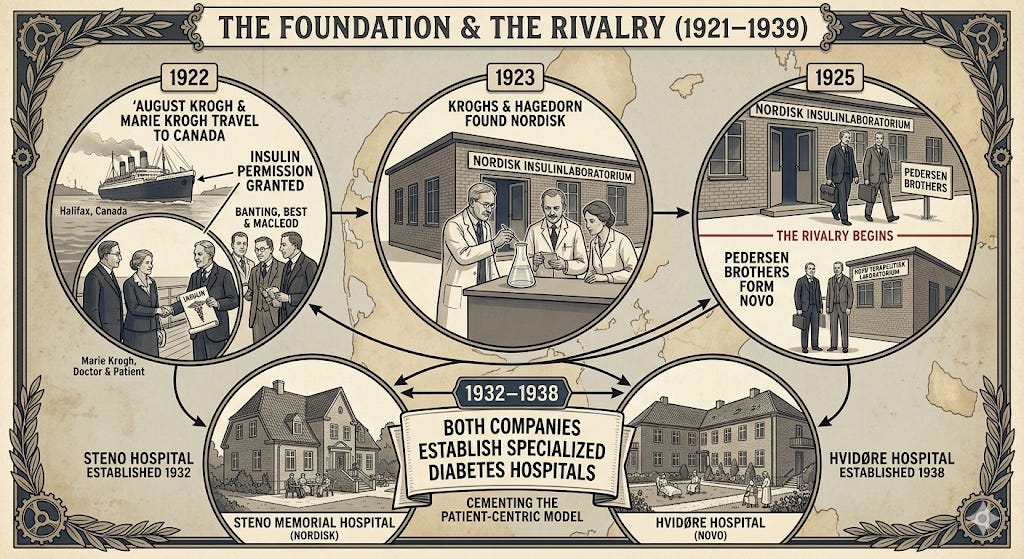
The Foundation & The Rivalry (1921–1939)
1922: Nobel laureate August Krogh and his wife Marie Krogh (a doctor and diabetes patient) travel to Canada to meet the discoverers of insulin. They receive permission to produce it in Denmark.
1923: The Kroghs and Dr. H.C. Hagedorn found Nordisk Insulinlaboratorium.
1925: Brothers Harald and Thorvald Pedersen, former employees of Nordisk, break away to form their own company, Novo Terapeutisk Laboratorium.
1932–1938: Both companies establish specialized hospitals (Steno Memorial and Hvidøre) dedicated to treating diabetes, cementing their patient-centric model early on.
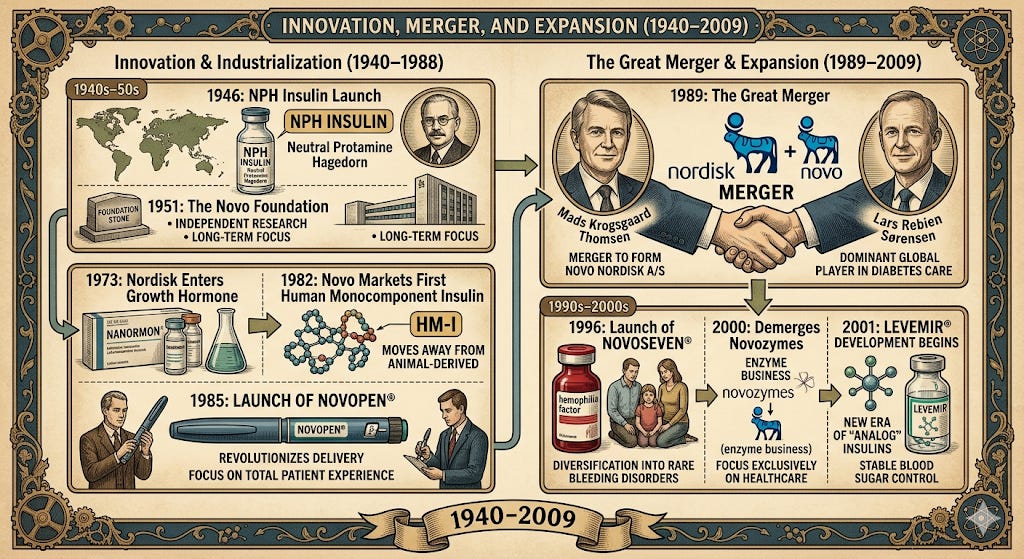
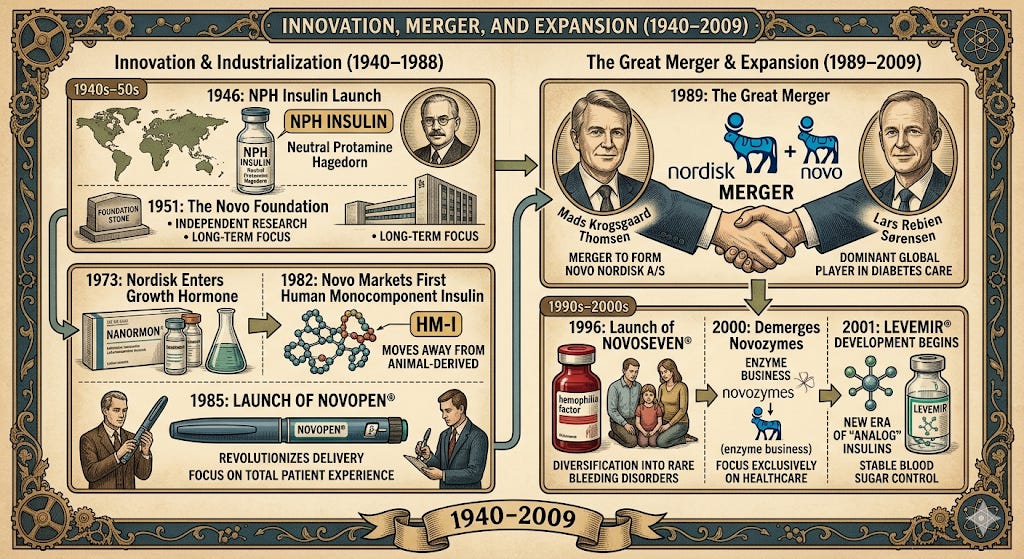
Innovation & Industrialization (1940–1988)
1946: Nordisk launches NPH insulin (Neutral Protamine Hagedorn), an intermediate-acting insulin that becomes a global standard for decades.
1951: The Novo Foundation is established to ensure the company remains independent and focused on long-term research—a precursor to today’s unique ownership structure.
1973: Nordisk enters the growth hormone market with Nanormon.
1982: Novo markets the world’s first Human Monocomponent Insulin, moving away from animal-derived (porcine/bovine) products.
1985: The launch of NovoPen®, the first insulin pen device, revolutionizes delivery and shifts the focus from just the drug to the total patient experience.
The Great Merger & Expansion (1989–2009)
1989: The two rivals merge to form Novo Nordisk A/S. The merger creates a dominant global player in diabetes care.
1996: Launch of NovoSeven® for hemophilia, diversifying the company into rare bleeding disorders.
2000: The company demerges its enzyme business into Novozymes A/S, allowing Novo Nordisk to focus exclusively on healthcare.
2001: Levemir® (long-acting insulin analog) development begins, starting a new era of “analog” insulins that provide more stable blood sugar control.
The GLP-1 Revolution & Modern Era (2010–Present)
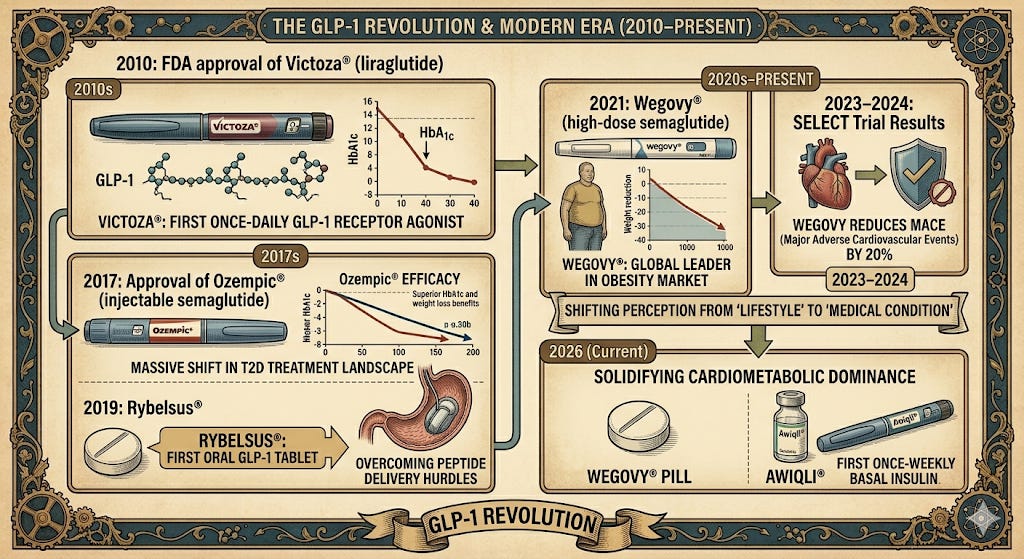
2010: FDA approval of Victoza® (liraglutide), the company’s first once-daily GLP-1 receptor agonist.
2017: Approval of Ozempic® (injectable semaglutide). Its superior efficacy in lowering HbA1c and providing weight loss benefits triggers a massive shift in the T2D treatment landscape.
2019: Rybelsus® is approved as the first oral GLP-1 tablet, overcoming significant peptide delivery hurdles.
2021: Wegovy® (high-dose semaglutide) is approved for chronic weight management, turning Novo Nordisk into a global leader in the obesity market.
2023–2024: The SELECT trial results demonstrate that Wegovy reduces the risk of major adverse cardiovascular events (MACE) by 20%, shifting the perception of obesity from a “lifestyle” issue to a critical medical condition.
2026 (Current): Launch of the Wegovy® pill and the first once-weekly basal insulin (Awiqli®), further solidifying their cardiometabolic dominance.
Strategic Note
Moat Observation: Novo Nordisk’s history is a case study in Vertical Specialization. Unlike many Big Pharma peers that diversified into everything from animal health to consumer goods, Novo reinvested almost all its compounding capital back into the endocrine system. This 100-year head start in peptide chemistry is exactly what allowed them to dominate the GLP-1 market while competitors were still playing catch-up.
The GLP-1 Franchise: From Diabetes to “Whole-Body” Medicine
Novo Nordisk’s GLP-1 strategy is built on a single molecule, Semaglutide engineered into three distinct delivery systems, now evolving into next-generation combinations.
While the core molecule, semaglutide, remains the same, Novo Nordisk has masterfully segmented it into three distinct brands. In 2026, this strategy is less about “one-size-fits-all” and more about creating a “clinical moat” across every major metabolic complication.
Ozempic: The Gold Standard for Type 2 Diabetes
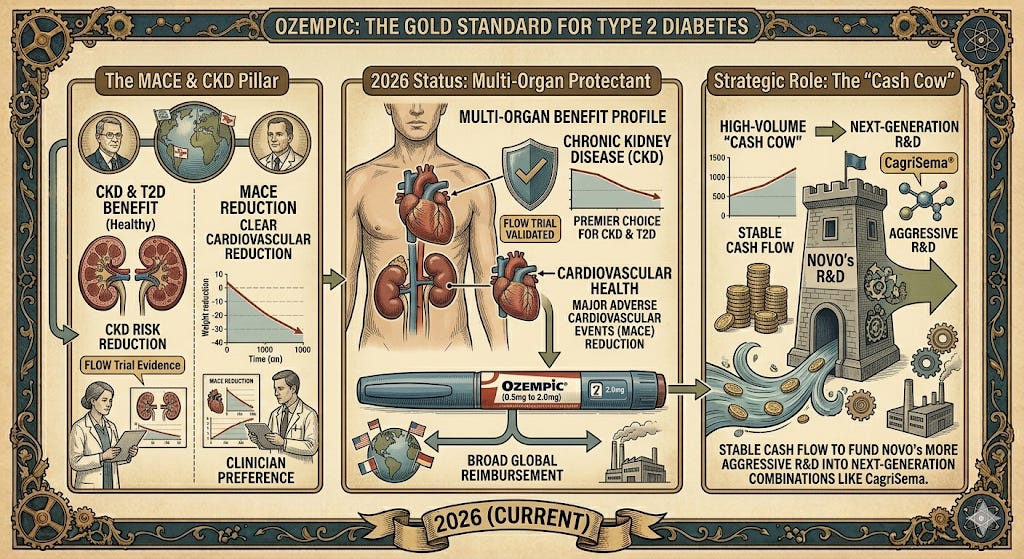
Ozempic remains the cornerstone of the franchise, delivered via a weekly subcutaneous injection (0.5mg to 2.0mg). While originally a diabetes drug, its 2026 status is defined by its role as a multi-organ protectant.
The MACE and CKD Pillar: Following the landmark FLOW trial, Ozempic is now the premier choice for clinicians treating patients with both Type 2 Diabetes and Chronic Kidney Disease (CKD).
Strategic Role: As a high-volume “cash cow” with broad global reimbursement, it provides the stable cash flow necessary to fund Novo’s more aggressive R&D into next-generation combinations like CagriSema.
Rybelsus: The “Bio-Pill” Disruptor
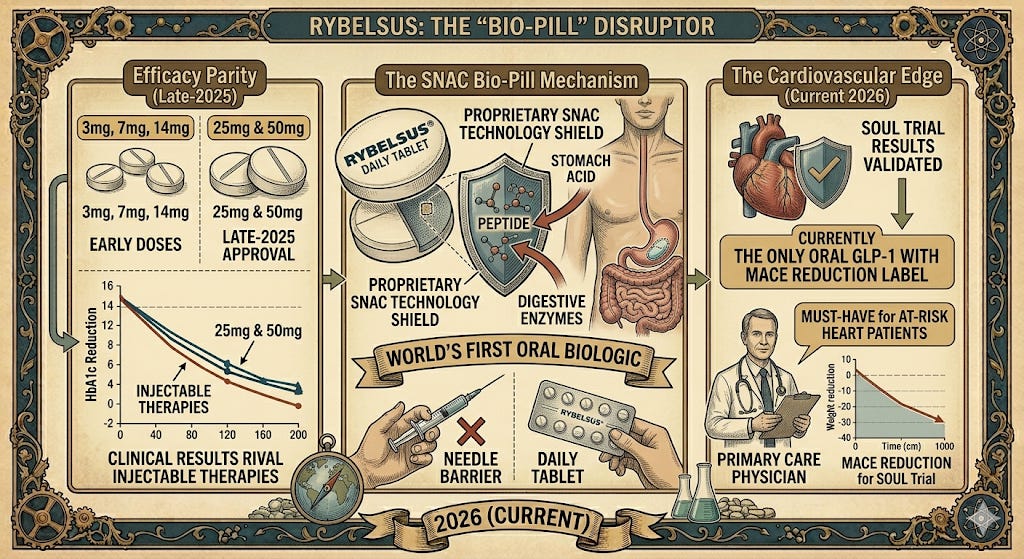
Rybelsus represents one of the most significant engineering feats in pharmaceutical history: the world’s first oral biologic. By using proprietary SNAC technology to shield the peptide from stomach acid, Novo has created a daily tablet that bypasses the “needle barrier.”
Efficacy Parity: With the late-2025 approval of the 25mg and 50mg higher-dose tablets, Rybelsus now offers clinical results that rival injectable therapies.
The Cardiovascular Edge: Following the SOUL trial results in late 2025, Rybelsus is currently the only oral GLP-1 on the market with a proven cardiovascular (MACE) reduction label, making it a “must-have” for primary care physicians treating at-risk heart patients.
Wegovy: Redefining Obesity as a Medical Priority
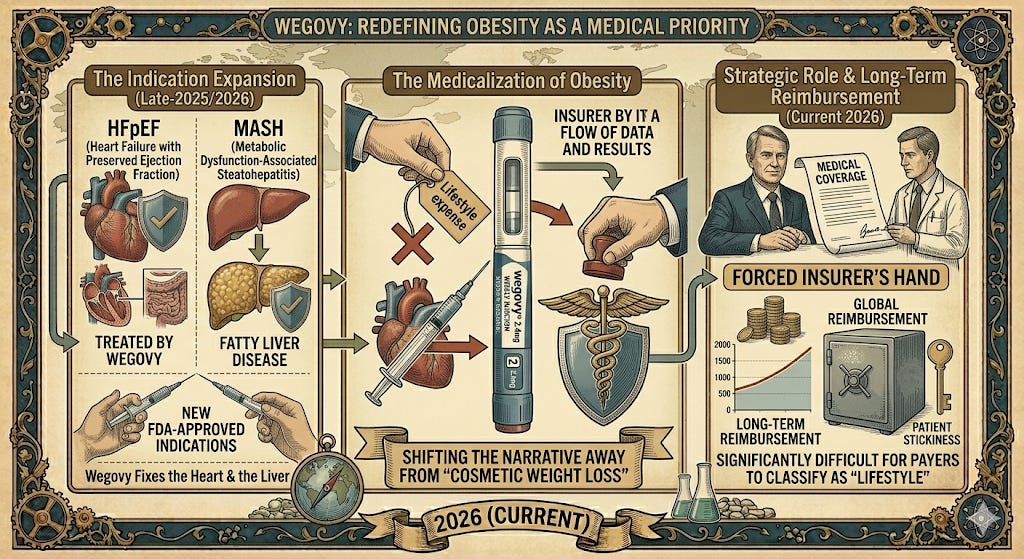
Wegovy (2.4mg weekly injection) is the primary engine of Novo’s current valuation. In 2026, the narrative has shifted away from “cosmetic weight loss” toward lifesaving metabolic intervention.
The Indication Expansion: Wegovy’s label now includes treatments for HFpEF (Heart Failure with preserved Ejection Fraction) and MASH (Metabolic Dysfunction-Associated Steatohepatitis), also known as fatty liver disease.
Strategic Role: By proving that Wegovy fixes the heart and the liver, Novo has effectively forced the hand of insurers. This “medicalization” of obesity makes it significantly more difficult for payers to classify the drug as a “lifestyle” expense, securing long-term reimbursement and patient stickiness.
The 2026 Breakthroughs: Oral Wegovy & High-Dose Injections
The most significant shift in the last 12 months has been the “democratization” of weight loss through oral delivery:
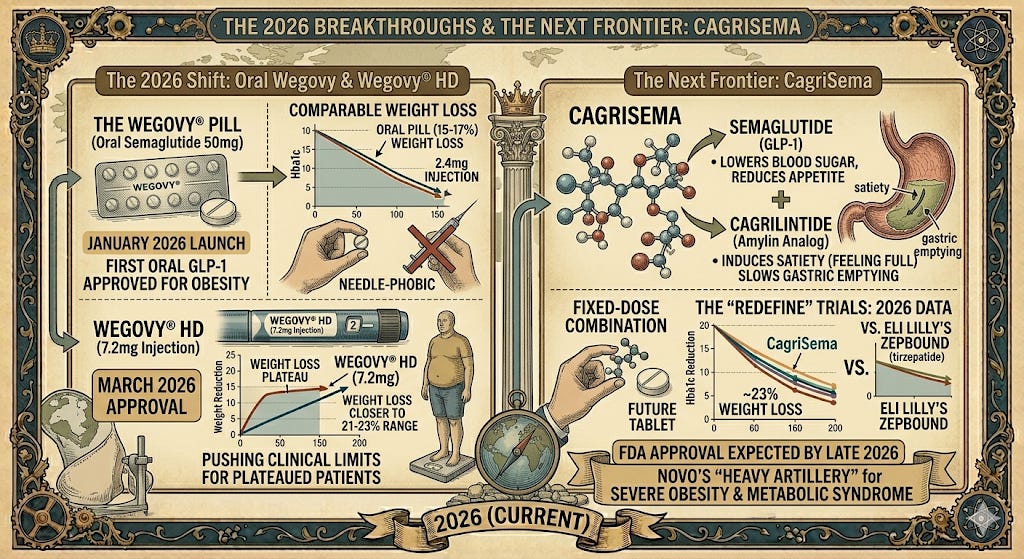
The Wegovy® Pill (Oral Semaglutide 50mg): Launched in January 2026, this is the first oral GLP-1 specifically approved for obesity. It delivers weight loss (approx. 15-17%) comparable to the 2.4mg injection, providing a massive advantage for patients who are “needle-phobic.”
Wegovy® HD (High Dose): Approved in March 2026, this 7.2mg injectable dose targets patients who have plateaued on lower doses, pushing clinical weight loss closer to the 21-23% range.
The Next Frontier: CagriSema
While Semaglutide is the current king, Novo’s future “moat” rests on CagriSema—a fixed-dose combination of:
Semaglutide (GLP-1): Lowers blood sugar and reduces appetite.
Cagrilintide (Amylin Analog): A long-acting analog of the hormone amylin that induces satiety (feeling full) and slows gastric emptying.
The “REDEFINE” Trials: 2026 data shows that CagriSema achieves ~23% weight loss. While it faced stiff competition from Eli Lilly’s Zepbound (tirzepatide) in head-to-head trials earlier this year, CagriSema remains Novo’s “heavy artillery” for the most severe cases of obesity and metabolic syndrome. FDA approval is expected by late 2026.
Investment Catalyst: The “Triple Moat” Analysis
Manufacturing Scale: Novo has invested over $6 billion in manufacturing (including the Catalent acquisition) to resolve the shortages of 2023-2025. In 2026, they are the only company capable of producing both high-volume biologics and complex oral “protein” pills at this scale.
The SNAC Platform: Their proprietary SNAC (salcaprozate sodium) technology—the “bodyguard” that helps pills get absorbed—is a massive barrier to entry for generic competitors. Even if the semaglutide molecule eventually goes off-patent, the oral delivery system remains protected.
Indication Expansion: Novo isn’t just “the weight loss company.” They are successfully reclassifying obesity as a gateway disease. By proving GLP-1s treat heart failure, kidney disease, and MASH, they are securing long-term insurance coverage that “lifestyle” drugs never get.
Note on Competition: Keep an eye on Eli Lilly’s Orforglipron (a “small molecule” oral GLP-1). Unlike Novo’s pill, it doesn’t require fasting before taking it, which could be a significant convenience threat later this year.
The Next Decade: Beyond Semaglutide
Novo Nordisk’s pipeline is currently focused on three strategic pillars: Combination Therapies, Next-Generation Orals, and Expansion into Rare Disease.
Combination Therapies: The “Heavy Artillery”
To maintain dominance as competitors enter the market, Novo is moving toward “multi-receptor” drugs that offer higher weight loss with fewer side effects.
CagriSema (Semaglutide + Cagrilintide):
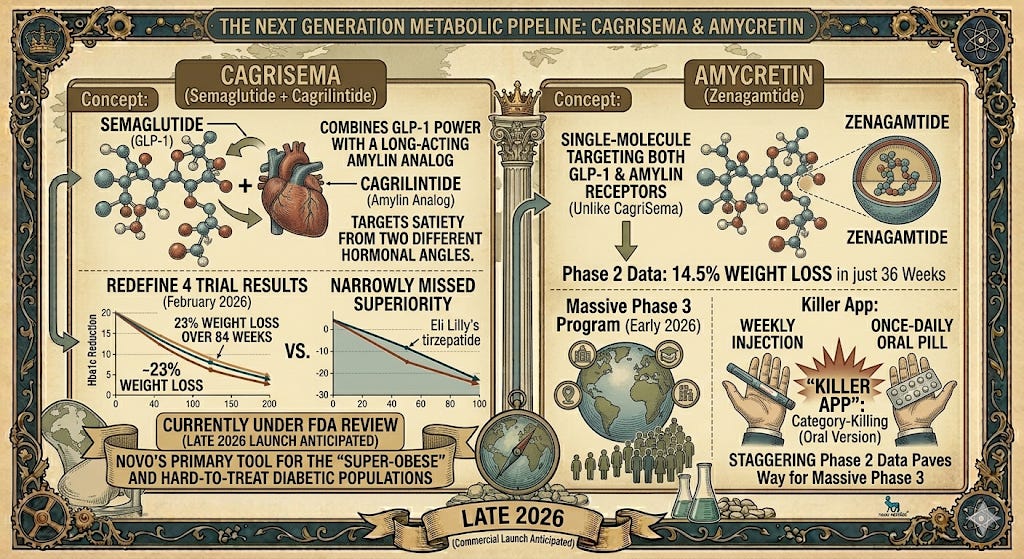
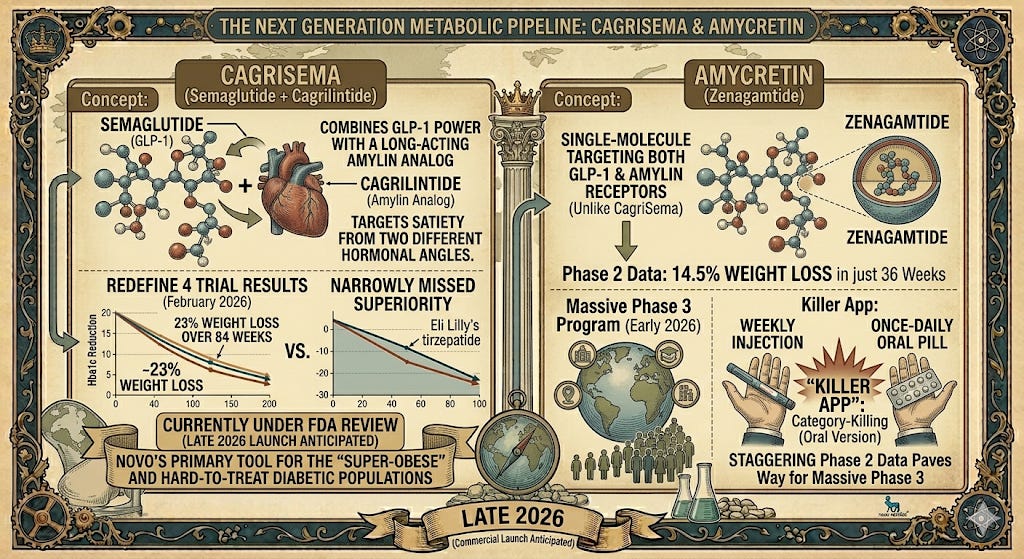
The Concept: Combines the GLP-1 power of semaglutide with a long-acting amylin analog (cagrilintide) to target satiety from two different hormonal angles.
2026 Status: Following the REDEFINE 4 trial results in February 2026, which showed 23% weight loss over 84 weeks, CagriSema is currently under FDA review. While it narrowly missed “superiority” over Eli Lilly’s tirzepatide, it remains Novo’s primary tool for the “super-obese” and hard-to-treat diabetic populations.
Timeline: Full US commercial launch is anticipated for late 2026.
Amycretin (Zenagamtide):
The Concept: A “co-agonist” that targets both GLP-1 and Amylin receptors within a single molecule (unlike CagriSema, which is two molecules mixed together).
2026 Status: After Phase 2 data showed a staggering 14.5% weight loss in just 36 weeks, Novo has moved Zenagamtide into a massive Phase 3 program in early 2026.
The “Killer App”: It is being developed as both a weekly injection and a once-daily oral pill. An oral version with this much potency would be a category-killer.
The “Once-Weekly” Revolution in Insulin
For 100 years, insulin has been a daily burden. Novo is on the verge of changing that.
Awiqli® (Icodec):
The Breakthrough: Approved by the FDA in March 2026, Awiqli is the world’s first once-weekly basal insulin.
Strategic Impact: This is a massive “stickiness” factor for Novo. By reducing 365 injections a year down to just 52, they are effectively locking in the Type 2 Diabetes market and protecting their insulin franchise from biosimilar (generic) erosion.
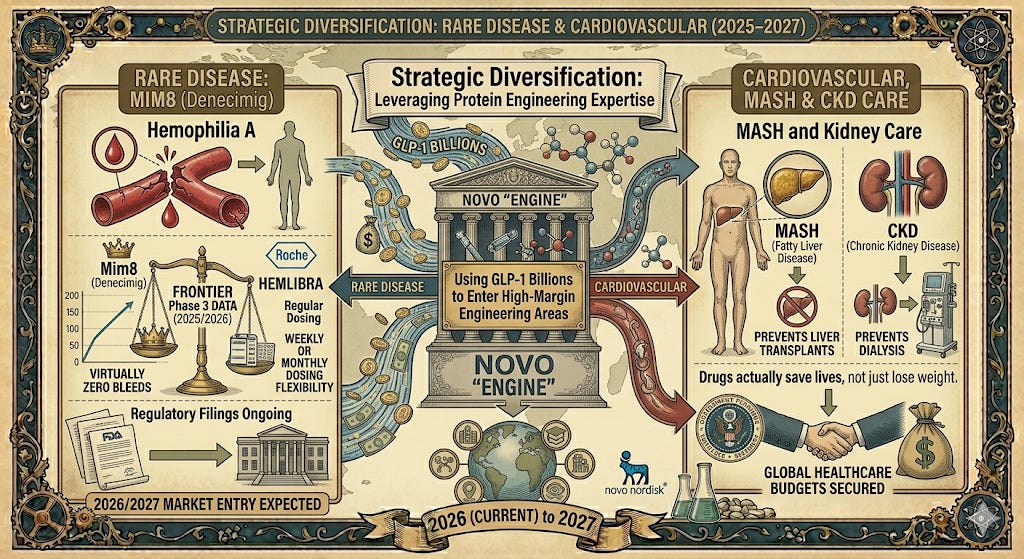
Strategic Diversification: Rare Disease & Cardiovascular
Novo is using its “GLP-1 billions” to diversify into high-margin areas where they can leverage their protein engineering expertise.
Mim8 (Denecimig): * Indication: Hemophilia A.
Potential: 2025/2026 Phase 3 data (FRONTIER program) showed that Mim8 is potentially superior to the current market leader, Roche’s Hemlibra. It offers more flexible dosing (weekly or monthly) and virtually zero bleeds for many patients.
Timeline: Regulatory filings are ongoing, with a 2026/2027 market entry expected.
MASH and Kidney Care: * The company is moving aggressively into MASH (fatty liver disease) and CKD (Chronic Kidney Disease). By proving that their drugs don’t just “lose weight” but actually prevent liver transplants and dialysis, they are securing a place in government-funded healthcare budgets globally.
The transition from “Semaglutide-only” to a “Portfolio Approach.” By 2028-2030, when the early Ozempic patents begin to expire, Novo aims to have transitioned the majority of its patient base onto CagriSema, Zenagamtide, or Weekly Awiqli. This “evergreening” strategy ensures that even as the “miracle drug” hype fades, the company’s compounding engine continues to run on higher-margin, protected next-gen therapies.
Risk Factor: Keep an eye on the High-Dose Wegovy (7.2mg) rollout. If the side-effect profile (nausea/vomiting) at these higher doses proves too high for the average patient, the “ceiling” for semaglutide’s efficacy may be lower than expected, making the success of the amylin-based pipeline (Amycretin) even more critical.
The Patent Fortress: Defending the Semaglutide Franchise
For an investor, the “Life of Asset” is just as important as current sales. Novo Nordisk uses a “layered” patent strategy—protecting the molecule, the delivery device, and the manufacturing process separately—to delay generic entry as long as possible.
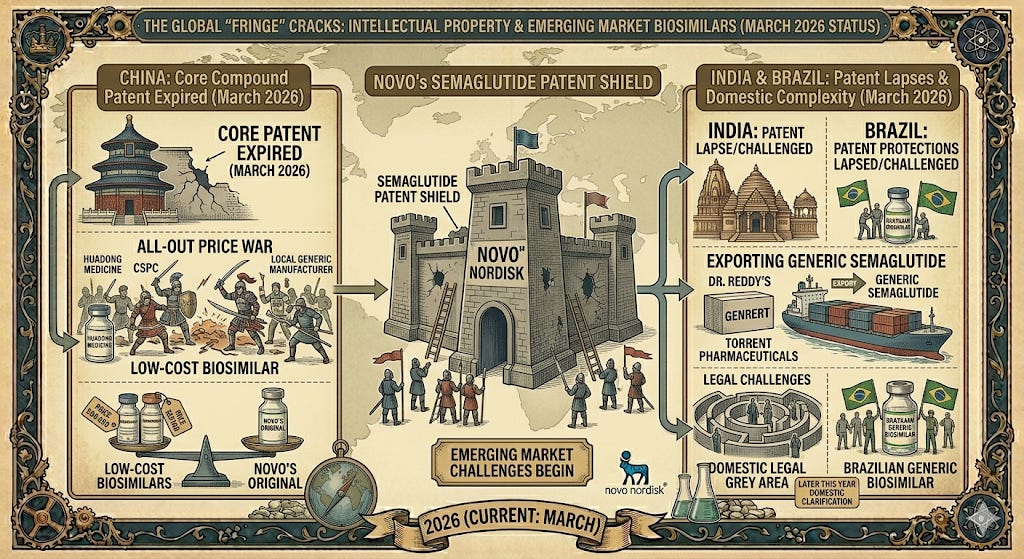
The Global “Fringe” Cracks (2026 Status)
As of March 2026, the first major holes in Novo’s patent shield have appeared in emerging markets.
China: The core compound patent for semaglutide expired in March 2026. This has triggered an “all-out price war” in the Chinese market, with over 15 local generic manufacturers (including Huadong Medicine and CSPC) launching low-cost biosimilars.
India & Brazil: Similar to China, patent protections have recently lapsed or been successfully challenged. In India, companies like Dr. Reddy’s and Torrent Pharmaceuticals have begun exporting generic semaglutide, though domestic sales remain in a complex legal “grey area” until later this year.
The Core Molecule: The 2031 Horizon
The foundational patent for the Semaglutide molecule (the active API in Ozempic, Wegovy, and Rybelsus) is currently slated for expiration in the United States in December 2031.
The Strategic Reality: This date represents the absolute earliest a true generic competitor could enter the US market. However, because semaglutide is a complex “biologic” peptide rather than a simple small-molecule chemical, the barrier to entry remains high. Competitors will need to prove “biosimilarity,” a process far more rigorous and expensive than standard generic approval.
The Delivery System: The “Mechanical Moat”
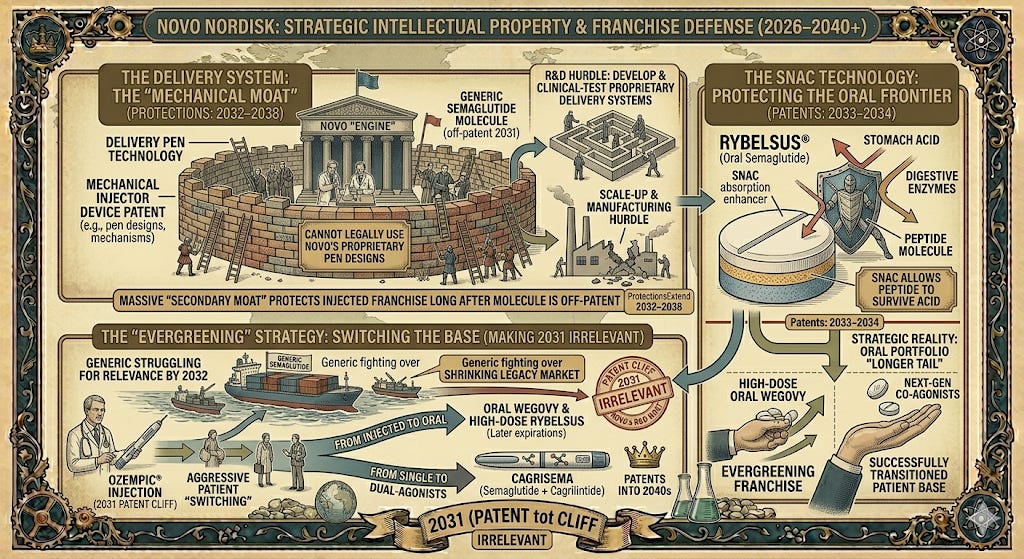
Perhaps the most underappreciated part of Novo’s defense is the Delivery Pen technology. As of 2026, over 50% of the patents surrounding the GLP-1 franchise cover the mechanical injector devices, with protections extending between 2032 and 2038.
The Strategic Reality: Even if a generic manufacturer successfully replicates the semaglutide molecule in 2032, they cannot legally use Novo’s proprietary pen designs. They must develop, clinical-test, and scale their own proprietary delivery systems. This creates a massive R&D hurdle and a “secondary moat” that protects the injected franchise long after the molecule itself is off-patent.
The SNAC Technology: Protecting the Oral Frontier
The oral version of semaglutide (Rybelsus) relies on a proprietary absorption enhancer known as SNAC (salcaprozate sodium). This technology acts as a “chemical bodyguard,” allowing the peptide to survive the harsh acidic environment of the stomach.
The Strategic Reality: The patents for the SNAC delivery platform remain in force until 2033–2034. This gives the oral portfolio a significantly “longer tail” than the initial Ozempic injections. By the time the SNAC patents expire, Novo expects to have successfully transitioned its patient base to high-dose oral Wegovy or next-generation co-agonists, effectively “evergreening” the franchise.
The “Evergreening” Strategy: Switching the Base
The goal for Novo is not to fight the 2031 patent cliff, but to make it irrelevant by the time it arrives. They are aggressively “switching” patients to newer, better-protected products:
From Injected to Oral: By the time Ozempic (injection) goes generic in 2032, Novo intends to have moved a significant portion of the market to Oral Wegovy and High-Dose Rybelsus, which carry later patent expirations.
From Single to Dual-Agonists: CagriSema (Semaglutide + Cagrilintide) is a new combination product with a patent life that extends well into the 2040s. If Novo can prove CagriSema is clinically superior to Ozempic, doctors will switch their patients to the “better” drug, leaving generic manufacturers fighting over a shrinking “legacy” market.
The “Compounding Alpha” Risk/Reward View
The Risk (The “Generics Are Coming”)
In 2026, the primary threat is compounding pharmacies. While Novo won a major legal battle in 2025 when the FDA removed semaglutide from the “shortage list” (effectively banning mass-compounding by firms like Hims & Hers), a new wave of “grey market” imports from China and India is currently flooding the global market. This puts downward pressure on pricing even before official generic entry in the US.
The Reward (The “Manufacturing Moat”)
Even when the patents expire in 2031, Novo holds a secret weapon: Manufacturing Complexity. Semaglutide is a “biologic” peptide, not a simple chemical pill like Aspirin.
Key Insight: Producing peptides at a scale of 100M+ doses requires specialized bio-reactors and sterile “fill-finish” facilities. By acquiring Catalent in 2024/2025, Novo effectively “cornered the market” on the infrastructure needed to make these drugs. Even if a generic company has the right to make the drug in 2032, they may not have the capacity to compete on price with Novo’s massive, vertically integrated supply chain.
Leadership & Strategy: Navigating the “Growth Reset” of 2026
After a decade of unprecedented expansion, Novo Nordisk entered 2026 with a fresh leadership mandate. The goal has shifted from creating the GLP-1 market to defending and scaling it in a high-pressure pricing environment.
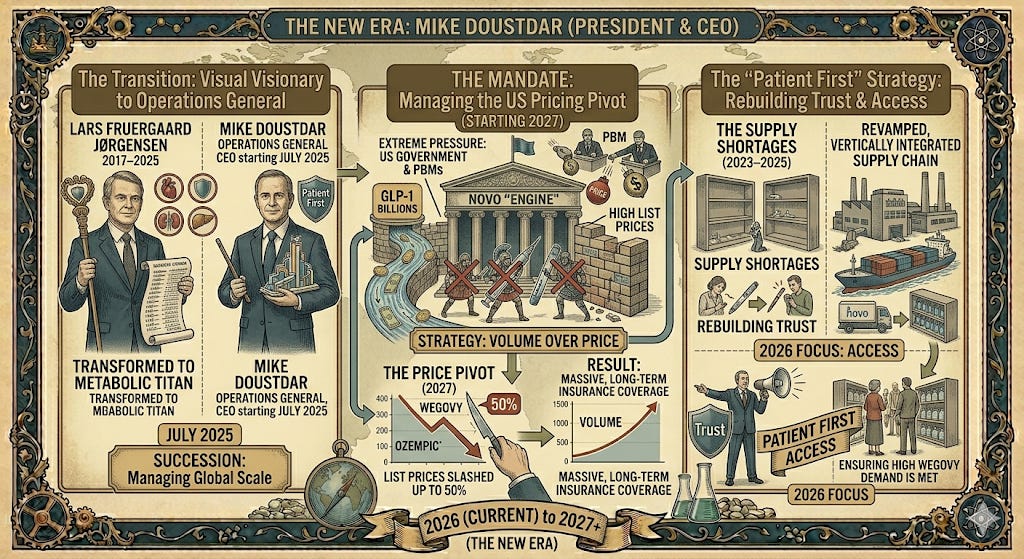
The New Era: Mike Doustdar (President & CEO)
In July 2025, long-time executive Maziar “Mike” Doustdar succeeded Lars Fruergaard Jørgensen as CEO. While Jørgensen was the visionary who transformed Novo from a “diabetes company” into a global metabolic titan, Doustdar is widely seen as the “Operations General” needed for the next phase.
The Mandate: Doustdar’s primary task is managing the US Pricing Pivot. With the US government and PBMs (Pharmacy Benefit Managers) applying extreme pressure, his strategy focuses on “volume over price”—slashing list prices for Ozempic and Wegovy by up to 50% (starting in 2027) to secure massive, long-term insurance coverage.
The “Patient First” Strategy: Doustdar has been vocal about “rebuilding trust” after the supply shortages of 2023–2025. His 2026 focus is on Access, ensuring that the high demand for Wegovy is met through a revamped, vertically integrated supply chain.
The Executive Engine Room
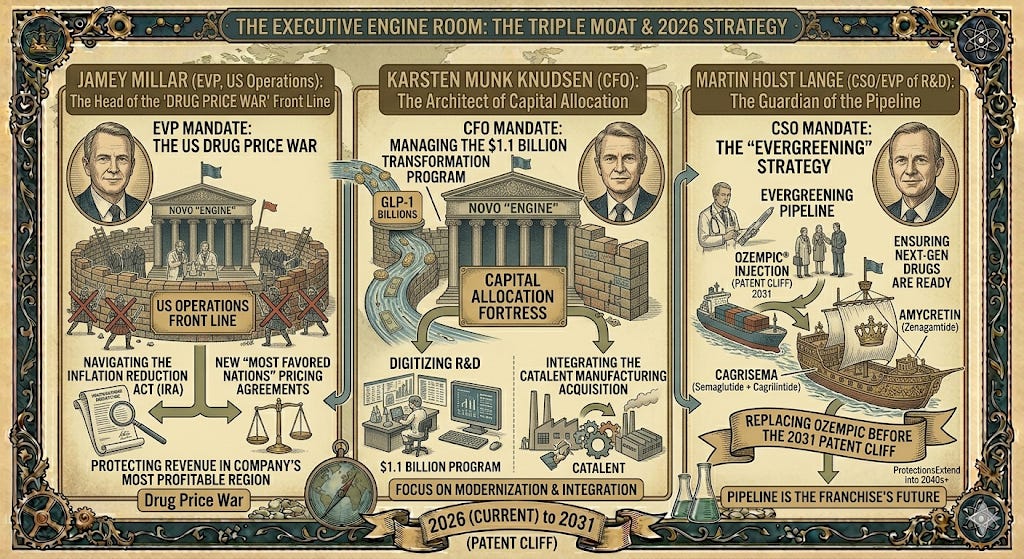
While the CEO sets the vision, the 2026 strategy is driven by three key executives who manage the company’s “Triple Moat”:
Karsten Munk Knudsen (CFO): The architect of Novo’s capital allocation. His focus in 2026 is managing the $1.1 billion transformation program aimed at digitizing R&D and integrating the Catalent manufacturing acquisition.
Martin Holst Lange (CSO/EVP of R&D): The guardian of the pipeline. Lange is responsible for the “Evergreening” strategy—ensuring that next-gen drugs like CagriSema and Amycretin are ready to replace Ozempic before the 2031 patent cliff.
Jamey Millar (EVP, US Operations): As the head of the company’s most profitable region, Millar is on the front lines of the “Drug Price War.” His strategy involves navigating the Inflation Reduction Act (IRA) and the new “Most Favored Nations” pricing agreements.
Strategic Pillars for 2026–2030
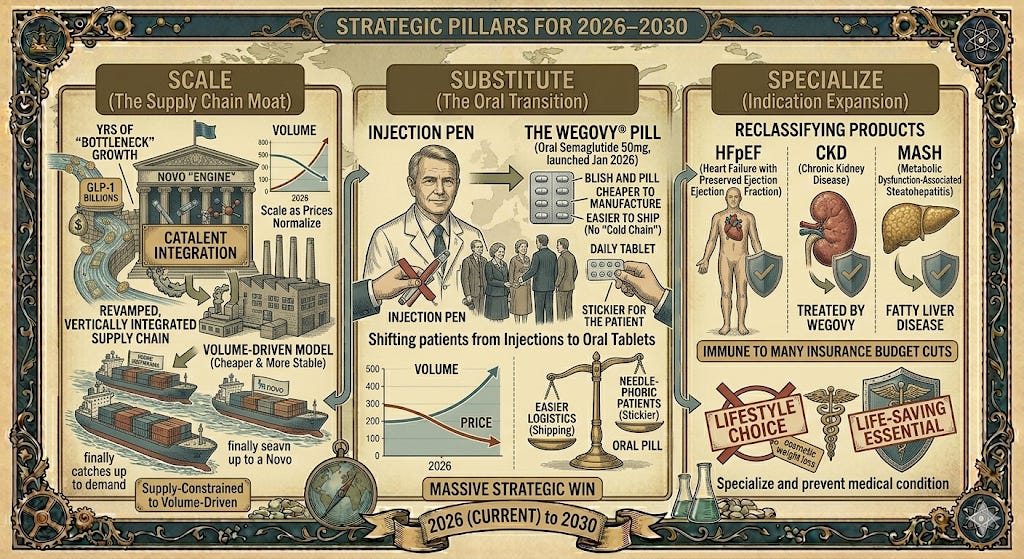
Scale (The Supply Chain Moat): After years of “bottleneck” growth, 2026 is the year Novo finally catches up to demand. The integration of Catalent allows them to move from a supply-constrained model to a volume-driven model, which is essential as prices begin to normalize.
Substitute (The Oral Transition): Management is aggressively pushing the Wegovy Pill (launched Jan 2026). Shifting patients from injections to oral tablets is a massive strategic win: it is cheaper to manufacture, easier to ship (no “cold chain” refrigeration), and significantly stickier for the patient.
Specialize (Indication Expansion): The team is moving “upstream” from obesity. By securing FDA approvals for heart failure (HFpEF), kidney disease (CKD), and liver disease (MASH), they are reclassifying their products from “lifestyle choices” to “life-saving essentials,” making them immune to many insurance budget cuts.
The “Foundation” Factor
A unique aspect of Novo’s management is the Novo Nordisk Foundation. Because the Foundation controls the majority of the voting rights, Doustdar and his team are not beholden to the quarter-to-quarter whims of Wall Street. This allows them to take a multi-decade view on R&D and manufacturing—a structural advantage that is the very definition of “Compounding Alpha.”
Management Watch: The market reacted sharply to the “Weak 2026 Outlook” (predicting a 5-13% sales decline). This is a classic “reset” year. Management is intentionally lowering expectations to account for the massive price cuts they are offering to stay ahead of Eli Lilly and the US government
Financial Analysis: The Engine of a Compounder
Novo Nordisk’s financial profile has undergone a dramatic transformation. While historically a steady, high-margin dividend payer, the “GLP-1 Era” has shifted the company into a high-intensity growth phase, characterized by massive CAPEX and a fundamental restructuring of the balance sheet.
