

Investing in hit driven entertainment is often seen as a fool’s errand. A gamble on the fickle whims of pop culture. But over the last two decades, Take Two Interactive (TTWO) has undergone a quiet, clinical transformation. From its chaotic origins and "Hot Coffee" scandals to the "bloodless coup" that installed Strauss Zelnick, the company has shifted from a speculative publisher into a high-margin financial fortress. As we stand in late 2025, the narrative has moved beyond the "Mobile Winter" and the $3.5 billion Zynga impairment. Today, Take-Two is a dual engine machine: it has a floor built on Zynga’s recurring mobile cash flow and a ceiling defined by the most anticipated entertainment event in history: the November 19, 2026, launch of Grand Theft Auto VI. This is no longer just a gaming company; it is a masterclass in converting creative genius into a predictable, subscription-like cash cow.
The Take-Two Snapshot:
The Catalyst: GTA VI Launch (Nov 19, 2026).
The Moat: 79% Recurrent Consumer Spending (RCS) creates a floor that peers lack.
The Risk: 2025’s $3.5B Zynga impairment proves that overpaying for growth remains a management pitfall.
The Number to Watch: 80%. That is the projected digital mix for GTA VI, which effectively doubles the profit-per-unit compared to the 2013 launch of GTA V.

The Wild Origins (1993–1998)
Take-Two was founded in 1993 by Ryan Brant (the 21-year-old son of media mogul Peter Brant). For its first five years, the company was a mid-tier publisher focused on distribution and niche titles.
The IPO (1997): The company went public on the Nasdaq, raising capital to move from distribution to ownership.
The BMG Deal (1998): This is the most important date in company history. Take-Two acquired BMG Interactive for ~$14M. Tucked inside that deal was a small, controversial British studio called DMA Design and their fledgling top-down game: Grand Theft Auto.
Birth of Rockstar Games: Following the BMG acquisition, Sam and Dan Houser moved to NYC to form the Rockstar Games label under the Take-Two umbrella.

The Chaos & Scandal Era (2001–2006)
While GTA III (2001) revolutionized the industry and made Take-Two a powerhouse, the corporate office was in shambles.
Regulatory Heat: The company was plagued by SEC investigations into options backdating and revenue misreporting.
“Hot Coffee” (2005): A hidden mini-game in GTA: San Andreas sparked a massive political backlash (led by Hillary Clinton) and a costly FTC settlement.
The Fall of the Founder: Ryan Brant eventually pleaded guilty to falsifying business records, leaving the company leaderless and bleeding cash.
The Bloodless Coup (2007)
In March 2007, a group of activist investors led by Strauss Zelnick and his firm, ZMC, staged a shareholder revolt.
The Takeover: They successfully ousted the board and installed Zelnick as Chairman. This marked the birth of the “Modern Take-Two.”
Rejecting EA (2008): Just months after Zelnick took over, Electronic Arts (EA) launched a hostile $2 billion takeover bid ($26/share). Zelnick famously rejected it, claiming it was “opportunistically timed” to capture the value of the upcoming GTA IV. His gamble paid off; the company’s valuation would eventually grow by 10x.
The “Zelnick Era” at Take-Two is defined by a management philosophy that is polarizing for players but has been a masterclass in shareholder value. Strauss Zelnick operates Take-Two less like a traditional gaming company and more like a private equity firm that owns high-performance creative assets.

The Outsourced Leadership Model (ZMC)
Unlike almost any other S&P 500 CEO, Strauss Zelnick is not technically a direct employee of Take-Two in the traditional sense. He and President Karl Slatoff are paid through their own management firm, ZelnickMedia (ZMC).
The Consultant CEO: Take-Two pays a management fee to ZMC, which in turn pays Zelnick and Slatoff. This “management agreement” is a recurring point of debate during annual shareholder meetings but has been consistently renewed because of the stock’s performance.
The Benefit: Zelnick argues this aligns his interests with long-term strategy rather than quarterly politics. To investors, it signals that the leadership is “mercenary” in its pursuit of efficiency and profit.
The Incentive Structure: The Microtransaction Multiplier
Zelnick’s compensation package is one of the most performance-heavy in the industry. While his base salary is effectively zero (often cited as $1), his total compensation is massive, often exceeding $40M–$70M depending on the year.
Recurrent Consumer Spending (RCS): A significant portion of Zelnick’s bonus is tied directly to the growth of microtransactions, DLC, and in-game currency (like GTA Online’s Shark Cards and NBA 2K’s VC).
The Strategy: This incentive structure is the reason Take-Two shifted from a one-off game seller to a live services company. It ensures that management is hyper-focused on keeping players engaged (and spending) years after a game’s initial release.
Creative Autonomy vs. Financial Rigor
Zelnick’s greatest trick has been maintaining a church and state separation between the suit-and-tie corporate office in NYC and Rockstar developers.
Hands-Off Creative: He famously allows Rockstar Games and 2K to delay games (sometimes for years) to reach perfection. He understands that a mediocre game is a permanent brand stain, while a late game is eventually a goldmine.
Hands-On Finance: While the studios handle the fun, the corporate office handles the math, centralizing legal, HR, and massive distribution networks to squeeze every drop of margin out of those hits.
The Quality Over Quantity Era (2010–2021)
Under Zelnick’s leadership, the company consolidated its talent into two primary pillars: Rockstar Games and 2K.
The Blockbuster Strategy: They stopped chasing dozens of titles and focused on a few “Tier-1” franchises: Grand Theft Auto, Red Dead Redemption, NBA 2K, and BioShock.
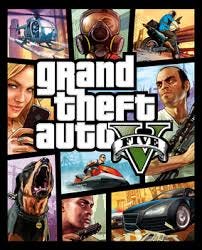
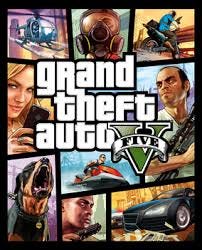
GTA V (2013): The game broke every record in entertainment history, grossing $1 billion in three days. More importantly, the launch of GTA Online transformed the business model from one-time sales to Recurrent Consumer Spending (RCS).
The Diversification of 2K: While Rockstar made the headlines, 2K built a “cash cow” in NBA 2K, which became the most profitable sports franchise in the U.S. through microtransactions.
The Pivot: The Zynga Acquisition (May 2022)
By 2021, Take-Two was a high-margin giant, but it had a massive “Mobile Hole.” While peers like Activision (King) and EA (Glu Mobile) had diversified, Take-Two remained tied to the long development cycles of consoles.
The Deal: Take-Two acquired Zynga for $12.7 billion, one of the largest deals in gaming history.
The Logic: Zelnick wanted to bring Take-Two’s hardcore IP (like GTA and Red Dead) to the mobile platform while using Zynga’s data science and Live Services expertise to boost the monetization of their console games.
The Zynga acquisition was the ultimate expression of the Zelnick style. He identified a gap (Mobile/Live Services), waited until he could buy a market leader (Zynga), and immediately began integrating their monetization math into Rockstar and 2K’s creative IP.
The acquisition of Zynga (completed in May 2022) was not just a purchase; it was a total reconstruction of Take-Two’s financial DNA. Before the deal, Take-Two was a “lumpy” business that lived and died by 5-to-10-year release cycles. After the deal, it has the potential to become a diversified, recurring revenue machine.

The Financial Architecture $12.7 Billion
At the time, this was the largest acquisition in the history of the video game industry (until Microsoft’s Activision deal).
The Terms: $3.50 in cash and $6.36 in TTWO stock per share.
The Premium: Zelnick paid a 64% premium over Zynga’s closing price. This raised eyebrows among value investors, but Zelnick argued that Zynga’s turnkey mobile platform was worth the price to avoid years of failed internal mobile development.
The Goal: Take-Two projected $100M in annual cost synergies and, more importantly, $500M in annual revenue synergies by cross-pollinating their brands.
The Mobile Gap Rationale
Zelnick admitted in late 2025 that Take-Two missed the boat on mobile in the early 2010s. By 2022, mobile had become the fastest-growing and most lucrative segment of gaming, yet it represented only 10% of Take-Two’s revenue.
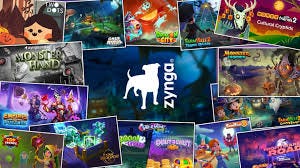
Why Zynga? Zynga wasn’t just FarmVille. It owned Chartboost (a massive mobile advertising platform), Rollic (a leader in hyper-casual games), and a massive Forever Franchise portfolio (Zynga Poker, Words With Friends, Empires & Puzzles).
The Demographic Shift: Take-Two’s console games skewed toward hardcore male gamers. Zynga brought a massive, diverse audience that skewed female and older, providing a hedge against the volatility of the hardcore market.
The Synergy: Console IP on Mobile
The core investment thesis for the merger was simple: Take the world’s best IP and give it to the world’s best mobile operators.
The Strategy: Use Zynga’s expertise to launch mobile versions of Grand Theft Auto, Red Dead Redemption, BioShock, and Borderlands.
The “Direct-to-Consumer” (D2C) Play: One of the hidden gems in this deal was Zynga’s ability to bypass the “Apple/Google Tax” (the 30% platform fee) by driving players to their own web-based stores—a strategy that has become highly accretive to margins in 2024 and 2025.
Post-Acquisition Reality (2023–2025)
The Zynga acquisition was pitched as a merger of the decade, but the timing could not have been more challenging. Shortly after the deal closed in mid 2022, the mobile gaming industry entered its first-ever sustained contraction, a period analysts now call the Mobile Winter.
Industry Headwinds: The Mobile Winter (2022–2024)
The post-acquisition period was defined by three systemic shocks that broke the traditional mobile growth model:
The Privacy Wall (Apple’s IDFA): Apple’s App Tracking Transparency (ATT) made it significantly harder for Zynga to identify “whales” (high-spending players). Previously, Zynga could surgically target users based on their spending habits; post-ATT, customer acquisition costs (CAC) skyrocketed because marketing essentially became blind.
Macroeconomic Hangover: As inflation rose and pandemic lockdowns ended, the casual gamer (Zynga’s core demographic) pulled back on discretionary spending. Mobile games, which had been a primary source of entertainment in 2020, suddenly had to compete with a return to travel and outdoor leisure.
The Hyper-Casual Crash: The market for ultra simple games became oversaturated. Regulatory shifts and lower ad-revenue yields meant that the churn-and-burn model of launching dozens of small games per year became less profitable.
How Zynga Has Faired: The Report Card
While the industry struggled, Zynga’s performance within Take-Two has been a tale of two realities: strategic growth vs. accounting pain.
The Accounting Pain: The $3.55 Billion Impairment
The most critical detail for your investment thesis is that in early 2025, Take-Two took a $3.55 billion goodwill impairment charge related to the Zynga acquisition.
What it means: Management essentially admitted they overpaid for Zynga in 2022. The market conditions (privacy and macro) deteriorated so much that the projected value of the assets had to be written down. For investors, this was the “clearing of the decks” before the GTA VI era.
The Strategic Growth: Match Factory” & “Toon Blast
Despite the write-down, Zynga’s operational machine is currently firing on all cylinders. As of late 2025, mobile accounts for 52% of Take-Two’s total revenue, even through the dilution this provides a diversified revenue stream to fill long waits between releases (Grand Theft Auto VI).
The Breakout Hit: Match Factory! (released by Zynga’s Peak Games) has become a monster success, consistently ranking in the Top 20 U.S. grossing charts. It is generating $15M–$17M per month and is the primary driver of the company’s recent mobile revenue growth.
The Forever Franchises: Older titles like Toon Blast have seen a resurgence, growing over 20% year-over-year in 2025 thanks to new seasonal events and better LiveOps.
Direct-to-Consumer (D2C) Success: Zynga has successfully shifted a larger portion of its billing to its own web stores. By bypassing the 30% Apple/Google Tax, Zynga is seeing significant margin expansion on every dollar spent by its most loyal users.

The Synergy Assessment
The original promise was to put Take-Two’s massive IP (like Grand Theft Auto or Red Dead) onto mobile via Zynga.
The Reality: We haven’t seen a GTA Mobile developed by Zynga yet. Most of the success has come from Zynga’s own internal IP (Match Factory, Toon Blast).
The Future: The synergy is currently technical, not creative. Zynga is teaching Rockstar and 2K how to better monetize their console games through data science, while Take-Two is providing the massive capital needed for Zynga to survive the Mobile Winter.
The Final Verdict: Was Zynga Worth the $12.7 Billion?
When Take-Two announced the Zynga acquisition, it was a massive bet on a future that arrived faster and colder than anyone expected. The $3.55 billion impairment charge in early 2025 is the smoking gun that proves Take-Two overpaid for the peak pandemic valuations of 2022. However, for long-term shareholders, judging the deal solely on that write-down is a mistake.
In the world of Zelnick led management, this was never just about buying a game studio; it was about buying a floor.
The Floor vs. The Ceiling
Before Zynga, Take-Two was a high-volatility hit business. If a game like Grand Theft Auto, or Red Dead Redemption were delayed, the stock cratered because there was no secondary engine to drive cash flow.
The Zynga Floor: Today, Zynga provides a stable, recurring revenue base that accounts for over 50% of total bookings. Even during the Mobile Winter, titles like Match Factory! and Toon Blast have generated the consistent cash needed tide the company over until the next big release.
The GTA Ceiling: With the floor secured by Zynga’s daily microtransactions, the company can afford to wait for perfection from Rockstar Games.
Strategic Diversification: Mission Accomplished
While the Mobile Winter and Apple’s privacy changes stunted the initial growth projections, Zynga has transformed Take-Two into a Live Services powerhouse. The expansion into Direct-to-Consumer (D2C) web stores, bypassing the 30% platform fee is a high-margin victory that simply wasn’t possible for Take-Two on its own.
The Bottom Line
The Zynga deal was expensive, and messy. However it gave Strauss Zelnick the one thing every CEO wants: control over time. Take-Two is no longer at the mercy of a single launch date. For investors, the $3.5B write-off is yesterday’s news; the 79% Recurrent Consumer Spending and the upcoming GTA VI super cycle are the reasons to stay for the long haul.
The 2025 Setup: Loading the Bases
While the world waited for Rockstar, Take-Two’s 2K label spent 2025 proving that the company is more than just a one-trick pony. This setup year was defined by rapid fire releases of Tier-1 sequels that stabilized the balance sheet.
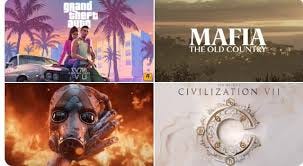
Sid Meier’s Civilization VII (Feb 11, 2025): Despite a slow start in sales, the title earned a strong 82 Metacritic score and has established monetization through DLC.
Mafia: The Old Country (Aug 8, 2025): In a brilliant tactical move, Take-Two launched this prequel at a $50 price point. It over-delivered on bookings, proving that mid-budget A titles can drive massive margins without the $300M+ development risk of a blockbuster.
Borderlands 4 (Sept 12, 2025): The looter-shooter returned to its roots with critical acclaim (82 Metacritic). Along with NBA 2K26, it became the primary driver of the company’s raised FY 2026 guidance.

The 2026 Execution: The Grand Slam GTA VI
As we stand in late 2025, the market is laser-focused on November 19, 2026, the officially confirmed release date for Grand Theft Auto VI.
This isn’t just a game launch; it’s a total step-change in the company’s scale. Analysts project that GTA VI will achieve a 5-year CAGR of >10% for the entire company’s revenue, driven by:
The Double-Dip Strategy: Releasing first on PS5/Xbox Series X|S in 2026, with a high-margin PC version expected to follow in 2027/28.
The Synergy: Using Zynga’s data science to optimize the next evolution of GTA Online, which will launch alongside the main game.
The 2026 Support Cast
Take-Two isn’t stopping at Rockstar. The 2026 pipeline includes Judas, the mind-bending sci-fi shooter from Ken Levine (BioShock creator), and CSR 3, Zynga’s first major technical synergy title that leverages high-end racing physics. Along with 2k’s annual release games such as NBA 2k.
2026 Investment Thesis
In 2026 (or later) Take-Two’s success hinges on Grand Theft Auto 6, many analysts already predicting this to be the biggest game of all time. With Grand Theft Auto 5 selling 32.5 million copies in its first year, the next installment looks to blow that number out of the water.
Unlike GTA V (2013), which launched on the massive install base of the PS3 and Xbox 360 (approx. 160 million units combined), GTA VI is restricted to current-gen hardware. By late 2026, the addressable market (PS5 + Xbox Series X|S) is projected to reach approximately 125–130 million units.
Here is the Bull, Bear, and Base case for first-year sales (Nov 2026 – Nov 2027).
